What Is the Chain of Survival in First Aid?
When someone suffers a cardiac arrest, every second matters. The difference between life and death often comes down to how quickly and effectively action is taken in those first critical minutes. That’s where the Chain of Survival comes in.


In Short
- The Chain of Survival in first aid is a five-step process used to improve survival chances during a cardiac arrest, focusing on fast and coordinated action.
- The five links include early recognition, calling emergency services (000), performing CPR, using an AED, and receiving advanced medical care and recovery support.
- Time is critical. Every minute without CPR or defibrillation significantly reduces the chance of survival.
- CPR helps keep oxygen flowing to the brain and heart until professional help or a defibrillator is available, but it does not restart the heart on its own.
The Chain of Survival in first aid is a simple but powerful concept that describes the sequence of actions needed to give a person the best possible chance of surviving a cardiac arrest. Each “link” in the chain represents a step in the emergency response process, and when those links are strong and carried out quickly, survival rates improve significantly.
Understanding this concept is essential for anyone completing a first aid course in Australia, whether for work, family safety, or general preparedness.
What Are the 5 Links in the Chain of Survival?
Although different organisations may describe the Chain of Survival slightly differently, in modern first aid and Australian training contexts it is generally made up of five key links.
1. Early Recognition and Calling for Help
The first step is recognising that something is seriously wrong. This includes identifying that the person is unresponsive and not breathing normally.
Once cardiac arrest is suspected, the priority is to call emergency services immediately (000 in Australia). This ensures professional help is on the way as quickly as possible and may also allow dispatchers to guide you through CPR over the phone.
Early recognition is critical because hesitation at this stage can cost valuable minutes.
2. Early CPR
The second link is starting cardiopulmonary resuscitation (CPR) as soon as possible.
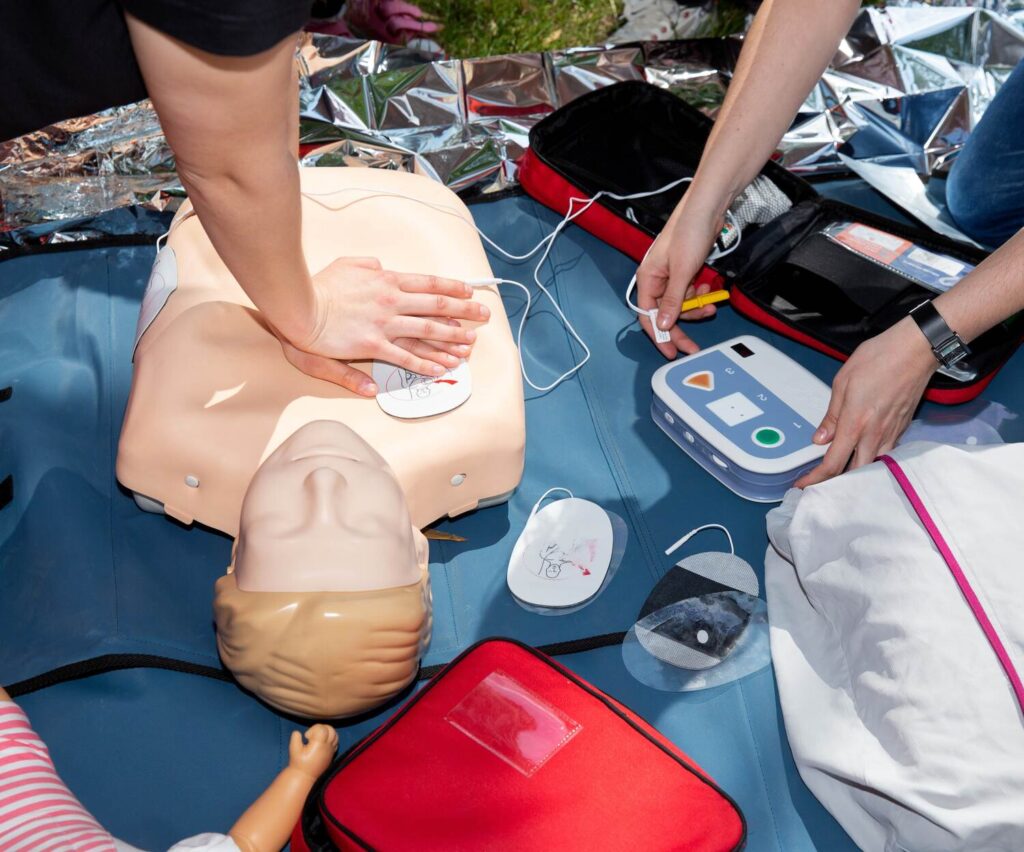
CPR helps manually circulate oxygenated blood to the brain and heart when the body can no longer do it on its own. While it does not restart the heart, it buys time until defibrillation and advanced care can occur.
High-quality CPR focuses on strong, fast chest compressions with minimal interruptions. Even if rescue breaths are not performed, compression-only CPR can still significantly improve survival outcomes. The key message is simple: if someone is not breathing normally, start CPR immediately.
3. Early Defibrillation
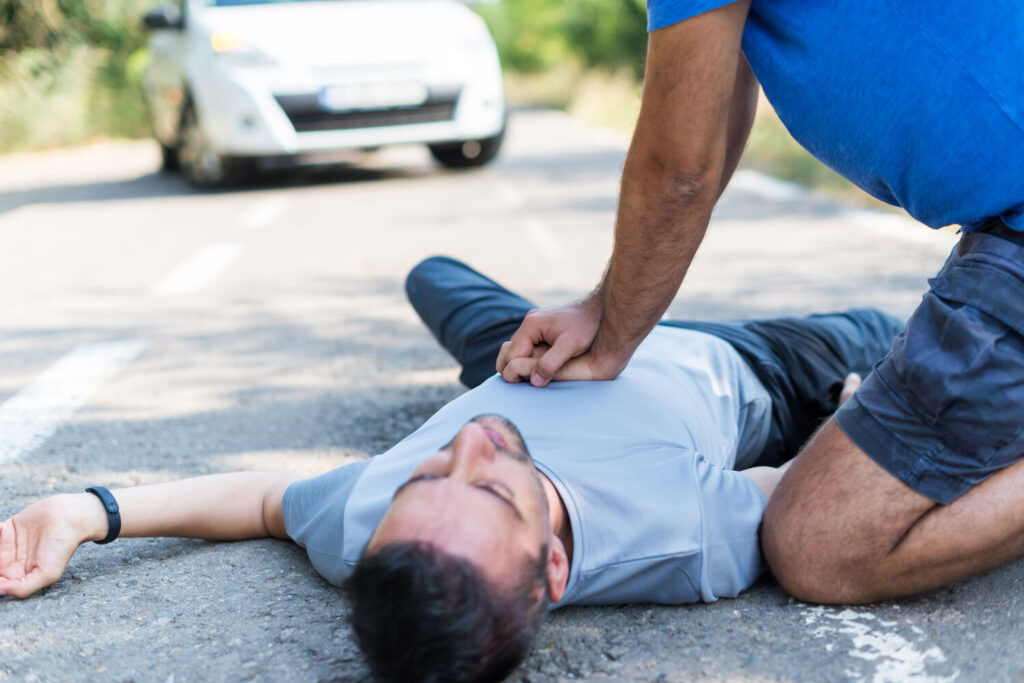
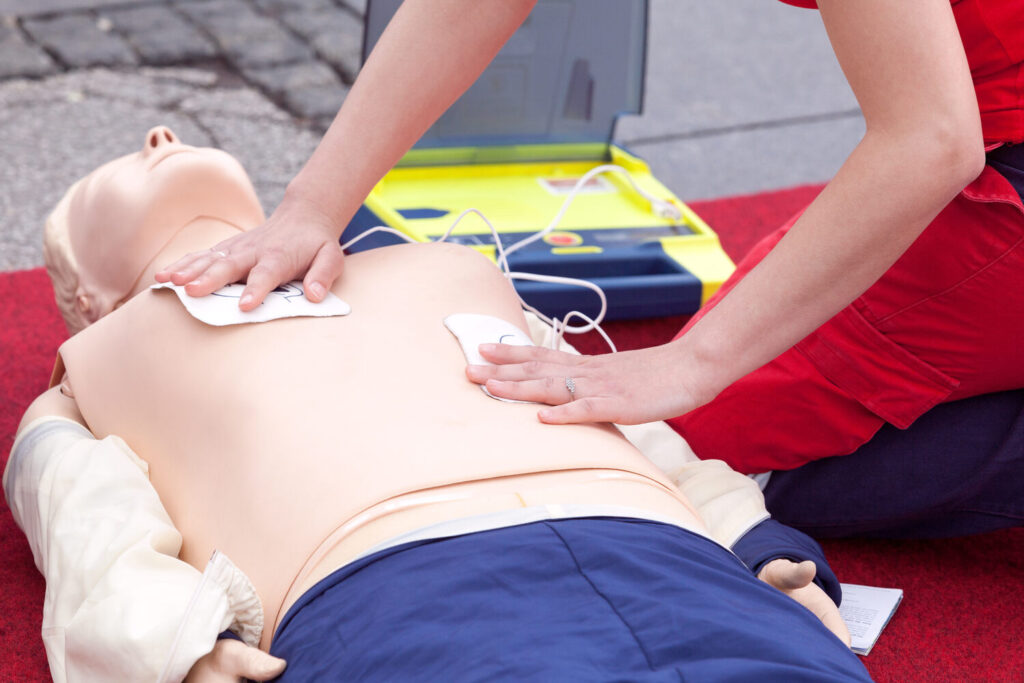
The third link is early defibrillation using an Automated External Defibrillator (AED). In many cardiac arrests, the heart is in a chaotic rhythm called ventricular fibrillation. An AED delivers a controlled electrical shock that can help reset the heart’s rhythm.
AEDs are designed for public use and provide clear voice instructions, meaning almost anyone can use one with minimal training. The sooner defibrillation occurs, the higher the chance of survival.
In fact, every minute without defibrillation significantly reduces survival rates, which is why rapid access to an AED is so important in workplaces, schools, gyms, and community spaces.
4. Advanced Emergency Medical Care
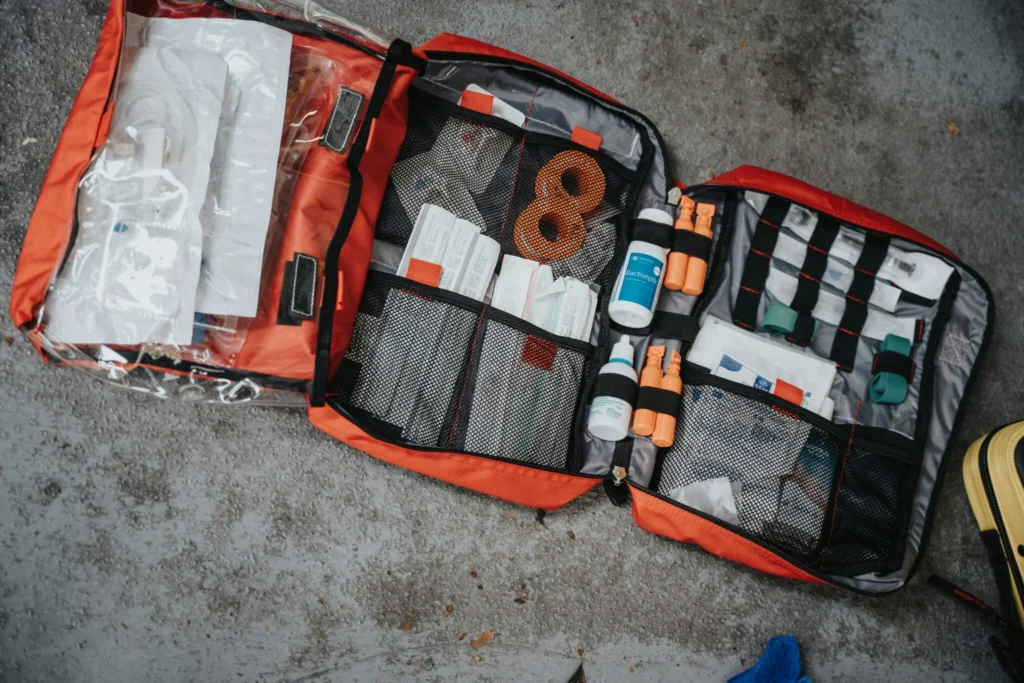
Once paramedics arrive, the next link in the chain begins. Advanced care includes medications, advanced airway management, and ongoing resuscitation techniques that cannot be performed by lay first aiders.
Paramedics and emergency clinicians work to stabilise the patient, identify the cause of the cardiac arrest, and restore a sustainable heart rhythm. This stage bridges the gap between basic life support and hospital treatment.
5. Post-cardiac Arrest Care and Recovery
Survival doesn’t end when the heart starts again. The final link in the Chain of Survival is post-resuscitation care, which happens in hospital. This includes intensive care monitoring, brain protection strategies, treatment of the underlying cause, and rehabilitation.
Recovery can also involve physical, emotional, and cognitive support. Many survivors require ongoing care as they regain strength and adjust after the event.
This stage is often overlooked, but it is crucial for long-term recovery and quality of life.
Why the Chain of Survival Matters
Cardiac arrest is different from a heart attack. In a cardiac arrest, the heart suddenly stops pumping blood effectively, cutting off oxygen to the brain and vital organs. Without immediate intervention, brain damage can begin within minutes.
The Chain of Survival exists because survival depends on time and teamwork. No single action is enough on its own. Instead, each step builds on the one before it, creating a coordinated response that keeps oxygen flowing and restores heart rhythm where possible.
When each link is performed early, survival chances can increase dramatically. When even one link is delayed or missed, outcomes become far less favourable.
The Chain of Survival is Only as Strong as Its Weakest Link
A helpful way to think about the Chain of Survival is that it is exactly what it sounds like: a chain. If one link is weak or missing (whether that’s delayed recognition, slow CPR, or no access to a defibrillator) the chances of survival drop significantly.
On the other hand, when each link is performed quickly and confidently, the outcome can change completely. This is why first aid training is so important. It gives everyday people the confidence to step in and act during a crisis.
Who Should Learn the Chain of Survival?
The short answer is everyone. But it is especially important for:
- Parents and caregivers
- Grandparents that care grandchildren
- Teachers and childcare workers
- Construction and trade workers
- Fitness instructors and coaches
- Anyone responsible for others in a workplace
In reality, cardiac arrest can happen anywhere. At home, at work, or in public. Knowing the Chain of Survival means you are prepared to respond rather than freeze in the moment.
How First Aid Training Brings It All Together
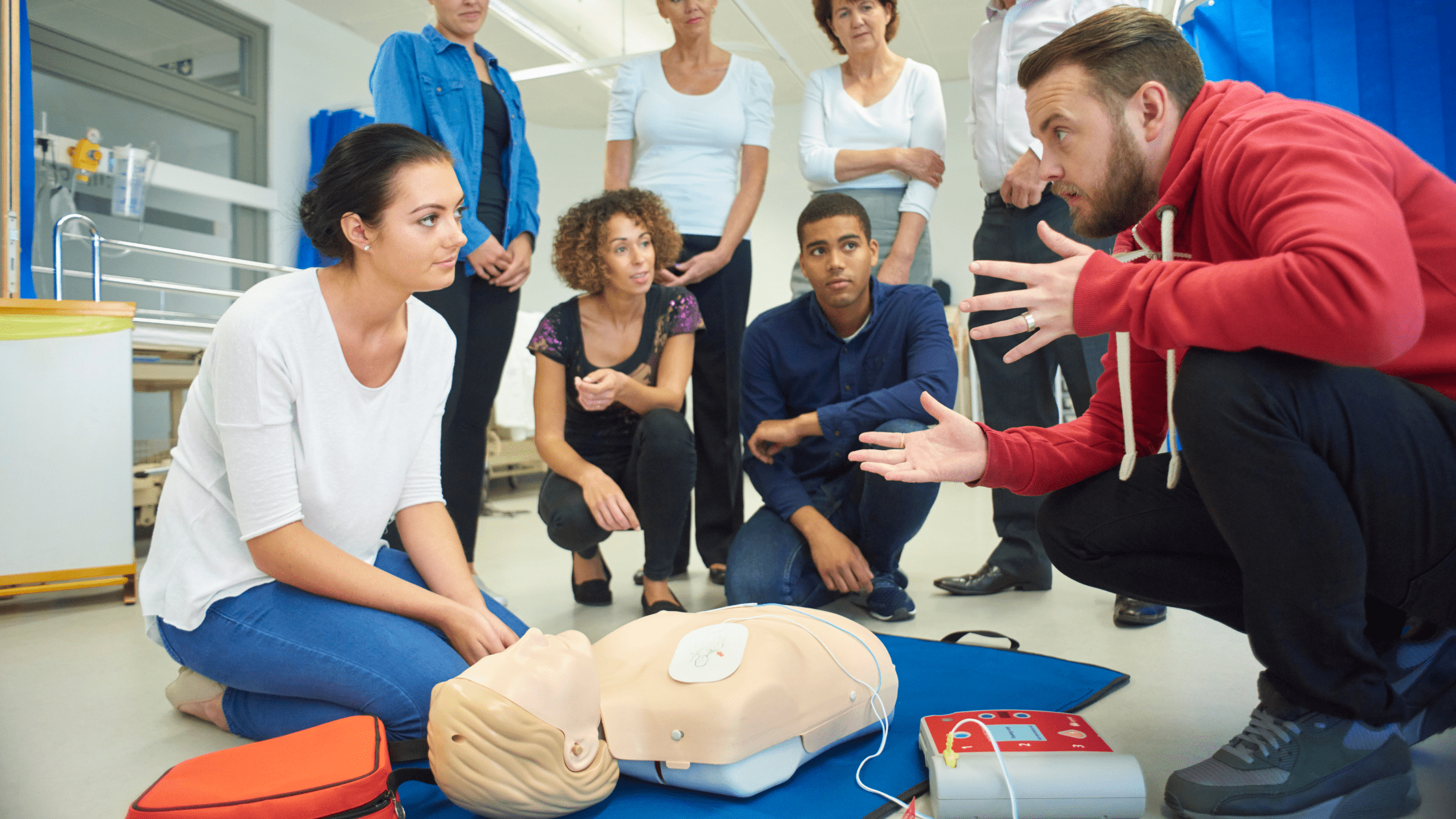
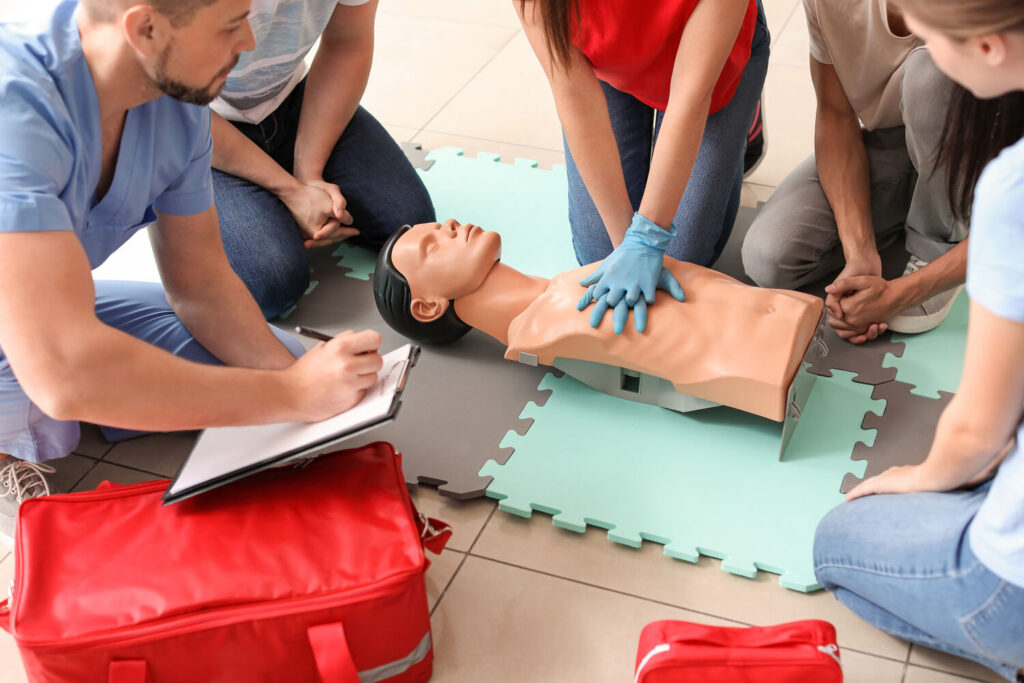
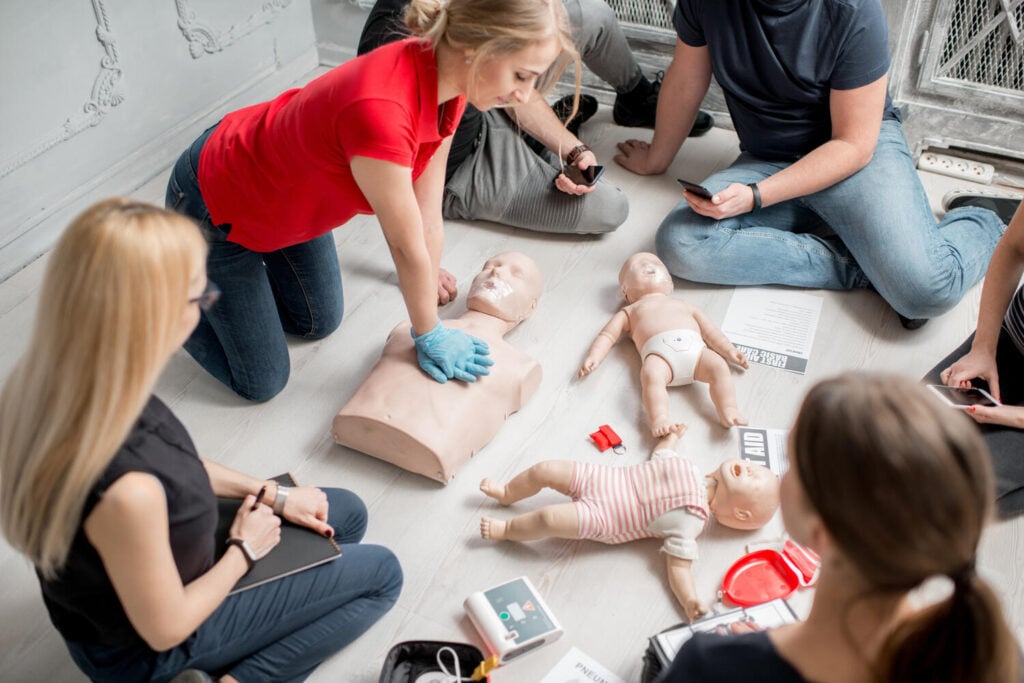
In a first aid course, the Chain of Survival is not taught as theory alone. It is built into practical training scenarios, including CPR practice and AED use.
At National First Aid Courses, this is reinforced through hands-on learning so that when a real emergency happens, your response is automatic and confident. You are not trying to remember steps, you are acting on training.
Frequently Asked Questions
Why is the Chain of Survival important?
The Chain of Survival is important because cardiac arrest is a time-critical emergency. When someone’s heart stops beating normally, oxygen is no longer being pumped around the body properly. The brain, heart, and other vital organs can start to suffer damage within minutes.
Each step in the Chain of Survival is designed to give the person the best possible chance of survival, from recognising the emergency and calling for help, to starting CPR, using an AED, and getting advanced medical care. When these actions happen quickly and in the right order, the chances of recovery are much higher.
What happens if one link in the Chain of Survival is delayed?
If one link in the Chain of Survival is delayed or missed, the person’s chance of survival can drop quickly. Cardiac arrest needs immediate action because the brain and other organs rely on a constant supply of oxygen-rich blood.
For example, if CPR is delayed, blood flow to the brain and heart is reduced. If defibrillation is delayed, a shockable heart rhythm may become harder to correct. Even if emergency services arrive later, the delay in the early steps can make recovery much less likely. The Chain of Survival works best when every step happens as quickly as possible.
Can CPR alone save someone in cardiac arrest?
CPR alone usually cannot restart the heart, but it can help keep someone alive until further help arrives. Chest compressions help move oxygenated blood around the body when the heart is not pumping properly. This is especially important for the brain, which can be damaged quickly when it does not receive enough oxygen.
CPR buys time for an AED to be brought to the person, or for paramedics to arrive with advanced equipment and treatment. While CPR is not the full treatment for cardiac arrest, it is one of the most important early actions you can take.
What is the role of an AED in the Chain of Survival?
An Automated External Defibrillator, or AED, plays a key role in the Chain of Survival because some cardiac arrests are caused by abnormal heart rhythms that can be corrected with an electric shock. The AED checks the person’s heart rhythm and only gives a shock if one is needed.
This makes it safe for use by members of the public. Early defibrillation can greatly improve the chance of survival, especially when it is combined with CPR. The sooner an AED is used, the better the person’s chance of getting their heart back into a normal rhythm.
Do I need training to use an AED?
No, you do not need formal training to use an AED. These devices are designed to be used by members of the public, even if they have never used one before. Once the AED is turned on, it gives clear voice instructions and guides you through each step.
It will also check the person’s heart rhythm and only advise a shock if needed. However, first aid training is still very useful because it helps you stay calmer, start CPR sooner, and use the AED with more confidence. In an emergency, that confidence can make a real difference.
How does first aid training relate to the Chain of Survival?
First aid training helps you understand and apply the Chain of Survival in a real emergency. It teaches you how to recognise cardiac arrest, call emergency services, start CPR, and use an AED safely.
Without training, you might freeze or feel unsure about what to do first. With training, you are more likely to act quickly and follow the right steps. First aid training also helps you understand why each part of the chain matters, instead of just memorising instructions. This makes you better prepared to help someone until professional medical support arrives.
Get Government-Approved First Aid Training at a Location Near You
National First Aid Courses is Australia’s trusted provider of accredited, nationally recognised first aid training. As a Registered Training Organisation (RTO 41072), we run practical, hands-on courses built around real-life situations, not just theory on a whiteboard.
With face-to-face training, same-day certificates, and locations across Australia, getting certified has never been more straightforward. Enrol in an upcoming first aid course with National First Aid Courses and be ready for whatever comes your way.