

In Short for First Aid Compliance 2026
- Australian businesses are legally required under WHS laws to provide appropriate workplace first aid equipment, trained first aiders, and emergency preparedness based on workplace risks.
- Workplace first aid kit requirements are not one-size-fits-all. The type of work being performed, workplace hazards, staff numbers, and site location all influence what first aid supplies and equipment are needed.
- A compliant workplace first aid kit should be properly stocked, easily accessible, regularly inspected, and suitable for the specific risks present in the workplace.
- Many industries, including construction, childcare, hospitality, and remote worksites, require specialised first aid supplies and more advanced emergency response planning.
Every Australian business has a legal responsibility to provide appropriate first aid equipment in the workplace. But when it comes to first aid kit requirements, many employers are still unsure about what’s actually required, how many kits are needed, who’s responsible for maintaining them, and whether the rules change depending on the workplace or state.
The reality is that workplace first aid obligations in Australia are based on risk. A small office with low-risk activities won’t need the same setup as a construction site, warehouse, childcare centre, or remote worksite.
This guide covers everything you need to know, from what goes inside a compliant kit and how often to check it, to state-by-state requirements and how it all ties into WHS compliance.
Are First Aid Kits Mandatory for Businesses in Australia?
Yes. Under Australian Work Health and Safety (WHS) laws, businesses are required to provide adequate first aid equipment, facilities, and trained personnel. This obligation applies to employers, contractors, sole traders with staff, volunteer organisations where WHS duties apply, and any Person Conducting a Business or Undertaking (PCBU).
Importantly, the law does not prescribe one universal first aid kit for every business. Instead, Australian WHS legislation uses a risk-based approach.
This means businesses are expected to assess the type of work being performed and ensure their first aid arrangements are appropriate for the hazards and risks present in the workplace.
For example, a corporate office may only require a basic first aid kit with supplies for minor injuries and medical emergencies, while a construction site may require larger kits with trauma dressings, burn treatment supplies, and specialised equipment. This means businesses must consider factors such as:
- The type of work being performed
- Workplace hazards
- Number of workers
- Shift patterns
- Distance from medical services
- Whether the workplace is remote
- The likelihood of injury or illness
In practical terms, nearly every Australian workplace requires at least one properly stocked first aid kit.
Workplace First Aid Kit Legal Requirements in Australia
Safe Work Australia’s First Aid in the Workplace Code of Practice provides guidance on how businesses should meet their obligations.
Although Codes of Practice are not legislation themselves, regulators commonly use them as evidence of what is considered “reasonably practicable” under WHS laws. Businesses are expected to provide:
- Accessible first aid kits
- Appropriate first aid supplies
- Adequate first aid facilities where required
- Trained first aiders
- Systems for maintaining first aid readiness
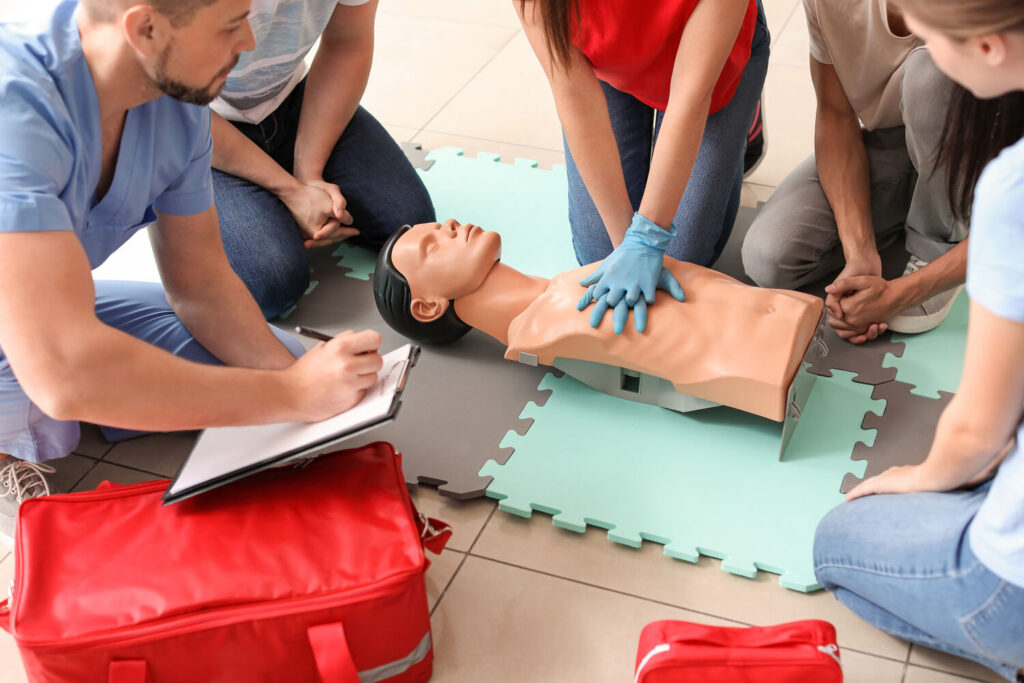
Importantly, first aid compliance is not just about owning a first aid box. Your first aid kit must actually be usable, accessible, properly maintained, and suitable for the environment.
A compliant workplace first aid kit should be clearly labelled, easy to access during emergencies, and regularly checked to ensure supplies are not expired or depleted.
Many businesses make the mistake of purchasing a first aid kit and forgetting about it. However, a neglected or empty first aid kit may not satisfy workplace safety obligations if an incident occurs.
What Should Be in a Workplace First Aid Kit?
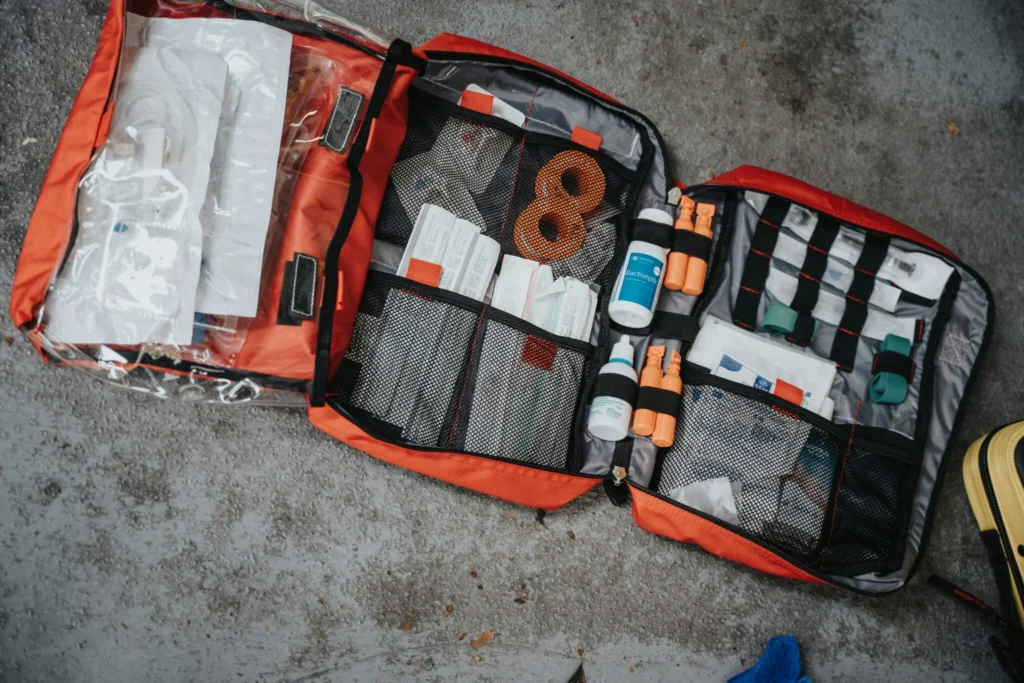
One of the most common questions businesses ask is: “What exactly should be in a workplace first aid kit?” The answer depends on workplace risk. However, Safe Work Australia provides guidance on the standard contents typically expected in a compliant workplace first aid kit.
Basic Workplace First Aid Kit Contents
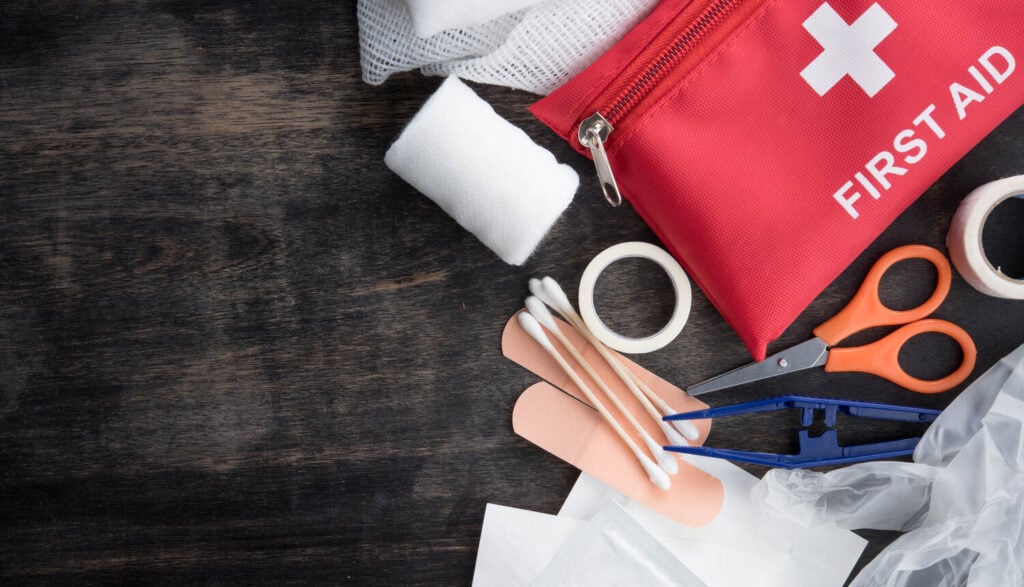
A standard low-risk workplace first aid kit in Australia commonly includes:
- Adhesive dressings (Band-Aids)
- Sterile gauze swabs
- Non-stick wound dressings
- Conforming bandages
- Triangular bandages
- Crepe bandages
- Sterile eye pads
- Saline solution or eye wash
- Disposable gloves
- Antiseptic wipes
- Scissors
- Tweezers
- Safety pins
- CPR face shield or resuscitation mask
- Instant cold packs
- Thermal blanket
- Burn treatment dressings or gel
- Notebook and pen
- First aid instruction booklet
Many workplaces also include emergency contact information, incident report forms, and biohazard disposal bags. Importantly, medications are generally not recommended in standard workplace first aid kits unless specifically approved under workplace policies.
Do Different Workplaces Require Different First Aid Kits?
Yes. Different industries and workplaces often require different first aid equipment depending on the hazards present. This is one of the most important aspects of workplace first aid compliance.
Office First Aid Kit Requirements
Low-risk office workplaces may only require basic wound care supplies, CPR protection equipment, eye wash, and standard bandaging materials.
However, even office environments can experience slips, falls, choking incidents, and medical emergencies, so first aid preparedness still matters.
Construction Site First Aid Kit Requirements
Construction and trade environments typically require larger and more comprehensive kits due to hazards such as:
- Machinery injuries
- Cuts and lacerations
- Crush injuries
- Burns
- Falls
- Eye injuries
Construction workplaces may require trauma dressings, heavy-duty bandages, burn treatment supplies, and snake bite bandages in some regional areas.

Hospitality and Café First Aid Kits
Restaurants, cafés, commercial kitchens, and hospitality venues often face a higher risk of workplace injuries than many other industries due to hot surfaces, sharp utensils, fast-paced environments, and constant food preparation activities.
Because of this, hospitality businesses typically require workplace first aid kits that are specifically suited to burns, cuts, slips, and kitchen-related injuries.
Common first aid supplies for hospitality workplaces include:
- Burn treatment supplies
- Finger cots
- Blue detectable bandages
- Additional wound dressings

Childcare and School First Aid Kits
Education and childcare environments require specialised first aid considerations because staff are responsible for the health and safety of children, who can be more vulnerable during medical emergencies and accidents.
Schools, childcare centres, early learning facilities, and OSHC providers commonly need first aid kits and procedures that are designed to respond quickly to childhood injuries, allergic reactions, asthma incidents, and other age-specific emergencies.
Common first aid supplies and emergency equipment in education and childcare settings may include:
- Asthma emergency equipment
- Anaphylaxis response supplies
- Child-specific dressings
- Ice packs
- Emergency medication procedures
Remote Workplace First Aid Kits
Remote worksites (mining operations, agricultural stations, outback construction sites, offshore facilities) operate under a completely different set of pressures. The biggest one is time. If something goes wrong, emergency services could be hours away. That changes everything.
Safe Work Australia’s First Aid Code of Practice is clear: the further you are from help, the more comprehensive your setup needs to be. That means advanced wound care supplies, extra compression bandages, splinting materials, burn dressings, and an AED. A standard office kit won’t cut it.
You’ll also need at least one worker with an advanced qualification like the Certificate IV in Remote Area First Aid (HLTAID013). Someone who can manage a serious situation for an extended period before help arrives. And don’t overlook communication. Satellite phones, EPIRBs, or two-way radios are part of the first aid plan out here.

How Many First Aid Kits Does a Business Need?
There is no fixed national rule that states exactly how many first aid kits a workplace must have. Instead, businesses are expected to assess their own workplace and ensure first aid equipment is accessible wherever it may be needed.
Factors such as the size of the workplace, the number of employees, the layout of the site, and the level of workplace risk all play an important role. Businesses should also consider things like multiple floors, workers operating in different areas, shift work, and whether staff travel or work remotely.
The key principle is accessibility. Workers should never need to travel unreasonable distances or search for equipment during an emergency.
Who Is Responsible for Workplace First Aid Kits?
Under WHS laws, the ultimate responsibility for workplace first aid kits sits with the employer or PCBU. However, many businesses assign the day-to-day management of first aid supplies to workplace health and safety officers, supervisors, office managers, site managers, or designated first aid officers.
Whoever is responsible should ensure that first aid kits remain fully stocked, expired items are replaced, and supplies are replenished after use. They should also make sure kits remain easily accessible and continue to meet the changing risks of the workplace over time.
To help demonstrate compliance, many businesses also keep first aid inspection checklists or maintenance records as part of their broader WHS documentation.
How Often Should Workplace First Aid Kits Be Checked?
Workplace first aid kits should be inspected regularly.
For most Australian businesses, checking first aid kits every three months is considered good practice. However, high-risk workplaces may require more frequent inspections.
First aid kits should also be checked:
- After any incident
- After supplies are used
- When stock expires
- When workplace risks change
- Before major events or projects
During inspections, businesses should check:
- Expiry dates
- Missing supplies
- Damaged packaging
- Accessibility of the kit
- Cleanliness of the container
- Whether contents still match workplace risks
Keeping documented inspection records can help demonstrate compliance during audits, investigations, or insurance claims.
Why Trained First Aiders Are Just as Important as the First Aid Kit
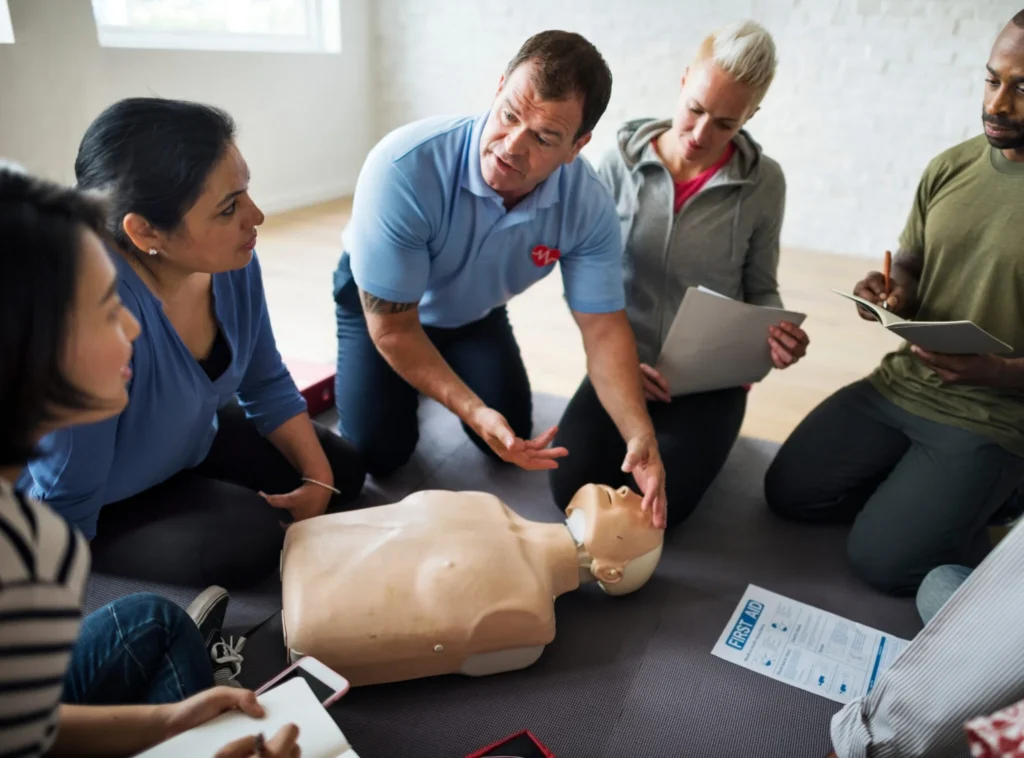
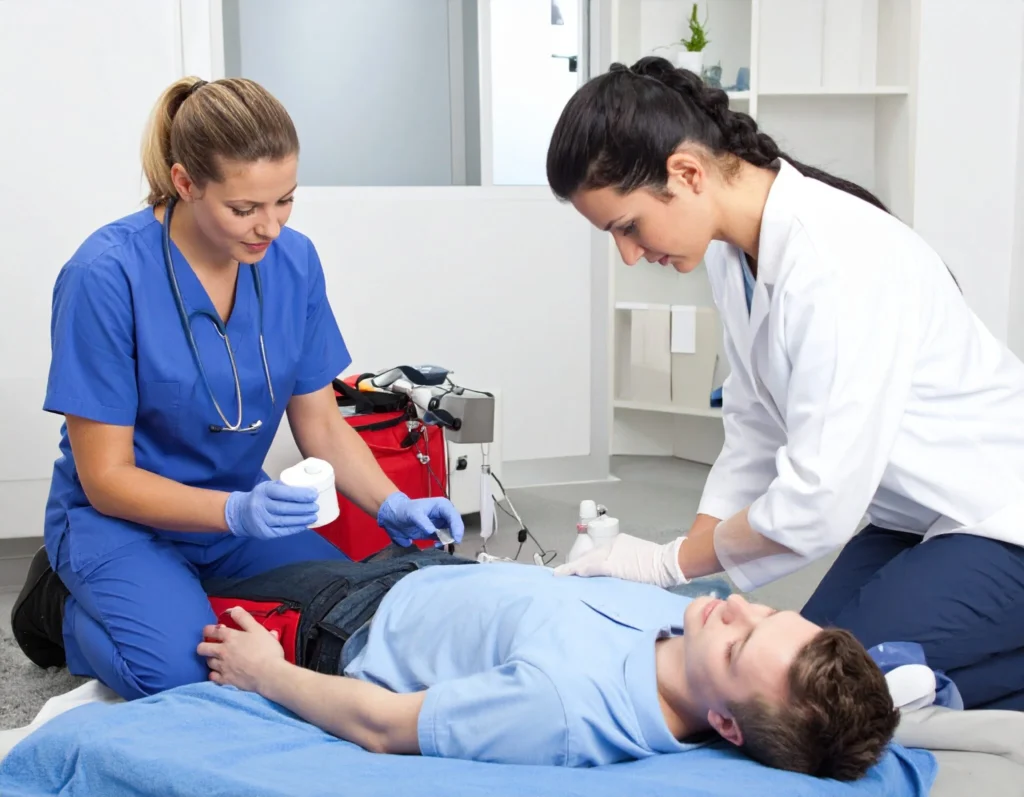
A first aid kit is only effective if workers know how to use it. This is why Australian WHS laws also place strong emphasis on first aid training.
Businesses should ensure an adequate number of trained first aiders are available during all operating hours, particularly in:
- High-risk industries
- Shift-based workplaces
- Remote worksites
- Childcare settings
- Construction sites
- Sporting organisations
A trained first aider is able to respond quickly in an emergency, perform CPR, use an AED correctly, and manage injuries such as bleeding, burns, and other trauma until emergency services arrive.
This immediate response can make a critical difference and, in some cases, help save lives. Importantly, workplace first aid training should always be nationally recognised and delivered by a Registered Training Organisation (RTO).
Recommended Workplace First Aid Training in Australia
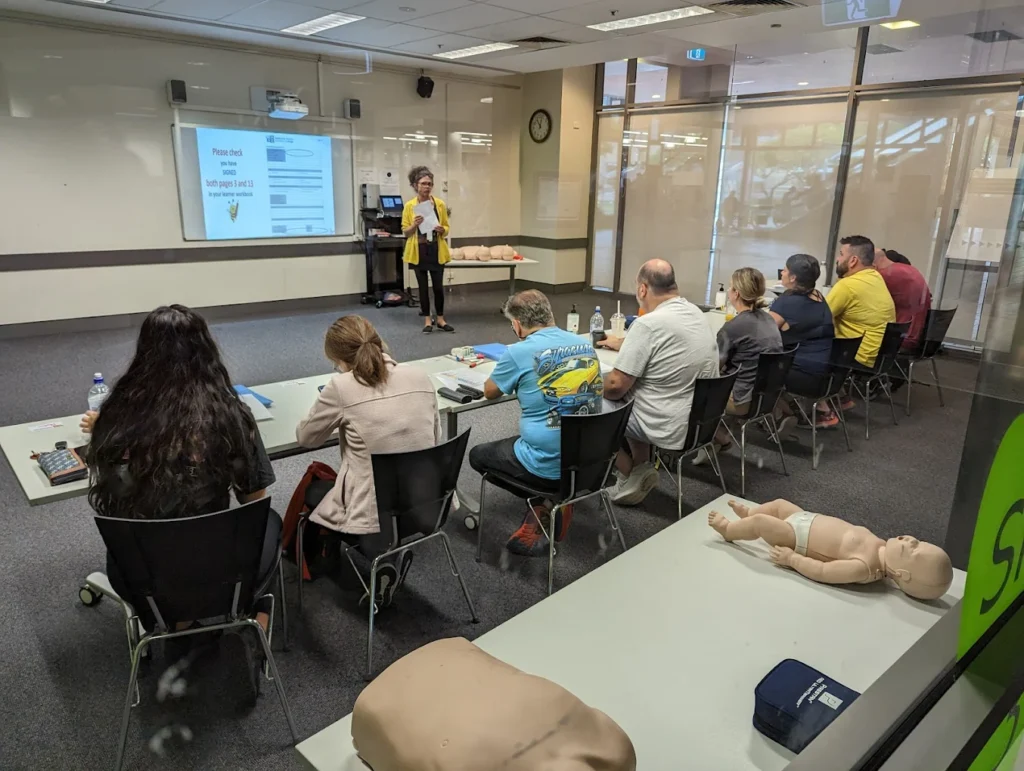
Recommended workplace first aid training in Australia is designed to ensure employees are equipped to respond effectively to injuries and medical emergencies in the workplace.
It also helps businesses meet their WHS obligations by ensuring staff have the practical skills and confidence to act quickly when incidents occur, rather than relying solely on emergency services.
HLTAID011 – Provide First Aid
The most common workplace first aid course is HLTAID011 – Provide First Aid, which is a nationally recognised qualification.
It covers essential skills such as CPR, the correct use of an AED, managing bleeding, burns, fractures, and other common injuries, as well as responding to medical emergencies including asthma and anaphylaxis.
The course also includes training in incident response procedures so participants are prepared to act effectively in real workplace situations.
HLTAID009 – Provide CPR
The HLTAID009 – Provide CPR course focuses specifically on CPR, basic life support, and the correct use of an AED during cardiac emergencies. Participants learn how to recognise when someone is unresponsive, assess breathing, perform chest compressions effectively, and provide immediate care until emergency services arrive.
Because CPR skills can decline over time and guidelines may be updated, many Australian workplaces require employees to complete annual CPR refresher training to maintain competency and compliance.
HLTAID012 – Provide First Aid in an Education and Care Setting
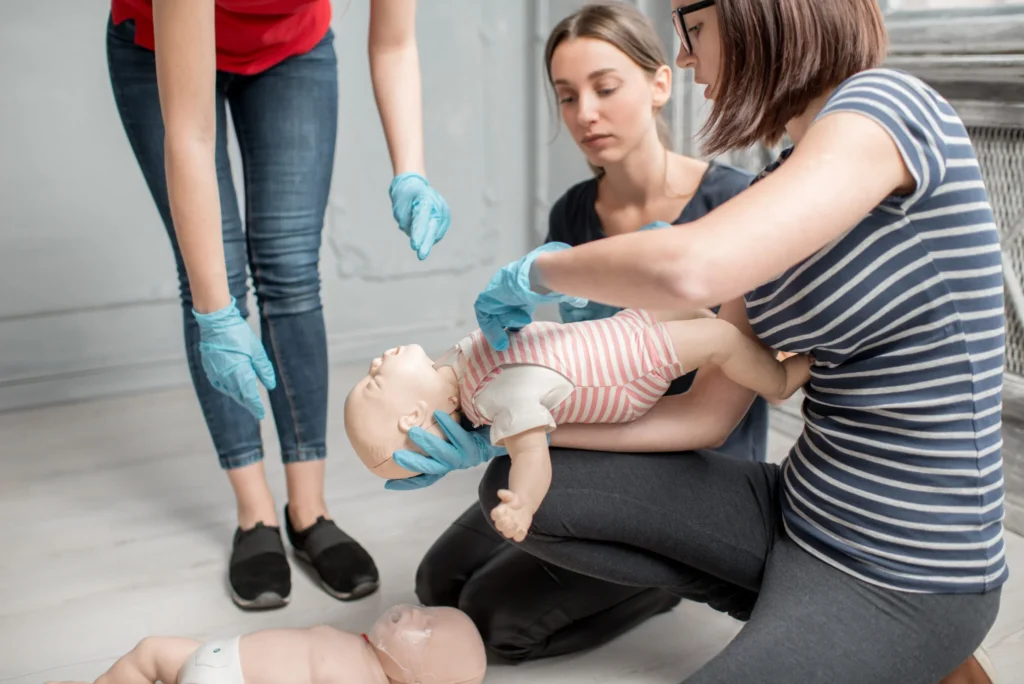
HLTAID012 – Provide First Aid in an Education and Care Setting is specifically designed for childcare workers, educators, schools, and early learning staff who are responsible for the care and safety of infants and children.
In addition to general first aid principles, it includes child-specific first aid response training that focuses on common emergencies in education and care settings, such as choking, asthma attacks, anaphylaxis, febrile convulsions, allergic reactions, and injuries involving young children and babies.
Frequently Asked Questions
Are workplace first aid kits mandatory in Australia?
Yes. Under Australian Work Health and Safety (WHS) laws, businesses are required to provide adequate first aid equipment, facilities, and trained personnel that are appropriate for the risks present in the workplace. In most cases, this includes at least one properly stocked and accessible first aid kit.
What should be included in a workplace first aid kit?
The contents of a workplace first aid kit depend on the type of workplace and its level of risk. Common items include adhesive dressings, sterile gauze, bandages, gloves, eye wash, burn treatment supplies, CPR protection equipment, scissors, and emergency first aid instructions. Higher-risk workplaces may require additional trauma or specialised medical supplies.
How many first aid kits does a business need?
There is no fixed national rule that specifies exactly how many first aid kits a workplace must have. Businesses are expected to assess factors such as workplace size, employee numbers, layout, shift work, and risk level to ensure first aid equipment is easily accessible during emergencies.
Do office workplaces still need first aid kits?
Yes. Even low-risk office environments can experience medical emergencies, slips, falls, cuts, choking incidents, or sudden illnesses. Office workplaces are still expected to maintain appropriate first aid supplies and emergency response procedures.
Do workplace first aid kits need to meet Australian Standards?
While there is no single mandatory Australian Standard that applies to every workplace first aid kit, businesses should ensure their kits contain appropriate, high-quality supplies suitable for workplace risks and relevant compliance expectations.
Are trained first aiders required in the workplace?
Yes. Australian WHS laws generally require businesses to ensure an adequate number of trained first aiders are available, particularly in high-risk workplaces, remote worksites, childcare settings, and environments where immediate medical assistance may not be readily available.
How often should workplace first aid training be renewed?
Current Australian guidance generally recommends CPR refresher training every 12 months and full first aid refresher training every three years. Some high-risk workplaces may require more frequent refresher training depending on operational risks.
What happens if a business does not have an adequate first aid kit?
Failure to provide adequate workplace first aid equipment can expose businesses to WHS breaches, fines, insurance complications, legal liability, and reputational damage. More importantly, poor first aid preparedness can delay emergency response times and place workers at greater risk during workplace incidents.
Get Government-Approved First Aid Training at a Location Near You!
Ready to Complete your First Aid Training For Parents?
If your training is approaching the recommended renewal timeframe, completing a refresher course is the best way to ensure your skills remain current and workplace compliant.
National First Aid Courses provides nationally recognised training in:
- HLTAID009 – Provide Cardiopulmonary Resuscitation (CPR)
- HLTAID010 – Provide Basic Emergency Life Support
- HLTAID011 – Provide First Aid
Our courses are designed to be practical, accessible, and aligned with the latest Australian safety guidelines, helping individuals and workplaces stay prepared for emergencies.
Whether you need certification for work or simply want to learn life-saving skills, completing a first aid course ensures you are ready to respond when it matters most.