First Aid & CPR Courses
Build practical skills with an experienced trainer. Choose First Aid, CPR or Childcare First Aid at a venue in NSW, Queensland or Victoria.
Nationally recognised training · RTO 41072 · Face-to-face First Aid and CPR
Face-to-face training
Practise with a qualified trainer beside you. Ask questions and get feedback as you learn.
No online homework
Complete your learning and assessment in the classroom, in one supported session.
Same-day certificate
Issued after successful assessment and completion of the required enrolment checks.
Nationally recognised
RTO 41072. Receive a Statement of Attainment for the units you successfully complete.
What our students say
All reviews below are for our dedicated First Aid venues across Australia.
Which First Aid course do you need?
Here are all the courses we currently offer. Start with the unit your workplace or study provider asks for. First Aid and Childcare First Aid already include CPR.

HLTAID011
First Aid + CPR
Course Info
Who it’s for
First aid for work, study and everyday life. Includes CPR, so you do not need to book a separate CPR course.
What’s included
- HLTAID011 – Provide First Aid
- HLTAID010 – Provide Basic Emergency Life Support
- HLTAID009 – Provide Cardiopulmonary Resuscitation
What you’ll learn
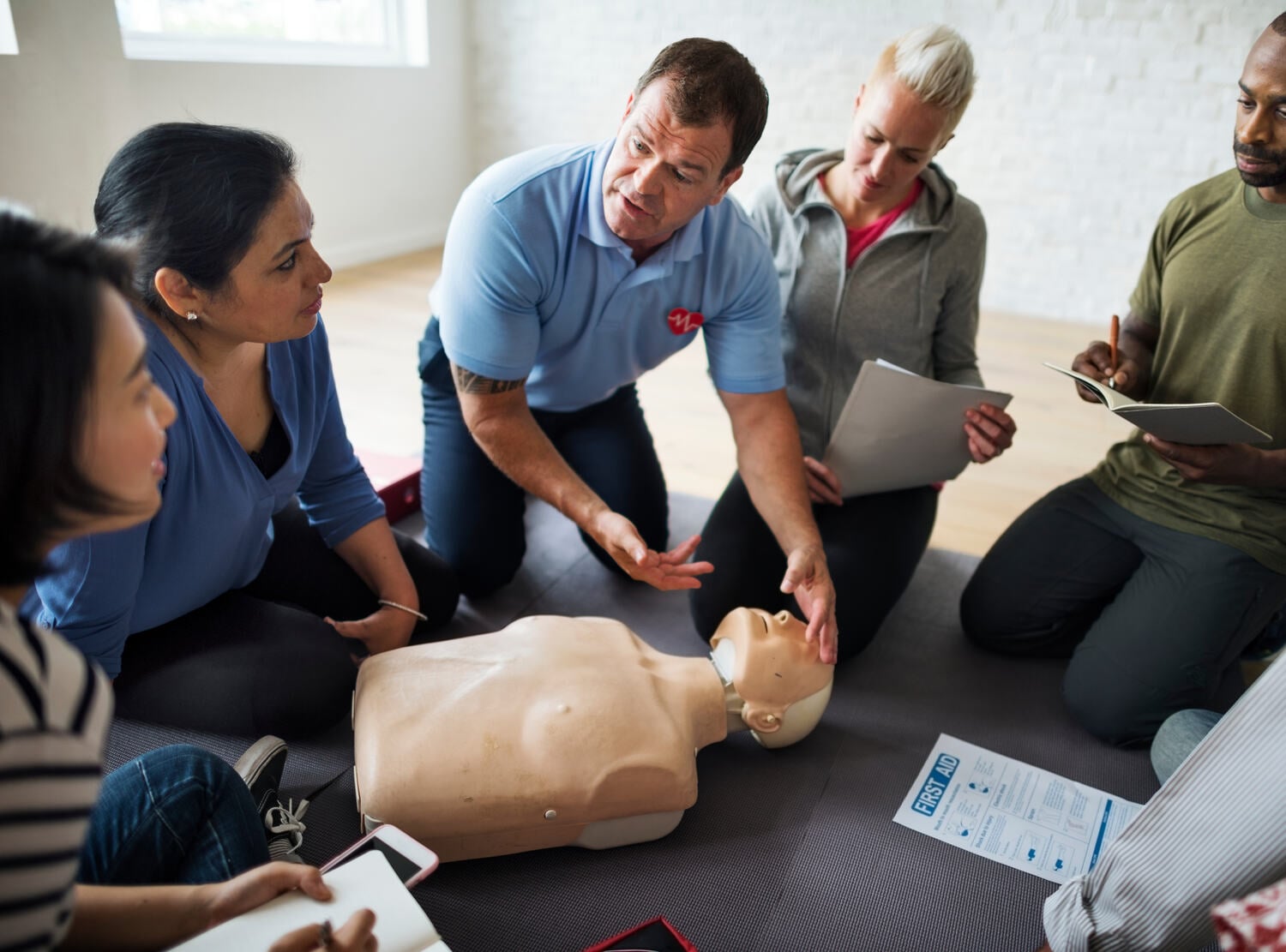
Practise CPR and using an AED, and learn how to respond to emergencies including asthma, anaphylaxis, bleeding, burns and fractures.
How it works
One face-to-face session, around six hours. No online modules or pre-course homework. Check your selected venue for session times.
Your Statement of Attainment is issued after successful assessment and completion of the required enrolment, ID and USI checks.
100% face to face
HLTAID009
CPR
Course Info
Who it’s for
People who need CPR training or a refresher for work, study or personal confidence. If you need First Aid as well, choose First Aid + CPR.
What’s included
HLTAID009 – Provide Cardiopulmonary Resuscitation.
What you’ll learn
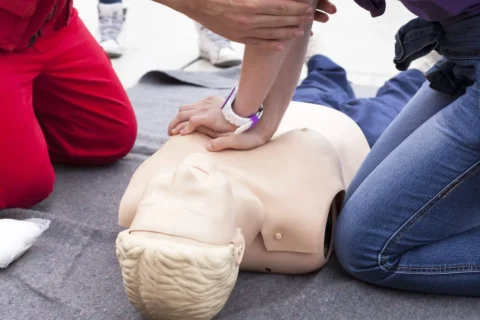
Recognise an emergency, practise CPR on adult and infant manikins and use an automated external defibrillator (AED).
How it works
Around three hours of face-to-face training. No online modules or pre-course homework. Check your selected venue for session times.
Your Statement of Attainment is issued after successful assessment and completion of the required enrolment, ID and USI checks.
100% face to face

HLTAID012
Childcare First Aid
Course Info
Who it’s for
Educators and people working in education and care settings, with a focus on infants and children.
What’s included
- HLTAID012 – Provide First Aid in an Education and Care Setting
- HLTAID011 – Provide First Aid
- HLTAID010 – Provide Basic Emergency Life Support
- HLTAID009 – Provide Cardiopulmonary Resuscitation
What you’ll learn
Practise CPR and using an AED, and learn to respond to emergencies such as asthma, anaphylaxis, choking, bleeding and burns.
How it works
Around six to seven hours of face-to-face training. No online modules or pre-course homework. First Aid and CPR are included.
Your Statement of Attainment is issued after successful assessment and completion of the required enrolment, ID and USI checks.
100% face to face
UETDRMP018 · HLTAID009
CPR / LV Rescue
Course Info
Who it’s for
Electrical workers and apprentices who require low voltage rescue and CPR training. Available at selected venues.
What’s included
- UETDRMP018 – Perform Rescue from a Live Low Voltage Panel
- HLTAID009 – Provide Cardiopulmonary Resuscitation
What you’ll learn
Practise low voltage rescue procedures and CPR skills for responding to electrical emergencies.
How it works
Around six hours of face-to-face training, with no online modules or pre-course homework. Check the course page for available venues and entry requirements.
Your Statement of Attainment is issued after successful assessment and completion of the required enrolment, ID and USI checks.
100% face to face
Find First Aid training near you
Choose a venue to see local prices, directions and upcoming dates. Please note that course availability varies by location.
Select your state to find a venue
Choose your state, then select a location to see course dates and prices.
New South Wales8 locations
Queensland2 locations
Victoria5 locations
Your First Aid training guide
Here’s everything you need to know before you book, with guidance on choosing a course, preparing for class and keeping your skills current.
01 · Choosing the right course
Start with the unit code you need. HLTAID011 Provide First Aid is a broad first aid course that includes CPR. HLTAID009 is the CPR unit on its own. HLTAID012 adds the education and care setting focus. UETDRMP018, paired with HLTAID009, covers low voltage rescue for electrical workers.
If you are booking for work, placement or professional registration, check the required unit with that organisation first. This avoids paying for a separate CPR course when it is already included.
02 · What you will practise
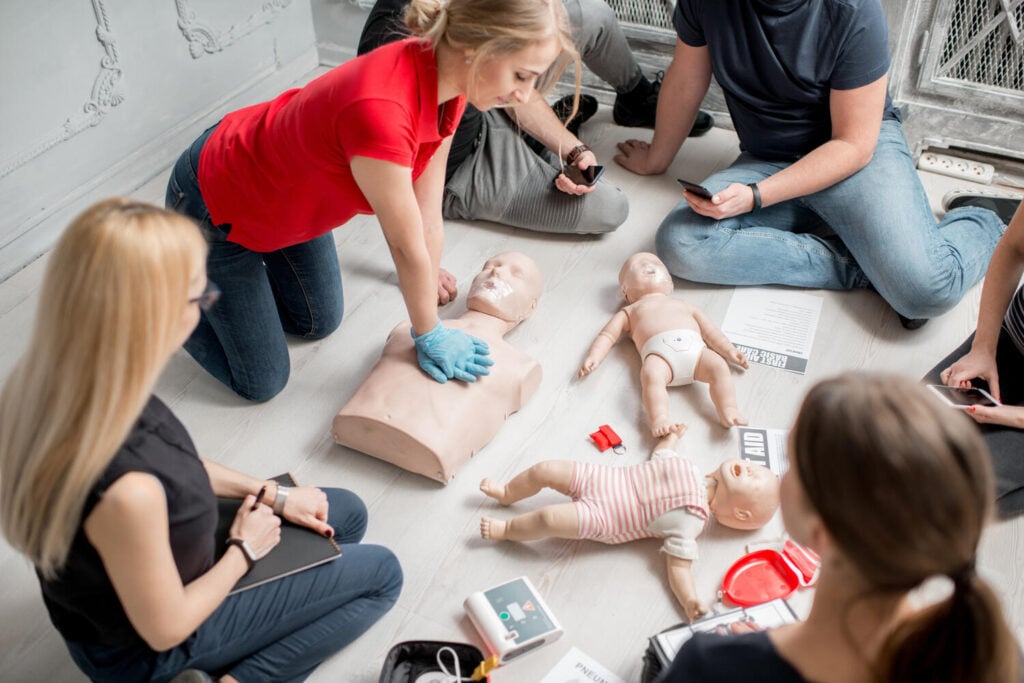
First Aid training covers recognising an emergency, getting help and providing an initial response. Classroom activities include CPR and AED practice, supporting a casualty, bandaging and responding to a range of injuries and illnesses.
You practise on training equipment with feedback from your trainer.
03 · How the training day works
National First Aid Courses delivers these courses face-to-face with no online modules or pre-course homework. Bring your identification and arrive ready to take part in practical activities and knowledge assessment.
Allow around six hours for First Aid, around three hours for CPR, six to seven hours for Childcare First Aid, and five hours for the LVR CPR course. Your selected session shows its specific start and finish times.
04 · What to bring and check
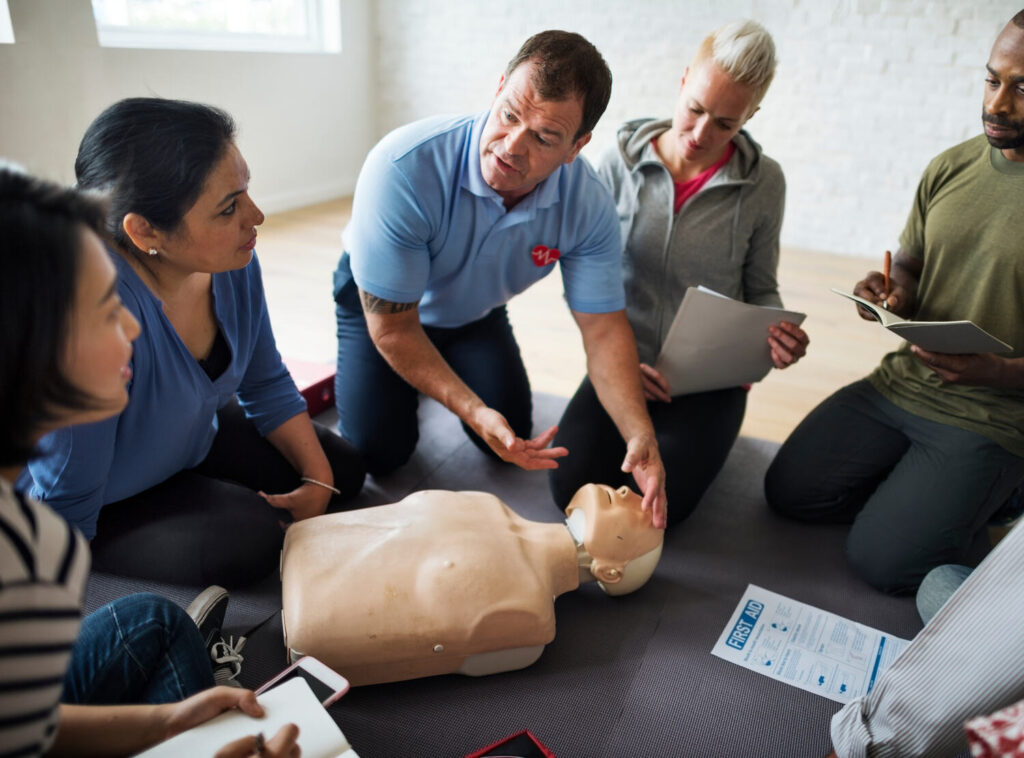
Bring valid photo ID and have your USI details ready. Wear comfortable clothing suitable for practical work on the floor. If you are booking for a young learner, contact us first to check attendance requirements.
Tell the team before booking if you need language, learning or accessibility support, or if an injury may affect practical assessment. They can explain the requirements and discuss support.
05 · Your certificate and recognition
After successful completion, we issue a nationally recognised Statement of Attainment for the units you complete. Same-day issue depends on successful assessment and the required enrolment, identity and USI checks being complete.
Keep a copy for your employer or placement provider. Check RTO 41072 on the National Training Register.
06 · Keeping your skills current
For workplace first aid, the usual refresher cycle is CPR annually and First Aid every three years. Check your employer or industry requirements, which may ask for more frequent training.
This is about maintaining current skills, rather than assuming every certificate has the same expiry rule. See Safe Work Australia’s first aid guidance for workplace refresher recommendations.
First Aid training: Key facts
First Aid (HLTAID011), CPR (HLTAID009), Childcare First Aid (HLTAID012), and Perform Rescue from a Live LV Panel (UETDRMP018).
First Aid, Childcare First Aid, and Live LV Panel include CPR.
Face-to-face learning and assessment with a trainer. No online modules or pre-course homework.
A nationally recognised Statement of Attainment after successful assessment and completion of identity, USI and enrolment checks.
Check the unit your employer or study provider requires. See your selected venue for prices, session times and preparation information.
Registered First Aid training you can trust
National First Aid Courses is RTO 41072, delivering nationally recognised First Aid and CPR training face-to-face across NSW, QLD and VIC.
Check our RTO registration
Our focus is practical, trainer-supported First Aid and CPR education. Check our registration, ask about your course requirements or speak to the team before booking.
Your learner guide
Explore the learner guide for First Aid, CPR and Childcare First Aid. It is a useful reference; there is no online homework to finish before your NFAC classroom session.
Need help choosing? Contact us or call us on 1300 623 613.
Frequently Asked Questions
Is CPR included in the First Aid course?
Yes. NFAC’s First Aid course includes HLTAID011, HLTAID010 and HLTAID009. You do not need a separate CPR booking when you book this course.
Can I complete my First Aid Course online?
CPR & First Aid courses cannot be completed entirely online. These courses require participants to demonstrate practical skills such as performing CPR on adult, child, and infant manikins, executing DRSABCD, using a defibrillator correctly, bandaging, managing fractures, etc.
Due to these practical requirements, it is highly unlikely that any First Aid course conducted purely online is a nationally accredited course.
Do I need previous First Aid experience?
No previous First Aid training is needed. You still need to meet the language and practical assessment requirements. Contact the team before booking if you need support.
How do I enrol in a First Aid course?
To enrol in a course, you can easily book online through the course calendars on National First Aid Courses website. These calendars provide a list of available courses along with their specific dates, times, locations, and pricing.
Important Note: Before enrolling, you will need a Unique Student Identifier (USI). A USI is a reference number that links to your training records and qualifications in Australia. It is required for anyone undertaking nationally recognised training, including our First Aid courses.
To create your USI, visit the official USI website at usi.gov.au. The process is quick and straightforward, and you will receive your USI immediately. Make sure the name and email address you use to create your USI matches the information you provide during the course booking to ensure your records are correctly linked.
Once you have your USI, you can proceed with your enrolment. If you have any questions about obtaining a USI or the enrolment process, feel free to contact us for assistance.
What if I need to change my booking?
You can change your class location, time, and date once at no additional cost, no questions asked. Just be sure to contact us before the scheduled start time of your class, you can call 1300 623 613.
Please note that if you do not attend and fail to notify us prior to the class start time, you will forfeit your booking.
How do I know which First Aid course to take?
Here are all our First Aid courses explained in detail.
First Aid Course (Including CPR)
Units included: HLTAID011, HLTAID010, HLTAID009
This is the one most people need. If your boss asks for “a first aid certificate”, this is it.
HLTAID011 already covers CPR, so you don’t need to book the CPR course on top. All three codes are included on your certificate. Common jobs that ask for it:
- Office staff
- Construction workers
- Security guards
- Lifesavers
- Personal trainers
- Teachers
- Cabin crew
- Hospitality workers
- Retail staff
- Aged care workers
- Disability carers
- Maintenance personnel
- Plus more
Child Care First Aid Course
Units included: HLTAID012, HLTAID011, HLTAID010, HLTAID009
This is the same as the course above, plus HLTAID012. Go with this one if you work with kids.
HLTAID012 covers first aid for infants and children, including asthma and anaphylaxis, in line with Australian Resuscitation Council guidelines. It’s the unit education and care services are required to hold under the National Quality Framework. Book it if you work as:
- Early childhood educators
- Childcare workers
- School teachers
- School support staff
- Before and after school care providers
- Vacation program staff
- Nannies and au pairs
- Foster carers
- Youth workers
- Coaches and trainers working with children
- Plus more
CPR Course
Unit included: HLTAID009
This is the refresher training. Book it if you already hold a current first aid certificate and just need your CPR topped up, or if your workplace only asks for CPR on its own.
Most people do this one every twelve months. That’s what the Australian Resuscitation Council recommends, and it’s what most employers write into their policies.
If you need low voltage rescue as well, take a look at our CPR/LV Rescue course instead.
If you’re unsure which course to choose, or you have any questions, please don’t hesitate to contact us.
Are your First Aid courses nationally accredited and recognised throughout Australia?
All our courses meet the highest standards set by the Australian government, ensuring you receive quality training that is recognised nationwide.
The simplest method to verify if you’re undertaking an official First Aid Course with any provider is to ensure they have an RTO (Registered Training Organisation) number. Our RTO number is 41072.
To confirm the legitimacy of an RTO number, you can visit training.gov.au and search for the RTO to make sure it’s accurate and the course provider is registered with the Australian government. If they aren’t listed on the training.gov.au website, they aren’t a legitimate RTO. To view our profile on training.gov.au, click here.
Do First Aid courses expire?
Legally, First Aid certificates do not expire. But everyone treats them as if they do. The Australian Resuscitation Council and Safe Work Australia both recommend a CPR refresher training every twelve months and your full First Aid every three years. That’s also what employers and site inductions ask for.
The cycle is simple. You complete a full course today, a CPR refresher at twelve months, and another CPR refresher at twenty four months, then back for the full course at three years.
Childcare is stricter. Since October 2023, there are actual legal deadlines. You must take another HLTAID012 course within three years and CPR within twelve months, or you don’t count as a qualified educator.
Lost track of your certificates? You can track your training history in your USI account at usi.gov.au.
How long do First Aid courses last?
Our full First Aid course (HLTAID011) runs for six hours, start to finish, in one session.
Childcare First Aid takes a bit longer, closer to seven, as it includes one extra session for childcare workers.
CPR on its own is quick, around three hours. The CPR LV Rescue course lasts 6 hours in total.
There’s no homework and nothing to finish at home. You walk in, do the training and the practical assessment, and walk out with your certificate the same day.
Language, Literacy and Numeracy (LLN) Requirements
To successfully complete any First Aid course, all students must have a basic level of English language, literacy and numeracy. This ensures you can understand safety information, follow instructions, and participate safely in both the training and assessment.
You must be able to:
- Read and understand simple safety signs, instructions, and short texts
- Write basic information (e.g., completing forms or short written responses)
- Communicate clearly in English with the trainer and other participants
- Follow verbal instructions during activities and assessments
- Use simple numeracy, such as reading times, basic measurements, or safety-related quantities
- If English is your second language
You must have a level of English that allows you to fully participate in the course. If you are unsure, please contact us, we can help you determine whether this course is suitable for you.
If you require LLN assistance, please let us know before booking. We may be able to provide support, make reasonable adjustments, or recommend alternative options depending on your needs.
Can I get RPL for this course?
We do not offer RPL (Recognition of Prior Learning) for any First Aid course in Australia.
First Aid units are assessed practically. You have to physically demonstrate CPR, bandaging and the rest in front of a trainer, so there’s no way to sign off on it from past training or documents. Everyone attends the full course.
Physical Requirements
All First Aid courses require you to complete practical activities, including demonstrating CPR on an adult manikin. To meet the assessment requirements, you must be able to:
- Perform 2 minutes of continuous CPR on an adult manikin placed on the floor
- Kneel on the floor for an extended period
- Use your arms and upper body strength to deliver effective compressions
- Perform other basic first aid tasks such as placing someone in the recovery position, applying bandages, and using an EpiPen or asthma device
If you have an injury or condition that may affect your ability to complete these tasks, please contact us before booking.
Ready to book your course?
Find a course near youReady to book?