How to Become a First Aid Trainer in Australia? 2026 Guide
Thinking about becoming a first aid trainer in Australia? It’s one of the smartest career moves you can make. With more workplaces, schools, and community groups requiring proper first aid training than ever before, qualified trainers are in strong demand.



In Short
- To become a first aid trainer in Australia, you’ll generally need current first aid qualifications and a TAE40122 Certificate IV in Training and Assessment.
- Most people become qualified first aid trainers within six to eighteen months, depending on their previous experience and study commitments.
- First aid trainers deliver accredited courses such as HLTAID011 Provide First Aid and HLTAID009 Provide CPR through Registered Training Organisations (RTOs).
- First aid trainer salaries in Australia range from $35 to $60 per hour, with experienced trainers often earning more.
- The role offers flexible career opportunities in workplace training, health and safety education, and compliance training.
This complete guide walks you through everything you need to know. We cover the exact qualifications you’ll need, which courses actually matter, how much it costs, and the realistic steps to start earning money as a professional first aid instructor. If you’re already in healthcare, looking for a career change, or simply want to turn your passion for helping people into a proper job, you’ll find clear, practical advice here.
What Does a First Aid Trainer Actually Do?
A first aid trainer delivers nationally accredited training programs that teach people how to respond in emergency situations. These include units such as:
- HLTAID011 Provide First Aid
- HLTAID009 Provide CPR
- HLTAID012 Provide First Aid in an Education and Care Setting
- UETDRMP018 – Perform Rescue from a Live LV Panel
These courses are part of Australia’s nationally recognised vocational education and training (VET) system. However, the role is much more than simply delivering content or reading from slides.
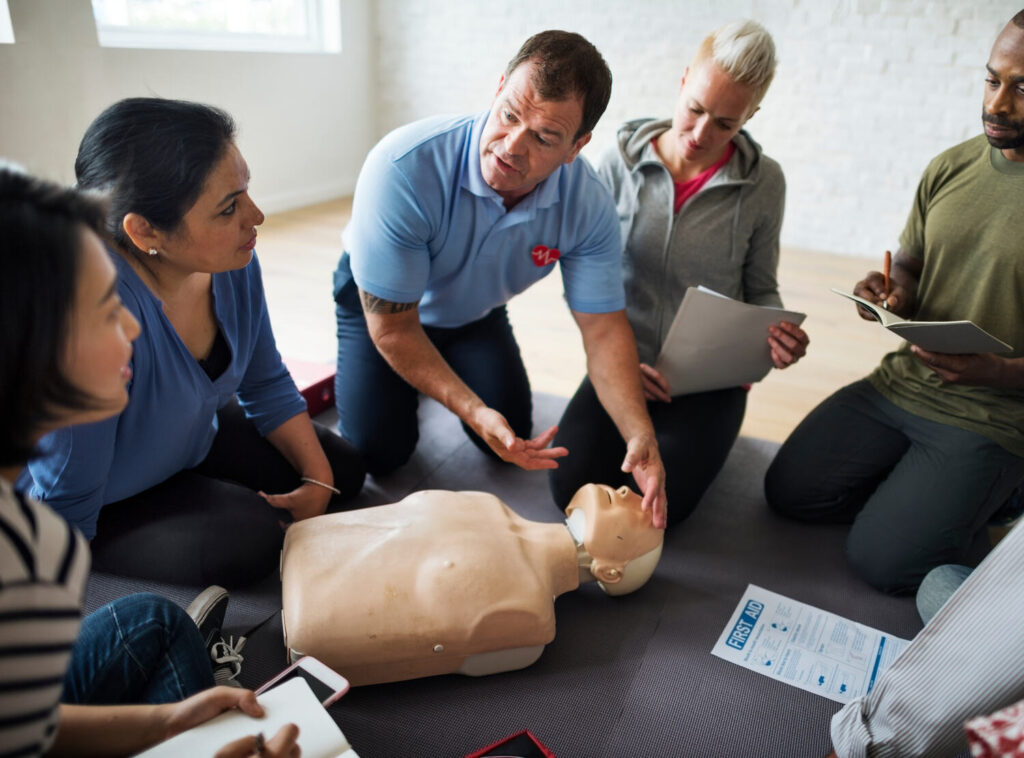
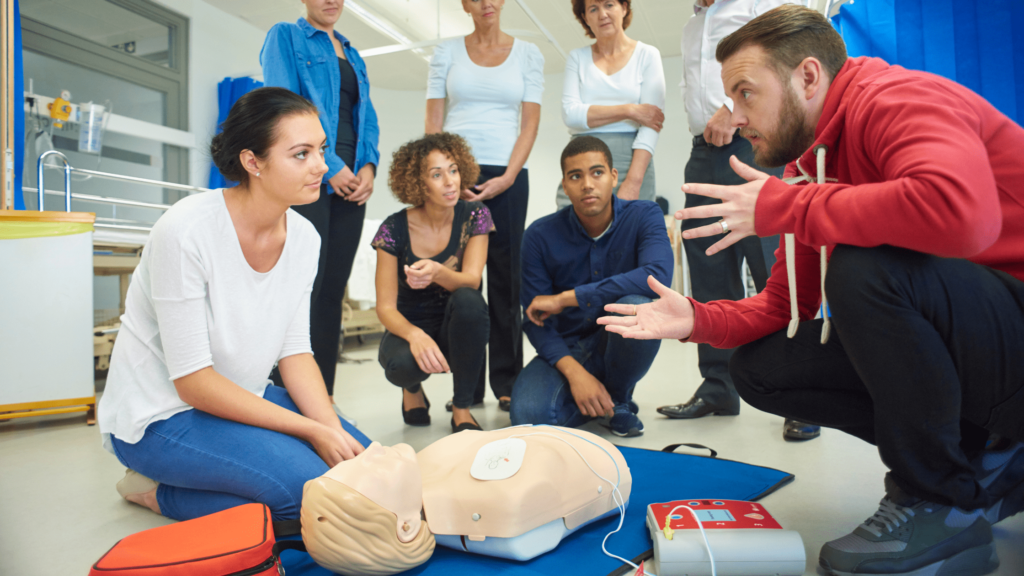
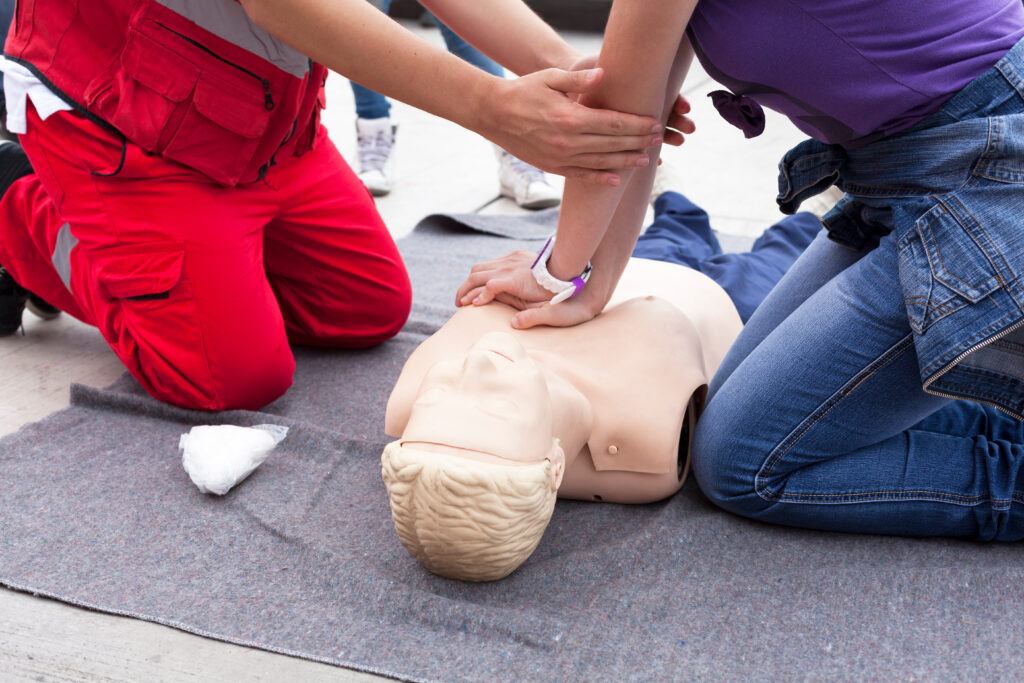
A skilled first aid trainer demonstrates life-saving techniques in a way that is clear, practical, and easy to follow. This includes CPR, the use of an Automated External Defibrillator (AED), bandaging, wound care, and emergency response procedures.
They also assess learners against national competency standards, ensuring each participant can confidently demonstrate the required skills. This assessment responsibility is a key part of the role and one of the reasons formal qualifications are required.
A good trainer also ensures all delivery remains compliant with Registered Training Organisation (RTO) requirements and stays up to date with evolving clinical guidelines so training reflects current best practice.
Training and Assessment Qualification
In Australia, you cannot legally deliver or assess accredited first aid training without the required vocational education qualification. The essential requirement is the: Certificate IV in Training and Assessment (TAE40122).
This qualification is the national benchmark for anyone who wants to deliver and assess training within the VET system.
It covers the foundations of adult education, including how to design and deliver structured learning experiences, assess competency fairly and accurately, and develop training materials that align with national standards.
Without the TAE40122, you can assist in training environments, but you cannot formally assess students or deliver accredited courses independently.
Registered Training Organisations also expect trainers to hold current industry skills and up-to-date first aid qualifications before they begin training.
First Aid Qualifications You’ll Need First
Before stepping into a trainer role, you’ll typically need strong, current first aid certifications in the units you plan to deliver.
At a minimum, this usually includes HLTAID011 Provide First Aid and HLTAID009 Provide CPR. If you intend to train people working in early childhood or education settings, HLTAID012 Provide First Aid in an Education and Care Setting is also commonly required.
These qualifications ensure you are not only teaching theory but actively demonstrating current, real-world skills.
Most first aid trainers come from practical, people-focused industries where emergency response is part of the job. This often includes healthcare, aged care, education, security, community services, or emergency response roles. These backgrounds help build the real-world confidence needed to teach effectively.
Do You Need Experience to Become a First Aid Trainer?
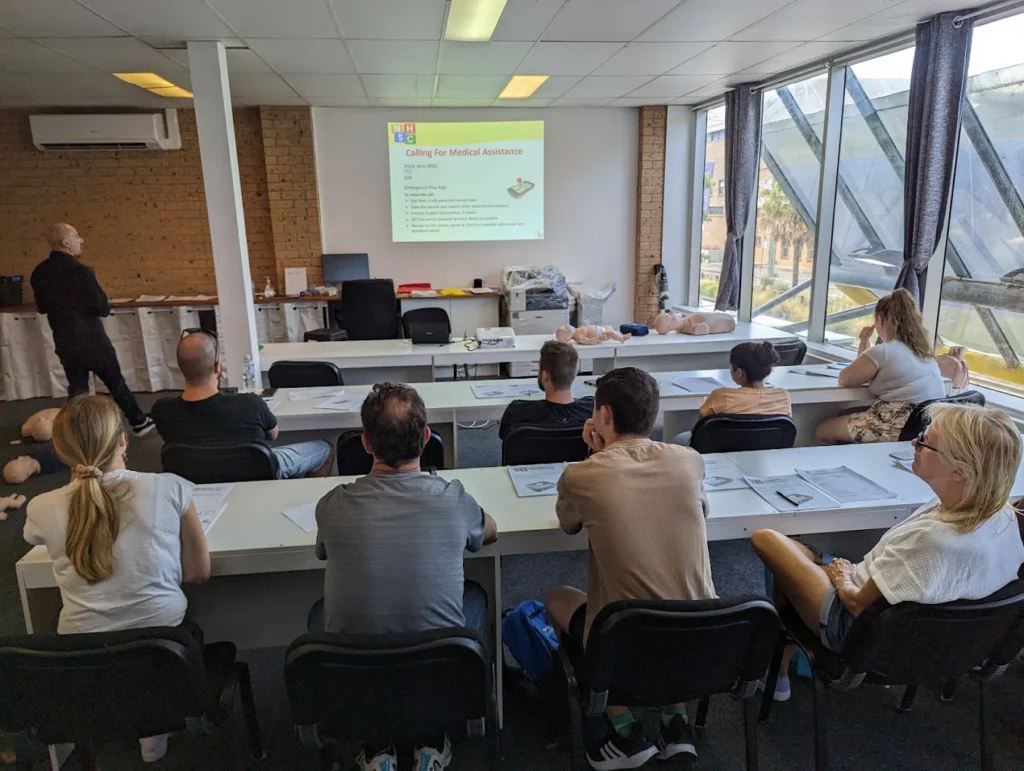
Most Registered Training Organisations prefer trainers who can draw on real-world examples and practical first aid knowledge. This helps bring training to life and gives learners greater confidence in the skills being taught.
Many successful first aid trainers come from backgrounds in healthcare, aged care, disability support, education, security, community services, workplace safety, emergency services, or other people-focused industries. However, experience doesn’t necessarily need to come from a clinical setting. Workplace first aid officers, volunteers, sports trainers, and others who have applied first aid skills in real situations can also make excellent trainers.
What’s most important is having a solid understanding of first aid principles, current qualifications, and the ability to communicate clearly with learners. The strongest trainers combine technical knowledge with practical examples, helping students understand not just what to do in an emergency, but why it matters.
How to Become a First Aid Trainer Step by Step
Becoming a first aid trainer is a structured pathway, but there’s flexibility depending on your background.
Build Real-World First Aid Experience
The strongest trainers are the ones who’ve actually used first aid skills in real situations, not just ticked boxes in a classroom. Workplace experience, volunteering, or roles where emergencies can pop up are all solid foundations to build from.
Complete Your Core First Aid Certifications
Once you’ve got practical experience under your belt, you’ll need to get certified. That means completing qualifications like HLTAID011 and CPR. These keep your knowledge current and in line with Australian Resuscitation Council guidelines.
Enrol in a Certificate IV in Training and Assessment
This is the big one. The TAE40122 Certificate IV in Training and Assessment is what officially qualifies you to train others. You can complete it through TAFE or a private RTO, and most courses run in a blended format, mixing online theory with in-person practical assessments. Part-time, most people wrap it up within three to six months.
Partner with a Registered Training Organisation (RTO)
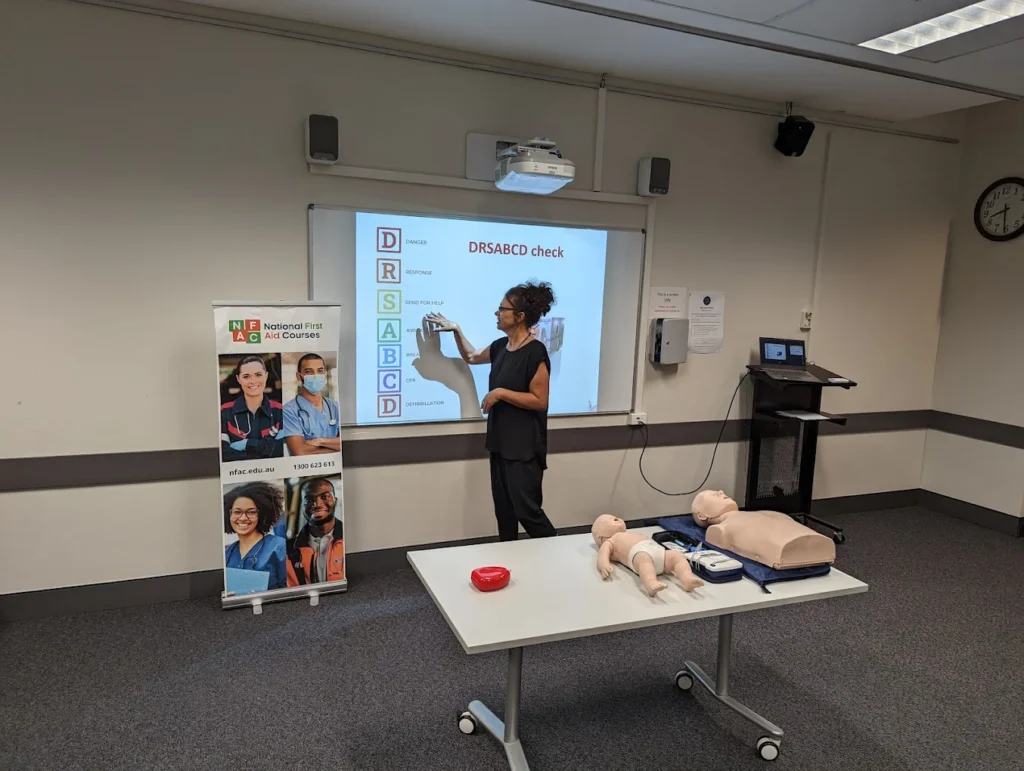
In Australia, accredited training has to be delivered under the scope of an RTO. That’s just how it works. Partnering with one like National First Aid Courses gives you structure, compliance support, course materials, assessment tools, and established training frameworks to work from day one.
Start as a Support Trainer
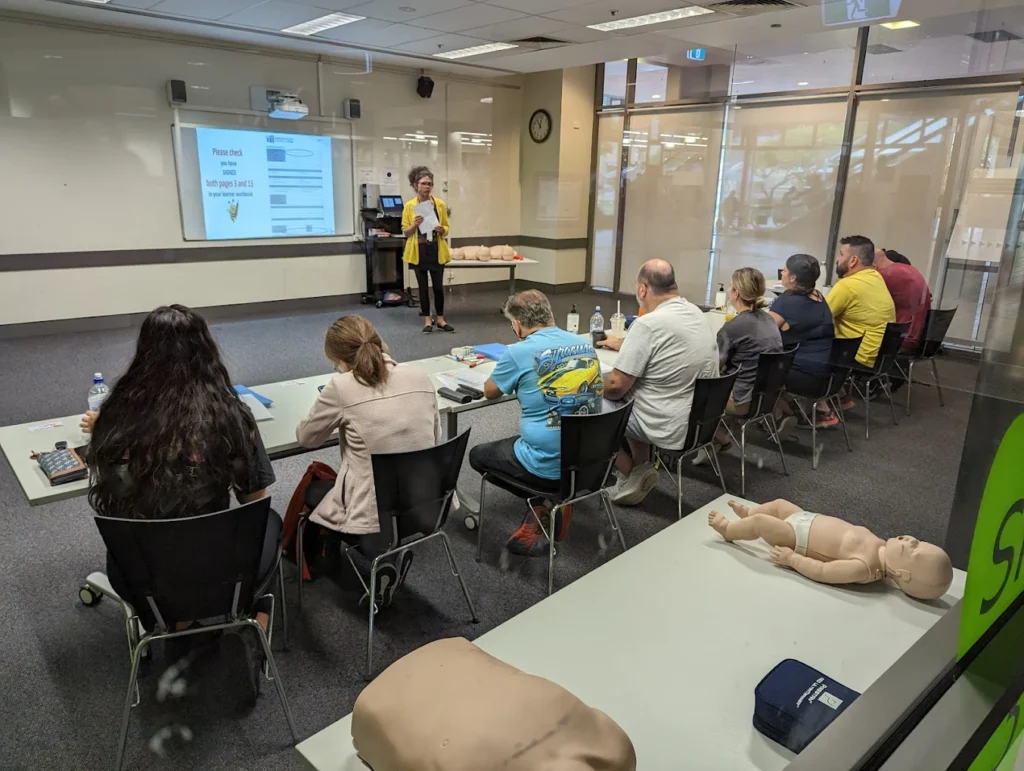
Don’t expect to run the show straight away. Most new trainers kick things off by assisting experienced trainers, observing sessions, or co-facilitating parts of a course. This stage matters. It’s where you pick up the real stuff: pacing, classroom management, and how to keep different types of learners engaged.
Deliver Courses on Your Own
As your confidence builds and your experience grows, you’ll start delivering full courses independently under the RTO’s scope. That’s when you’re officially operating as a first aid trainer.
Key Skills You’ll Need to Become a First Aid Trainer
While qualifications form the foundation, the effectiveness of a first aid trainer depends heavily on personal capability and communication style.
Strong communication is essential, particularly when explaining practical skills to mixed groups with varying levels of experience. The ability to break down complex actions into simple, repeatable steps is one of the most important parts of the job.
Confidence in public speaking is also important, as trainers regularly lead full-day group sessions. However, this confidence is not about being loud or dominant. It is about being clear, structured, and calm.
Empathy plays a major role as well. Many learners feel nervous about performing CPR or using a defibrillator for the first time, and a good trainer helps reduce that anxiety by creating a supportive environment.
Attention to detail is also critical due to strict compliance requirements. Trainers must ensure assessments are conducted correctly and that all evidence meets national standards.
Finally, adaptability is key. Every group is different, and trainers need to adjust their delivery style depending on learner needs, experience levels, and workplace context.
How Long Does It Take to Become a First Aid Trainer?
The TAE40122 Certificate IV usually takes between three and six months when studied part-time. After this, many new trainers spend another three to 12 months working in support roles or co-training before moving into fully independent delivery.
In total, most people become job-ready within six to eighteen months.
Note that the overall timeline varies depending on your starting point, but most people follow a similar progression. Individual first aid qualifications typically take one to two days each to complete.
First Aid Trainer Salary in Australia
Income for first aid trainers in Australia varies depending on employment type, experience, and whether they work casually, full-time, or as independent contractors.
Employed trainers typically earn between $35 and $60 per hour. Contract trainers are often paid per session, with rates ranging from $250 to $500 per training day, depending on the organisation and delivery type.
Corporate and onsite workplace training often attracts higher rates due to travel requirements, group size, and customised delivery.
As trainers gain experience, many move into freelance work or partner directly with RTOs, which can provide more flexibility and higher earning potential.
Career Path Opportunities
First aid training is often the beginning of a broader career in education, workplace safety, or compliance training.
Many trainers expand into workplace health and safety education, mental health first aid instruction, compliance training, or training co-ordination roles within RTOs. Others move into corporate training or consulting.
Some experienced trainers eventually establish their own Registered Training Organisation or build independent training businesses. It is a flexible career pathway that can evolve into leadership, education design, or entrepreneurship depending on personal goals.
Common Challenges (and What to Expect)
Like any training role, first aid instruction comes with its challenges. Managing large or mixed-ability groups can require strong facilitation skills, and maintaining energy across full-day sessions can be demanding. Trainers also need to stay across regular compliance updates and ensure all documentation and assessments meet strict national standards.
Balancing delivery work with administrative responsibilities is another common challenge.
Despite this, most trainers find the work highly rewarding due to its direct impact. Teaching someone how to perform CPR confidently can genuinely make a difference in life-or-death situations.
Is Becoming a First Aid Trainer Worth It?
If you enjoy helping people, working in practical environments, and teaching skills that have real-world impact, becoming a first aid trainer can be a highly meaningful career path.
It combines education, healthcare awareness, and community service in a way that few other roles do. The pathway is clear: build practical first aid confidence, complete your TAE40122, gain experience within an RTO, and gradually step into independent delivery.
Get Government-Approved First Aid Training at a Location Near You
Ready to turn your first aid skills into a career and actually make a difference in people’s lives?
National First Aid Courses is a trusted Registered Training Organisation (RTO 41072) that supports new trainers through every stage of the process, from your first certification right through to delivering courses independently under our scope.
With structured pathways, hands-on support, and established training frameworks already in place, you won’t be figuring it out on your own. Get in touch with National First Aid Courses today and take the first step toward becoming a qualified first aid trainer.