How Long Does a First Aid Certificate Last?
If you’ve recently completed a first aid course, you may be wondering how long does a first aid certificate last and when will you need to refresh your training. This is one of the most common questions asked by workers, employers, and people who want to keep their emergency response skills up to date.



In Short
- The most common first aid qualification in Australia, HLTAID011 – Provide First Aid, has to be refreshed every three years.
- CPR training (HLTAID009) should be refreshed every 12 months to maintain effective life-saving skills.
- First aid certificates in Australia do not technically expire, but recommended renewal intervals ensure training remains current.
- Many workplaces require employees to maintain current first aid certification to meet Work Health and Safety (WHS) obligations.
- Keeping first aid training up to date helps ensure people can respond confidently and effectively during medical emergencies.
The reality is, the answer to that question can be a little more complex than many people expect. Why? Because in Australia, there are several different types of first aid certificates, each covering different levels of emergency response training.
And these courses come with recommended renewal timeframes which are designed to ensure skills remain current and aligned with national safety guidelines.
Another important point to appreciate is that first aid certificates in Australia do not technically “expire” in a legal sense. Instead, they come with recommended refresh intervals, which are widely adopted by workplaces and industries in order to maintain safety standards.
Understanding how these certificates work, and how long they remain current, can help individuals and employers ensure they stay compliant with workplace safety expectations while maintaining confidence in emergency situations.
Understanding First Aid Certificates in Australia
When people ask how long first aid certificates last, they are usually referring to the most common workplace qualification, HLTAID011 – Provide First Aid.
However, this is only one of several nationally recognised first aid training units that may be covered as part of a first aid course.
The three main qualifications commonly delivered across Australia are:
- HLTAID009 – Provide Cardiopulmonary Resuscitation (CPR),
- HLTAID010 – Provide Basic Emergency Life Support, and
- HLTAID011 – Provide First Aid.
Each course builds on the previous level of training, expanding the skills participants learn and the range of emergencies they can respond to.
Understanding these different certificates helps explain why renewal recommendations vary and why some training needs to be refreshed more frequently than others.
HLTAID009 – Provide Cardiopulmonary Resuscitation (CPR)
Recommended refresh period – every 12 months
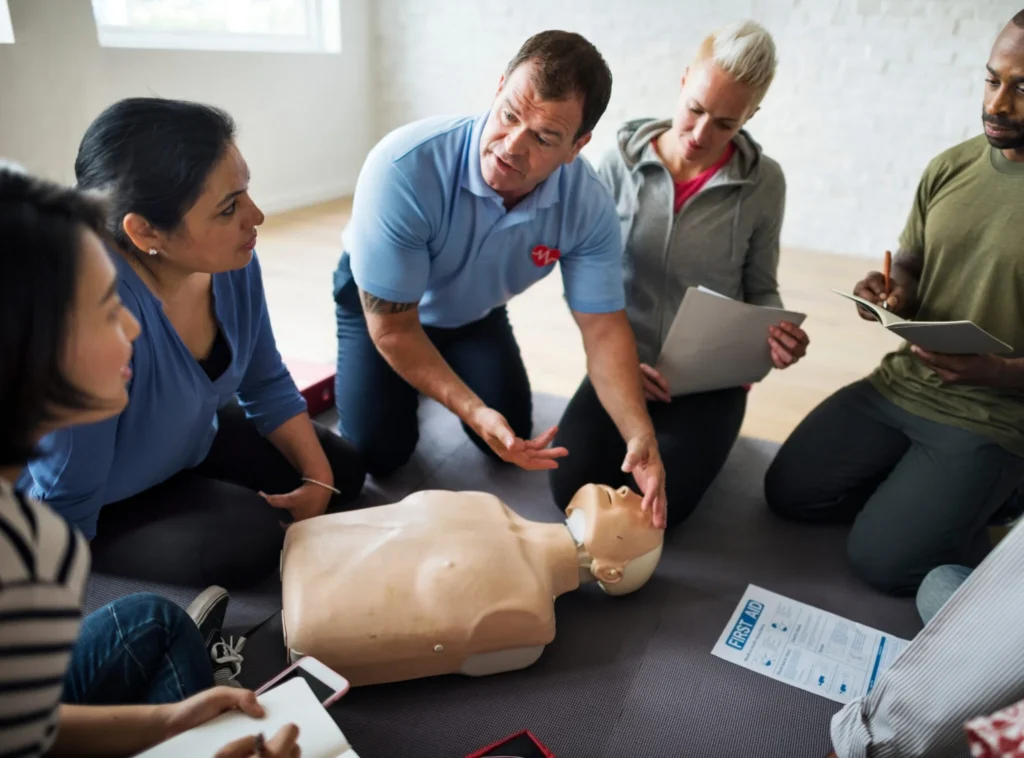
HLTAID009 is the most fundamental life-saving qualification and focuses entirely on cardiopulmonary resuscitation or CPR. Participants learn how to:
- recognise cardiac arrest
- perform chest compressions and rescue breathing
- and use an automated external defibrillator (AED).
The course also teaches how to respond to a person who is unconscious and not breathing normally, while co-ordinating with emergency services until professional help arrives.
Because CPR is a highly practical skill that relies on muscle memory and confidence, it is recommended that training be refreshed more frequently than other first aid qualifications.
The commonly accepted timeframe for renewing CPR training is every 12 months. Regular practice ensures people can maintain correct compression depth, rhythm, and technique in real emergencies.
HLTAID010 – Provide Basic Emergency Life Support
Recommended refresh period – Every three years
HLTAID010 sits between CPR-only training and the full first aid qualification. It covers core emergency response skills needed to assist a casualty before professional medical help arrives.
In addition to CPR and defibrillator use, the course includes managing unconscious casualties, responding to airway emergencies, treating shock, and providing basic wound care.
Participants also learn how to co-ordinate emergency responses and ensure the safety of both the casualty and bystanders.
This qualification is sometimes used in workplaces where staff need essential emergency response knowledge but do not require the full scope of first aid training.
The recommended refresh interval for this course is generally every three years, although the CPR component within it is usually refreshed annually.
HLTAID011 – Provide First Aid
HLTAID011 is the most widely recognised first aid qualification in Australia and the certificate most employers refer to when they require staff to hold a “first aid certificate”.
This course provides comprehensive training in responding to a wide range of medical emergencies and injuries.
Participants learn how to manage situations such as cardiac arrest, severe bleeding, burns, fractures, asthma attacks, anaphylaxis, choking incidents, and other medical emergencies including seizures, stroke, and heart attack.
The course also teaches incident management, communication with emergency services, and how to monitor and support a casualty until help arrives.
The recommended refresh timeframe for HLTAID011 is every three years, with the CPR component updated annually.

Do First Aid Certificates Actually Expire?
One of the most common misconceptions surrounding first aid training is that certificates have a strict legal expiry date.
In Australia, this is not technically the case. When you complete a nationally recognised first aid course, the Statement of Attainment issued by the training organisation does not include an official expiry date under national regulations.
Instead, first aid certificates are issued with recommended renewal intervals based on guidance from organisations such as the Australian Resuscitation Council and workplace health and safety authorities. These intervals reflect how quickly practical skills and emergency response knowledge can decline without practice.
For most training programs, the accepted industry standard is that CPR training should be refreshed every 12 months, while broader first aid training is refreshed every three years.
Although these timeframes are recommendations rather than legal expiry dates, they are widely recognised across workplaces and industries as the benchmark for keeping training current.
When Renewal Becomes Necessary for Work
While individuals are not legally required to renew their first aid training for personal use, the situation can be different in workplace environments.
Under Australian Work Health and Safety laws, employers have a duty to ensure adequate first aid arrangements are available in the workplace. This often includes ensuring that employees responsible for first aid hold current training.
In practice, this means many organisations require staff to refresh their training according to the recognised timeframes.
Once a certificate passes the recommended renewal interval, employers may consider it outdated for compliance purposes.
Industries where current first aid certification is particularly important include construction, education and childcare, healthcare, fitness and recreation, hospitality, and other environments where the risk of injury or medical emergencies is higher.
In these settings, maintaining up-to-date first aid training helps ensure staff are prepared to respond quickly and effectively if an incident occurs.
Why First Aid Skills Need Regular Refreshing
First aid training is designed to prepare people to act quickly in emergencies, but these skills can decline over time if they are not practised.
CPR is a clear example of this. Performing effective chest compressions requires the correct depth, rhythm, and technique, and studies have shown that performance can deteriorate within a year without practice.
Emergency response guidelines also evolve as new research becomes available. Over the years, recommendations for CPR technique, airway management, and casualty care have been updated several times.
Refresher training ensures first aiders remain familiar with the latest recommended procedures.
Beyond technical knowledge, regular training also helps maintain confidence. Many people find that repeating first aid training strengthens their ability to stay calm and respond effectively when faced with a real emergency.
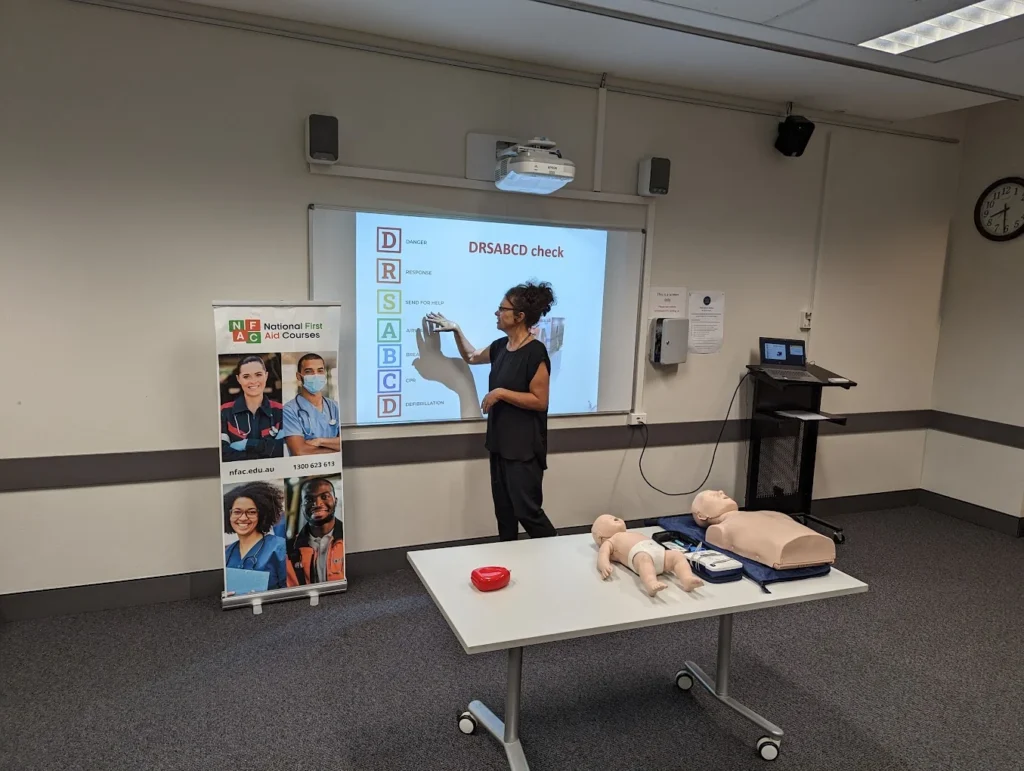
What Happens if Your Certificate is Out of Date?
If your training has passed the recommended renewal timeframe, you may need to complete a refresher course or undertake the full training again, depending on the requirements of your workplace or industry.
Refresher courses are often shorter than full first aid programs because they focus on updating knowledge and practising key skills such as CPR, casualty assessment, and emergency response procedures.
Many training providers also offer blended learning options, allowing participants to complete theory online before attending a practical assessment session.
How Long Does a First Aid Course Take?
One of the reasons first aid training is widely accessible is that it can usually be completed in a relatively short amount of time. A stand-alone CPR refresher course may take only a couple of hours, while a full First Aid course is typically completed within a single day of training.
Some providers allow participants to complete the theory component online beforehand, which reduces the time required for the practical training session.
Why First Aid Training Matters
First aid skills can make a critical difference in emergencies. Situations such as cardiac arrest, choking, severe bleeding, or allergic reactions often require immediate assistance before paramedics arrive.
When someone nearby knows how to respond effectively, it can improve survival rates, stabilise a casualty, and reduce the severity of injuries. For this reason, maintaining current first aid training is not only important for workplace safety but also valuable for everyday life.
People who hold first aid certification often find themselves better prepared to assist family members, colleagues, or members of the public during unexpected incidents.

Frequently Asked Questions
How long does a first aid certificate last in Australia?
The most common qualification, HLTAID011 – Provide First Aid, is typically refreshed every three years. However, the CPR component included in this training is recommended to be refreshed every 12 months.
Do first aid certificates expire?
First aid certificates in Australia do not technically have a legal expiry date. Instead, they come with recommended renewal intervals to ensure skills remain current and aligned with national safety guidelines.
How often should CPR training be renewed?
CPR training, formally known as HLTAID009 – Provide Cardiopulmonary Resuscitation, is generally recommended to be refreshed every 12 months. This helps ensure people maintain the correct technique and confidence during emergencies.
Is it mandatory to renew a first aid certificate for work?
While renewal is not legally required for personal use, many employers require staff to maintain current first aid training to comply with Work Health and Safety (WHS) requirements. In these cases, refresher training may be mandatory for employment.
What happens if my first aid training is out of date?
If your training is past the recommended renewal timeframe, you may need to complete a refresher course or full first aid training again, depending on workplace requirements and the training provider.
Ready to Complete or Refresh your First Aid Training?
If your training is approaching the recommended renewal timeframe, completing a refresher course is the best way to ensure your skills remain current and workplace compliant.
National First Aid Courses provides nationally recognised training in:
- HLTAID009 – Provide Cardiopulmonary Resuscitation (CPR)
- HLTAID010 – Provide Basic Emergency Life Support
- HLTAID011 – Provide First Aid
Our courses are designed to be practical, accessible, and aligned with the latest Australian safety guidelines, helping individuals and workplaces stay prepared for emergencies.
Whether you need certification for work or simply want to learn life-saving skills, completing a first aid course ensures you are ready to respond when it matters most.