


In Short
- High-Risk Workplaces Require Stronger First Aid
Manufacturing and industrial environments involve machinery, chemicals, and physical hazards, making first aid a critical safety control — not just a compliance formality. - First Aid Is a Legal Duty, Not Optional
Australian WHS laws require employers to provide adequate first aid equipment, facilities, and trained first aiders based on workplace risk, not headcount alone. - Risk-Based Planning Is Essential
There is no fixed standard for first aid in industrial workplaces. Employers must assess hazards, injury severity, shift patterns, and site layout to determine appropriate coverage. - Trained First Aiders Are Non-Negotiable
High-risk environments typically require workers trained in HLTAID011 Provide First Aid and HLTAID009 CPR, with refresher training kept current. - Equipment Alone Is Not Enough
First aid kits and facilities must be accessible, suitable for industrial risks, and supported by people who know how to respond to serious injuries. - Coverage Must Match Operations
First aid arrangements must be effective across all shifts, departments, and operating hours — especially in 24/7 or large-scale facilities. - Industry-Relevant Training Improves Outcomes
Training that reflects real industrial risks — such as crush injuries, chemical exposure, burns, and heat stress — leads to faster, more effective responses. - Compliance Requires Ongoing Review
First aid needs should be reviewed after incidents, equipment changes, workforce growth, or process updates to remain compliant and effective.
First Aid Training & Legal Requirements 2026

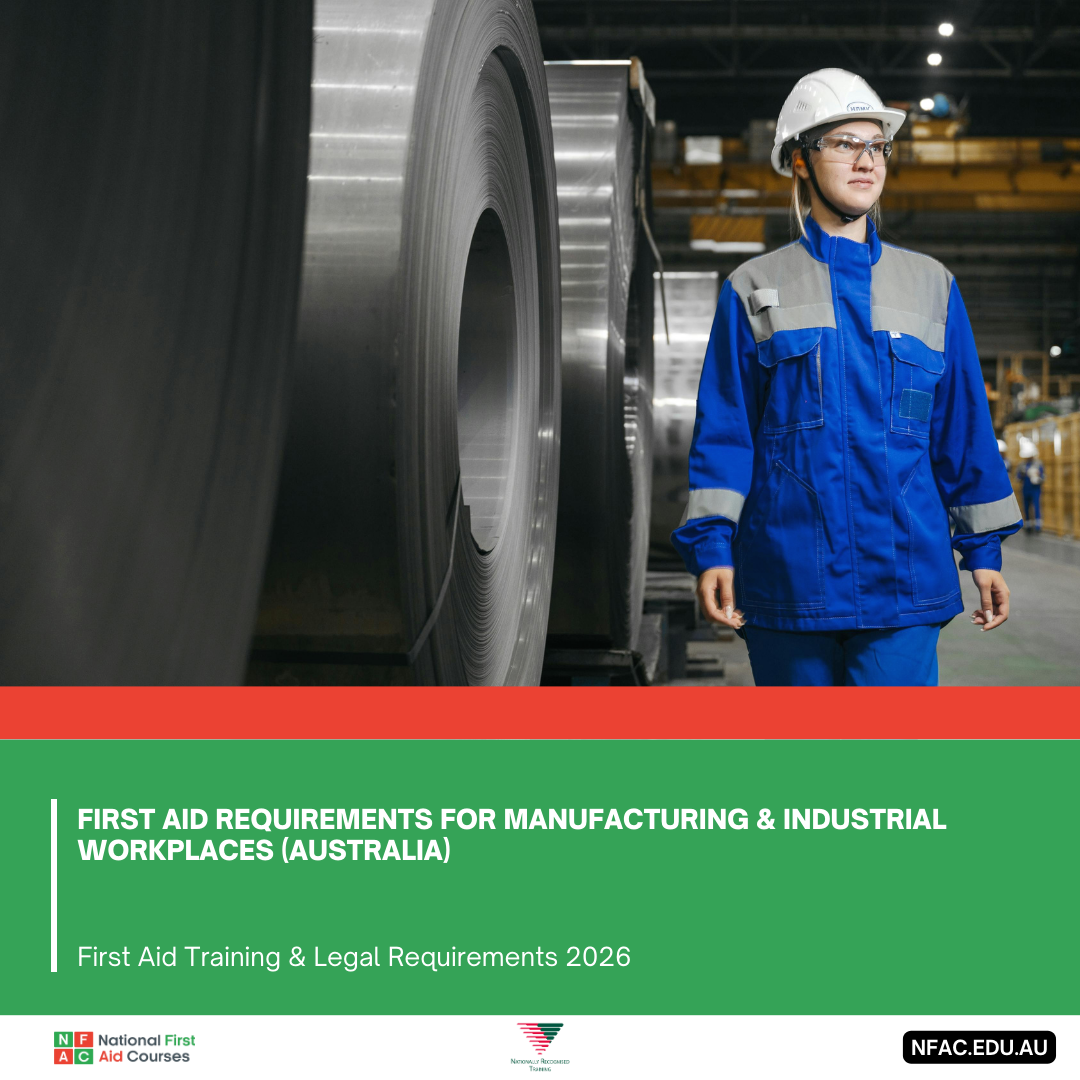
Manufacturing and industrial workplaces are among the most complex and high-risk work environments in Australia.
From fixed plant and automated machinery to hazardous substances, shift work, and physically demanding tasks, these settings present a range of potential injury and illness risks that require more than basic safety controls.
When incidents occur in industrial environments, the consequences are often very serious.
Crush injuries, chemical burns, severe bleeding, amputations, and exposure-related illnesses are all realities in manufacturing settings.
For this reason, first aid is not simply a procedural requirement — it is a critical part of operational safety and legal compliance.
This article explains first aid requirements for manufacturing and industrial workplaces in Australia, focusing on Work Health and Safety (WHS) laws, practical compliance expectations, and how those requirements apply in real industrial environments. It is written specifically for Australian employers, managers, and safety personnel, and reflects current regulatory frameworks and accepted guidance.
The Legal Framework for First Aid in Australian Workplaces
Primary WHS Duties
Under Australian WHS laws, employers — referred to as Persons Conducting a Business or Undertaking (PCBUs) — have a primary duty of care to ensure, so far as is reasonably practicable, the health and safety of workers and others who may be affected by the work.
This duty includes providing adequate first aid arrangements.
In jurisdictions that operate under the Model Work Health and Safety Act, this obligation is supported by the Model WHS Regulations, specifically Regulation 42 – First Aid.
Regulation 42 requires PCBUs to ensure:
- Adequate first aid equipment is provided
- Adequate first aid facilities are available
- An adequate number of trained first aiders are available to administer first aid
Importantly, the law does not prescribe exact numbers or a universal standard. Instead, it adopts a risk-based approach, requiring employers to assess their workplace hazards and implement first aid arrangements appropriate to the level of risk.
The First Aid in the Workplace Code of Practice

To help employers meet their legal obligations, Safe Work Australia has published the First Aid in the Workplace Code of Practice.
While not law itself, the Code provides practical guidance and is commonly used by regulators and inspectors when assessing compliance.
For manufacturing and industrial workplaces, the Code emphasises:
- Risk-based planning
- Accessibility of first aid resources
- Appropriate training for the types of injuries likely to occur
- Ongoing review of first aid arrangements
Most Australian states and territories have adopted the Model WHS framework and this Code of Practice.
Victoria and Western Australia operate under their own legislation, but the underlying principles and expectations remain broadly consistent.
Why Manufacturing and Industrial Workplaces Are Considered High Risk
Manufacturing and industrial sites differ significantly from low-risk office environments.
They often involve multiple hazards occurring simultaneously, with the potential for serious or life-threatening injury.
Common risk factors include:
- Fixed and mobile machinery
- Conveyor systems and production lines
- Manual handling and repetitive tasks
- Hazardous chemicals and substances
- Noise, heat, and vibration exposure
- Electrical systems and high-voltage equipment
- Shift work, fatigue, and reduced supervision after hours
These risks mean injuries are more likely to be severe, require immediate intervention, and escalate quickly if not managed effectively.
In some cases, emergency services may take time to reach the site, particularly in large industrial estates or regional areas.
As a result, manufacturing workplaces typically require more comprehensive first aid arrangements than lower-risk environments.
Minimum First Aid Requirements in Manufacturing Workplaces
First Aid Kits
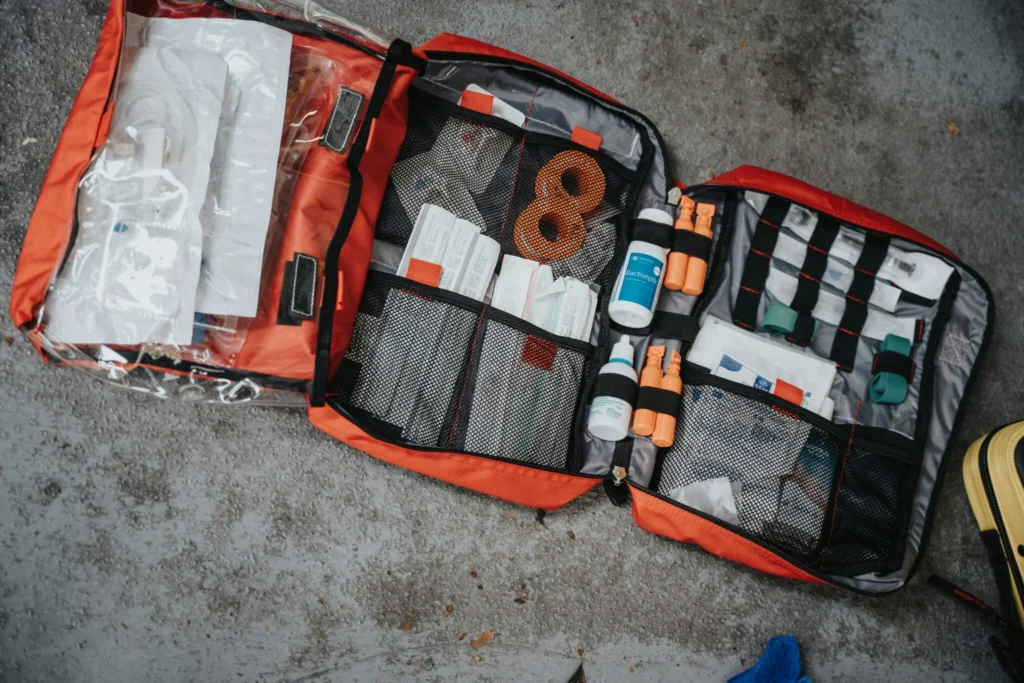
All manufacturing and industrial workplaces must provide appropriate first aid kits. The type, size, and contents of kits should be determined through a risk assessment, not selected arbitrarily.
In industrial settings, this often means:
- Larger or multiple kits
- Kits designed for high-risk environments
- Additional supplies for bleeding control, burns, and eye injuries
First Aid kits should be:
- Clearly labelled
- Easily accessible
- Located near high-risk areas
- Maintained and restocked regularly
Simply having a kit on site is not sufficient. Employers must ensure it is usable, complete, and appropriate for the hazards present.
First Aid Facilities
In some manufacturing environments, first aid kits alone are not enough. The WHS framework recognises that first aid facilities may be required where the size, layout, or risk level of the workplace justifies it.
Examples include:
- Dedicated first aid rooms
- Clearly designated treatment areas
- Emergency eyewash stations and safety showers (where hazardous chemicals are used)
Whether a facility is required depends on factors such as:
- Number of workers
- Severity of potential injuries
- Distance from external medical services
- Nature of substances and processes used
- Accessibility and Availability
First aid resources must be available:
- During all operating hours
- Across all shifts
- In all active areas of the site
In manufacturing environments that operate 24/7, this is a critical consideration. First aid arrangements that only function during business hours may be considered inadequate under WHS law.
How Many First Aiders Are Required in Industrial Workplaces?
Australian WHS legislation does not mandate a specific ratio of first aiders to workers. Instead, employers must ensure an adequate number are available, based on the risks involved.
When determining first aider coverage in manufacturing and industrial workplaces, employers should consider:
- Size of the workforce
- Layout and scale of the site
- Level of risk and likelihood of serious injury
- Shift patterns, including night shifts and weekends
- Availability of trained supervisors
- Distance from medical services
In higher-risk environments, it is common for workplaces to require:
- Multiple first aiders per shift
- Coverage across different departments or zones
- Backup first aiders to cover leave and absences
- Inspectors typically assess whether first aid would realistically be available when needed, not whether a particular number has been met.
Best First Aid Training for Manufacturing Environments
Core First Aid Training Requirements
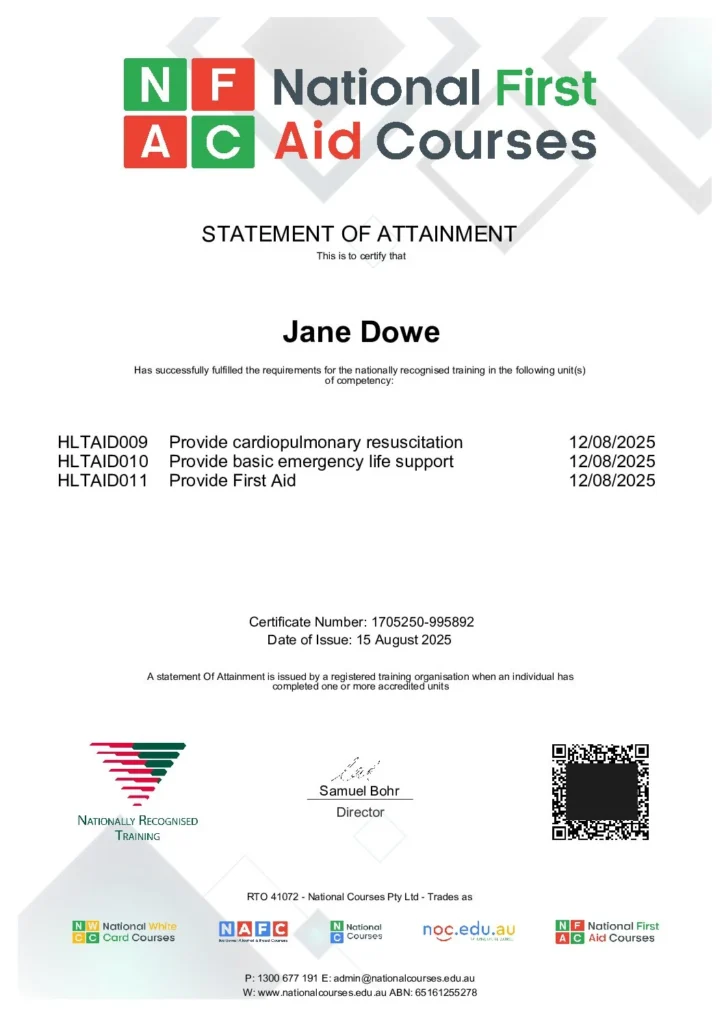
In most manufacturing and industrial workplaces, first aiders are expected to hold nationally recognised training, such as:
HLTAID009 – Provide Cardiopulmonary Resuscitation (CPR)
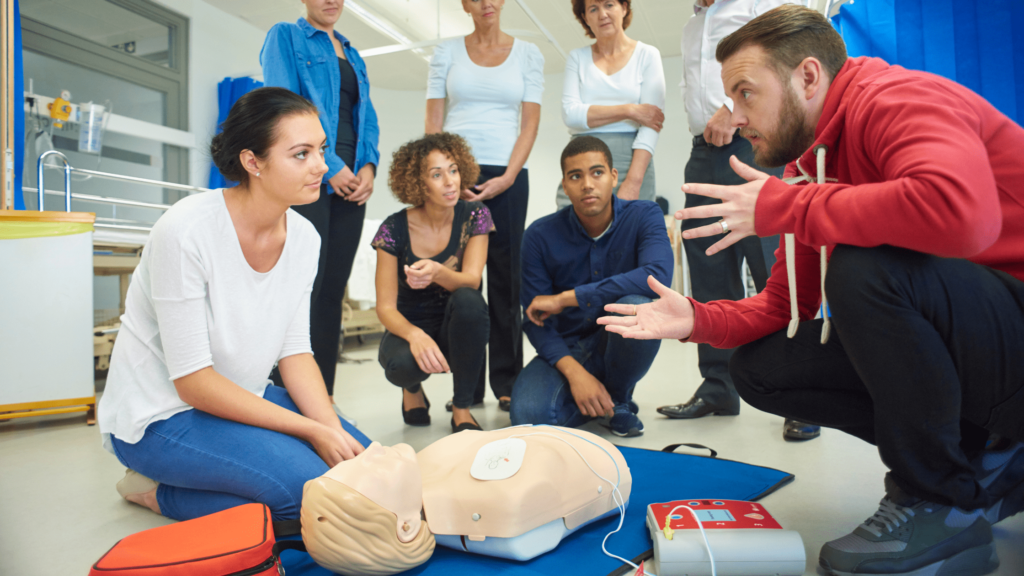
These courses cover essential skills including:
- Managing bleeding and shock
- Treating burns and fractures
- Responding to medical emergencies
CPR and use of AEDs
Given the severity of potential injuries in industrial environments, CPR-only training is rarely sufficient on its own.
Refresher Training
Current accepted practice in Australia is:
- CPR refreshed annually
- Full first aid refreshed every three years
In high-risk environments, more frequent refreshers may be appropriate, particularly where:
- Serious incidents have occurred
- Processes or equipment have changed
- Long periods pass without practical use of skills
Industry-Relevant Training
Manufacturing workplaces benefit significantly from context-specific first aid training. Generic examples may not prepare first aiders for the realities of industrial incidents.
Effective first aid training should reflect:
- Machinery-related injuries
- Chemical exposure scenarios
- Severe bleeding and crush injuries
- Heat-related illness
- Electrical incidents
This approach improves confidence and response times when incidents occur.
Common First Aid Risks in Manufacturing and Industrial Settings
Manufacturing environments expose workers to injury types that are less common in other industries.
Machinery and Crush Injuries
Fixed plant and automated systems can cause severe trauma. First aiders must be prepared to manage bleeding, shock, and immobilisation while ensuring their own safety.
Chemical Burns and Exposure
Industrial chemicals can cause immediate and long-term harm. Correct use of eyewash stations, safety showers, and decontamination procedures is critical.
Eye Injuries
Grinding, cutting, and chemical handling increase the risk of eye injuries, requiring prompt irrigation and treatment.
Burns
Thermal, chemical, and electrical burns are common in industrial environments and require specific first aid responses.
Heat Stress and Fatigue
High temperatures, PPE, and physical labour increase the risk of heat-related illness, particularly in summer or enclosed facilities.
These risks reinforce the need for trained first aiders, not just equipment.
Large, Remote, and Multi-Site Manufacturing Operations
Some manufacturing businesses operate across large industrial estates or regional locations where emergency response times may be extended.
In these situations, WHS expectations typically increase, not decrease.
Employers may need:
- More first aiders per shift
- Higher levels of training
- Clear emergency response and escalation procedures
- Coordinated first aid arrangements across multiple buildings or sites
Distance from hospitals or paramedics is a key consideration when determining what is “reasonably practicable”.
State and Territory Considerations
Most Australian states and territories operate under the Model WHS laws. However:
- Victoria operates under the Occupational Health and Safety Act and Regulations
- Western Australia operates under its own WHS legislation
While terminology and enforcement differ, the fundamental duty to provide adequate first aid remains consistent across Australia.
Employers should always consult local regulator guidance in addition to national Codes of Practice.
Common First Aid Compliance Mistakes in Manufacturing
Regulators frequently identify issues such as:
- Inadequate first aider coverage across shifts
- Outdated or poorly maintained first aid kits
- Training that does not reflect workplace risks
- Assuming proximity to hospitals removes the need for trained first aiders
- Failing to review first aid arrangements after changes to processes or equipment
Compliance failures often stem from assumptions, not intentional neglect.
Maintaining First Aid Compliance Over Time
First aid compliance is not a one-off task. Manufacturing workplaces change constantly, and first aid arrangements must evolve with them.
Best practice includes:
- Regular risk assessments
- Reviewing first aid needs after incidents
- Maintaining training records
- Ensuring new workers and supervisors understand procedures
- Using onsite group training to maintain consistency across teams
Proactive management reduces both legal risk and operational disruption.
Final Takeaway: First Aid is More than Just a Legal Requirement
In manufacturing and industrial workplaces, first aid is not about meeting a minimum requirement — it is about being prepared for serious, time-critical incidents.
Australian WHS laws require employers to provide first aid arrangements that reflect the real risks of the workplace. In high-risk environments, this means trained people, appropriate facilities, and systems that work at any hour, on any shift.
When first aid is treated as part of operational safety rather than paperwork, it protects workers, supports compliance, and strengthens the resilience of the business as a whole.
Get Government-Approved First Aid Training at a Location Near You!
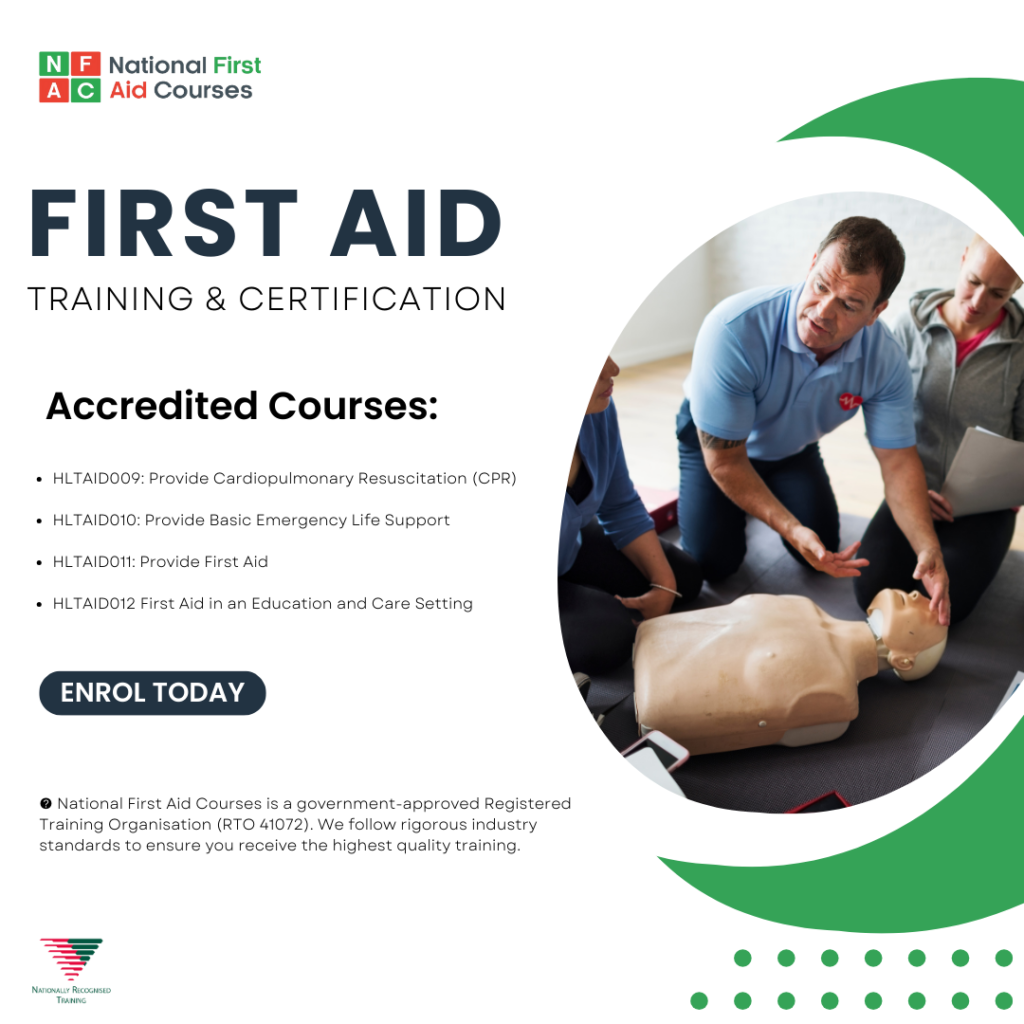
Not all first aid training is created equal.
At National First Aid Courses (RTO 41072), we do things differently.
We take First Aid training seriously.
Our courses are delivered face-to-face by industry-qualified trainers who teach the skills properly — using modern equipment and realistic scenarios.
No shortcuts. No rushed online content.
Real practice, real assessment, real confidence.
We train people who need to be trusted — employees, parents, carers, students and community members.
People who can’t afford to guess in an emergency.
When you choose National First Aid Courses, you get more than a certificate — you get training that truly prepares you for real emergencies:
-
Nationally Recognised Certification — valid across every state and territory in Australia.
-
Hands-On, Face-to-Face Learning — practice skills in realistic scenarios so you leave confident and capable.
-
Same-Day Certification — complete your course and receive your certificate immediately.
-
Practical, Real-World Scenarios — training designed for actual emergencies, not just ticking boxes.
-
Accessible Locations Across Australia — major cities and regional centres, so you can train wherever it suits you.
We make it simple: straightforward booking, affordable pricing, and trainers who genuinely care about your success.
Take the first step. Book your First Aid course today and be ready anywhere, anytime.