Why Face-to-Face First Aid Training is Better Than Online
When it comes to learning first aid, many Australians still prefer face-to-face training for one simple reason. It lets them physically practise the skills they may one day need in a real emergency.


In Short
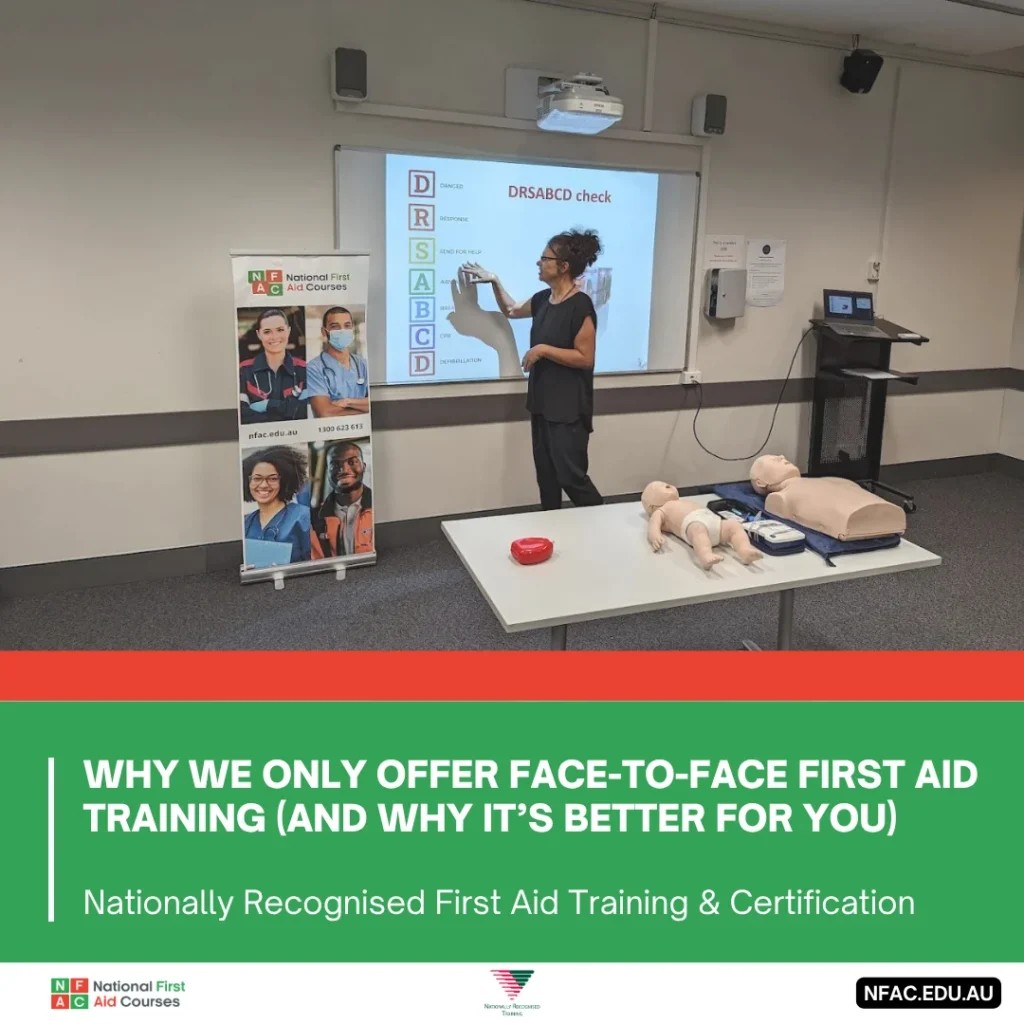
- Face-to-face first aid training provides stronger practical skills than online learning, because students physically practise CPR, AED use, and emergency response techniques in real time.
- Hands-on training builds confidence under pressure. This helps learners respond quickly and correctly in real emergencies rather than relying on theory alone.
- In-person courses improve knowledge retention, with demonstrations, repetition, and immediate feedback leading to better long-term recall of lifesaving skills.
- Blended and online courses often take longer than expected, as students still need to complete online theory plus attend an in-person assessment.
- Face-to-face first aid training offers a more streamlined and effective learning experience, typically completed in one session with same-day certification upon successful completion.
Online options have become more common, but in-person training offers something a screen can’t: hands-on practice, real-time trainer feedback, and realistic scenarios that build genuine confidence under pressure.
At National First Aid Courses, we believe first aid is something you need to do, not just read about. CPR, AED use, recovery position, choking, severe bleeding. These are physical skills that improve through guided practice and repetition. Here’s why face-to-face first-aid training remains the preferred choice for workplaces, professionals, and individuals across Australia.
Why Face-to-Face First Aid Training is More Effective Than Online Learning
One of the biggest misconceptions about online first aid training is that it is fully completed online. In most cases, that simply is not true.
Many providers offer what is called ‘blended learning’. This means students complete theory modules online before attending an in-person practical assessment.
What often gets overlooked is how long those online modules actually take.
For many students, the online component alone can take anywhere from four to eight hours to complete. That includes watching videos, reading slides, completing quizzes, and working through assessment questions.
After all of that, students still need to travel to a training venue and complete the practical component in-person anyway.
So rather than saving time, blended learning often spreads the workload across multiple sessions and multiple days.
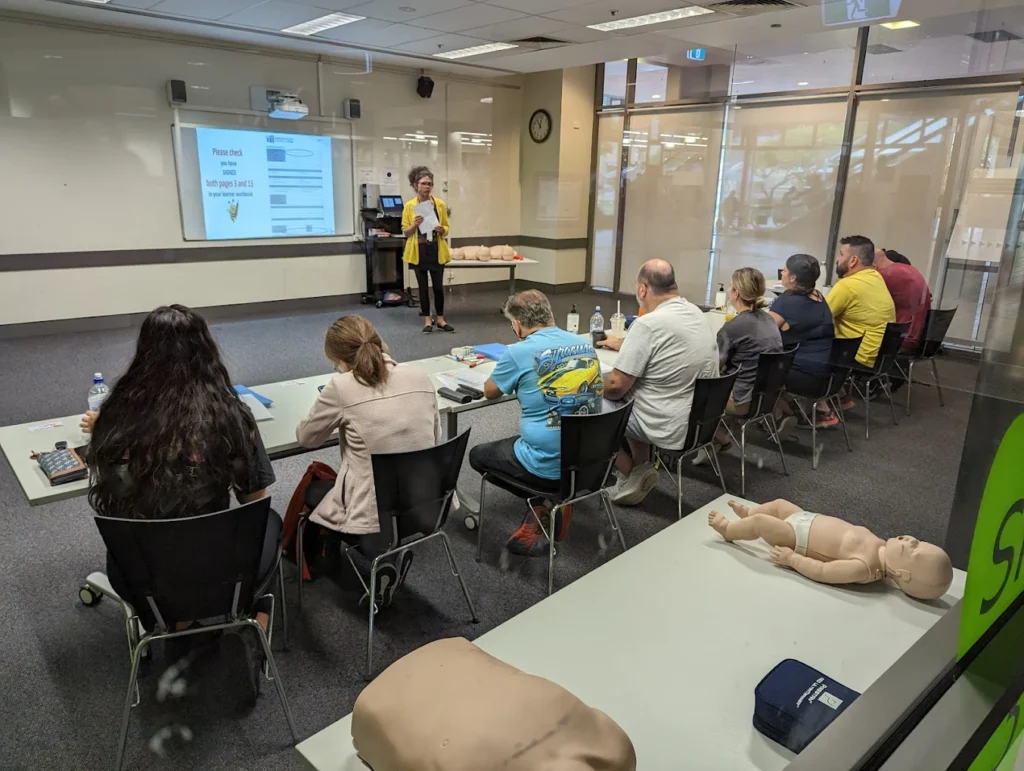
With face-to-face first aid training, everything is completed in one streamlined session. Students arrive, learn directly from an experienced trainer, complete their practical assessments, and leave with a nationally recognised certification.
For many people, that is not only more efficient, but far less stressful.
The Reality of Online vs Face-to-Face First Aid Training
There is a major difference between understanding something on a screen and physically being able to do it in a real emergency.
You cannot truly learn CPR by clicking through slides or watching videos alone.
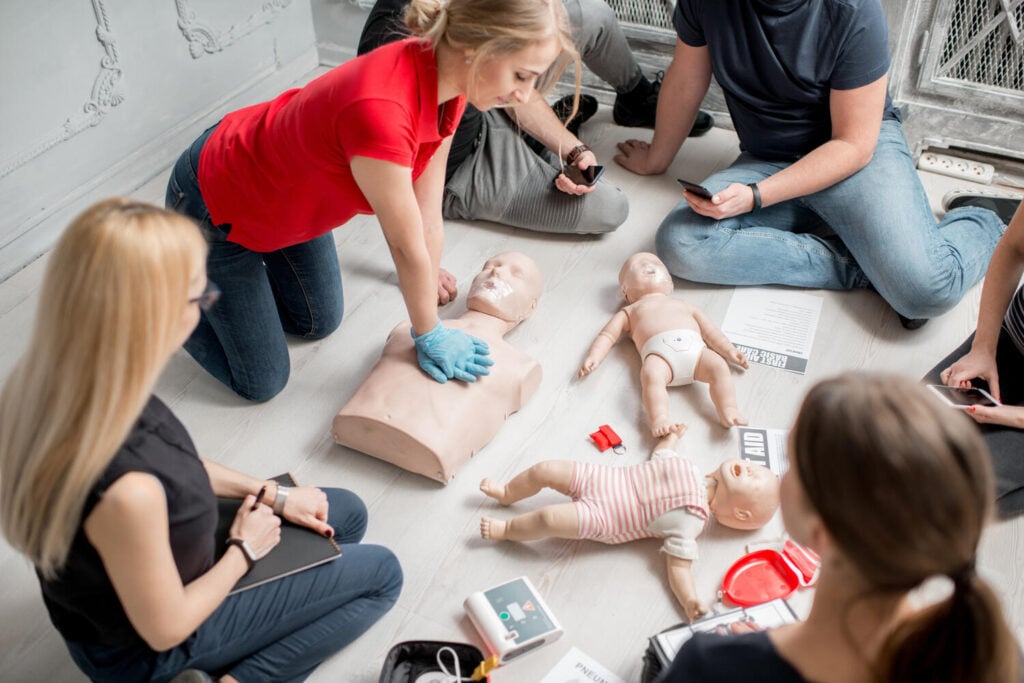
You need to physically perform compressions on a manikin. You need to understand the rhythm, depth, and technique. You need to practise using an AED, checking for breathing, placing someone into the recovery position, and responding calmly under pressure.
Hands-on first aid training allows students to develop muscle memory through repetition and guided practice. That practical experience matters enormously during real emergencies.
When someone is unconscious or not breathing, there is no time to second-guess yourself or search for answers online. Your response needs to be immediate and confident.
Hands-on learning helps build that confidence far more effectively than passive screen-based learning ever could.
Knowledge Retention in Face-to-Face First Aid Training
Many people assume online learning is automatically more effective because it is digital and self-paced.
However, research consistently shows that active participation improves knowledge retention far more effectively than passive learning.
Sitting alone at a computer for hours completing modules and quizzes can quickly become mentally draining. Information overload sets in, concentration drops, and students often rush through assessments simply to finish them.
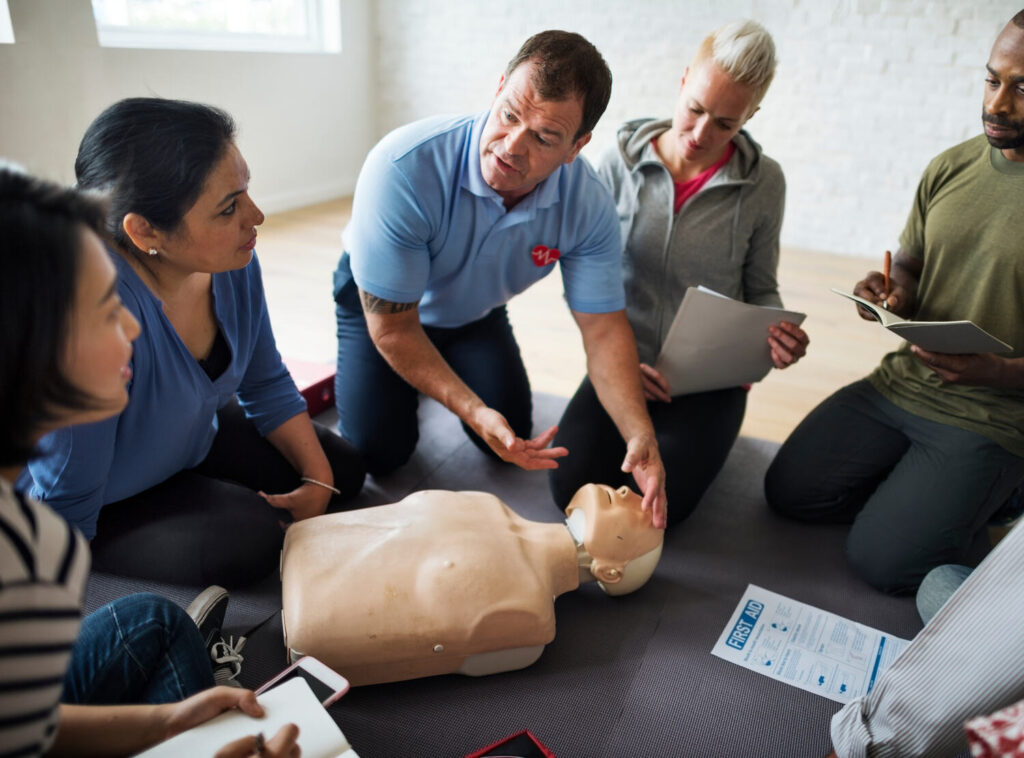
By contrast, in-person first aid training keeps students actively engaged. There are demonstrations, discussions, hands-on practice sessions, trainer feedback, and realistic scenarios that help reinforce the information being taught.
When students physically perform first aid techniques themselves, they are far more likely to remember those skills later when they matter most.
That retention can make a real difference during emergencies.
Real-Life Scenarios Improve Emergency Confidence
Emergencies are stressful. Even people who know the theory can freeze in the moment if they have never practised their skills in a realistic setting.
This learning format gives students the opportunity to work through real-life scenarios in a safe and supportive environment. This may include responding to:
- An unconscious casualty
- A cardiac arrest situation
- Severe bleeding
- Burns
- Asthma attacks
- Anaphylaxis
- Choking incidents
These practical exercises help students think critically, communicate clearly, and apply their knowledge under pressure. That kind of experience simply cannot be replicated properly through online quizzes or prerecorded videos. Confidence comes through doing.
The Problem With Online Modules in First Aid Training
Trying to learn first aid by clicking through slides on a computer screen at home doesn’t work for most people.
We’ve heard it all from students who’ve done online or blended courses elsewhere:
-
“The questions didn’t make sense.”
-
“I didn’t know what the right answer was supposed to be.”
-
“I finished it, but I still wasn’t confident.”
And we get it, because most online modules aren’t built to actually teach you effective first aid techniques.
Here’s what usually happens if you take a blended or online first aid course:
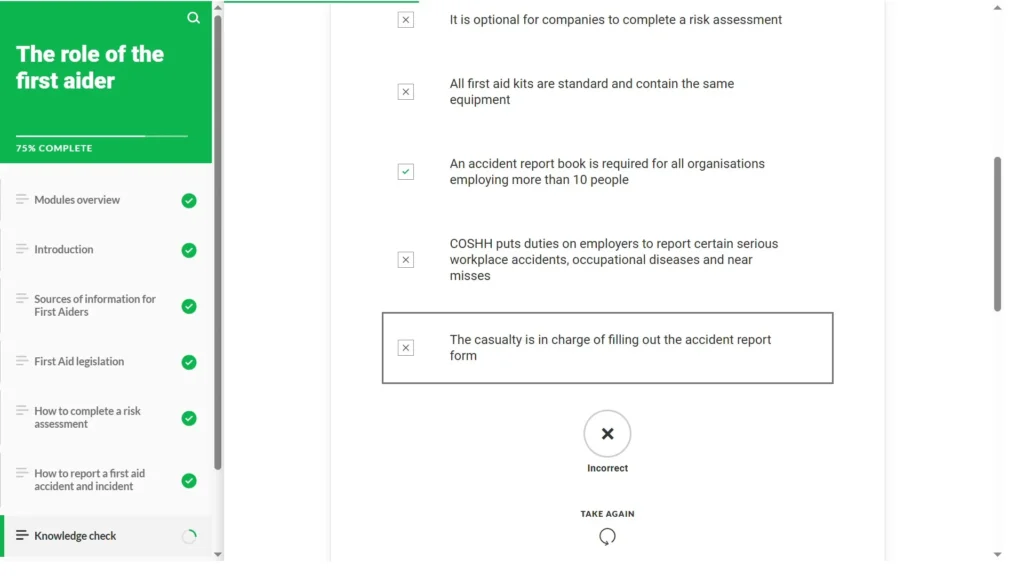
Multiple Choice Confusion
The quizzes often give you several answer options, with a few that are obviously wrong, and a couple that seem right.
That kind of guessing game doesn’t build knowledge. It just puts the wrong answers in your head.
No Room to Ask Questions
If something doesn’t make sense online, who do you ask? In a face-to-face session, you can raise your hand, have a proper discussion, and learn from the trainer (and your classmates).
That back-and-forth is where real learning happens.
It’s Passive, Not Practical
You can’t learn CPR by watching a video. You need to do it.
You need to feel how hard to push, how to check for breathing, and what real-time feedback looks like.
Online modules just don’t offer that level of experience.
It’s Mentally Draining
Sitting alone, staring at screens for 5–8 hours? That’s exhausting, and retention certainly suffers.
In fact, research shows that people retain far less information from passive, screen-based learning compared to active, hands-on training.
Bottom line? You might finish the online part… but that doesn’t mean you’ve actually learned it, or that you’ll remember it when it counts.
 ENROL IN A FIRST AID COURSE
Frequently Asked Questions
Can I still get a nationally recognised certificate if I do face-to-face only?
Yes — and in fact, face-to-face is the original and most widely recognised method of training. All our first aid courses are nationally recognised and comply with the latest Australian Resuscitation Council (ARC) guidelines. There’s no requirement to do any part online to be “valid.”
Isn’t online training more up-to-date with new information?
Not necessarily. Our trainers are qualified professionals who stay current with all regulation updates, changes to guidelines, and best practices. In fact, face-to-face training gives you a chance to ask about real-world updates that often get missed in outdated online modules.
What if I haven’t studied in years or get nervous in group settings?
Totally normal — and we cater to that. Our trainers are patient, down-to-earth, and experienced in working with people from all walks of life. You won’t be put on the spot or asked to perform in front of others. You’ll get support every step of the way, and we make sure everyone feels comfortable before assessment.
How do employers view face-to-face vs blended training?
Many employers actually prefer candidates who’ve done face-to-face training, especially in high-risk industries like construction, childcare, and healthcare. It gives them confidence that you’ve had hands-on practice and know what to do in a real situation.
Is face-to-face training more expensive?
Not with us. Our courses are priced competitively — and when you factor in the extra time, tech hassles, and delayed certification with blended options, face-to-face is often the better value overall. We also offer a Best Price Guarantee to make sure you’re not paying more than you should.
Do I need to bring anything on the day?
Just a valid photo ID, your USI (Unique Student Identifier), and a willingness to learn. We provide everything else — including experienced trainers, all equipment, and a straightforward process from start to finish.
Get Government-Approved First Aid Training at a Location Near You!
Ready to gain essential first aid skills to improve your confidence, enhance your resume, and advance your career?
Look no further than National First Aid Courses — Australia’s leading First Aid Course provider.
As a Registered Training Organisation (RTO 41072), we guarantee you will receive the highest standard of training.
We offer official, accredited, nationally recognised First Aid training at affordable prices.
Our comprehensive First Aid Courses are designed to equip you with the knowledge and certifications needed to provide life-saving assistance in emergency situations.
With face-to-face instruction, same-day certificates, and convenient locations across New South Wales and Queensland (including Sydney, Brisbane and the Gold Coast) we make it easy for you to become a certified First Aider.
Enrol in one of our upcoming First Aid courses and secure your spot today!