What Is Level 1 First Aid? Complete Guide
In Australia, Level 1 First Aid is an older term generally associated with basic emergency life support training.


In Short
- Level 1 First Aid is an older term commonly associated with basic emergency life support training in Australia.
- HLTAID010 – Provide Basic Emergency Life Support is the current nationally recognised unit generally associated with Level 1 First Aid.
- HLTAID010 focuses on recognising and responding to life-threatening emergencies, including CPR and the use of an automated external defibrillator (AED).
- Level 1 and Level 2 are not the official names of Australia’s current nationally recognised first aid units. HLTAID011 – Provide First Aid is generally associated with the older Level 2 or Senior First Aid terminology.
- Always check the unit code required by your employer, industry or organisation rather than relying solely on terms such as Level 1 or Level 2.
The term is no longer officially used to describe first aid courses or any nationally recognised unit, but you may still see the term used differently by employers, organisations and training providers.
So, what is Level 1 First Aid today, and which current course does it correspond with? Today, the nationally recognised unit that most closely corresponds with Level 1 First Aid is HLTAID010 – Provide Basic Emergency Life Support.
However, as employers might have specific first aid requirements, it’s always worth checking the actual course code you’ve been asked to complete.
What Does Level 1 First Aid Mean?
Level 1 First Aid refers to introductory first aid training that is designed to give you the skills to recognise and respond to a life-threatening emergency until professional medical assistance arrives.
The terminology comes from older ways of describing different levels of first aid training in Australia.
Today, Australia’s nationally recognised first aid courses are identified primarily by their unit codes and official titles, rather than Level 1, Level 2, Level 3 and Level 4.
The current unit most commonly associated with Level 1 First Aid is: HLTAID010 – Provide Basic Emergency Life Support
According to the National Training Register, HLTAID010 provides the skills and knowledge required to recognise and respond to life-threatening emergencies in line with first aid guidelines.

What Does Level 1 First Aid Cover?
As its official name suggests, HLTAID010 focuses on basic emergency life support. The training is designed to prepare you to recognise an emergency, assess the situation and provide an appropriate initial response. Depending on your training provider, your course may cover areas including:
- Recognising and assessing an emergency
- Keeping yourself, bystanders and the casualty safe
- Assessing a casualty
- Contacting emergency services
- Performing CPR
- Using an automated external defibrillator (AED)
- Responding to an unconscious casualty
- Managing choking and airway emergencies
- Providing basic first aid
- Monitoring a casualty until further help arrives
- Communicating details to emergency services
- Reporting and reviewing a first aid incident
Because nationally recognised first aid training includes practical assessment, you’ll also need to demonstrate that you can perform the required emergency response skills.
Is Level 1 First Aid the Same Across Australia?
Nationally recognised units such as HLTAID010 – Provide Basic Emergency Life Support are part of Australia’s national vocational education and training system.
That means HLTAID010 is the same nationally recognised unit whether you complete it in Queensland, New South Wales, Victoria or another Australian state or territory.
Where things can become confusing is the terminology. Some employers, organisations and training providers still use descriptions such as ‘Level 1 First Aid’ or ‘Level 2 First Aid’, while others refer exclusively to the current HLTAID unit codes.
The terminology appears to remain particularly common in Victoria. For example, Victoria Police currently describes HLTAID010 as Level 1 and HLTAID011 as Level 2 in its entry requirements.
So if you’re told you need ‘Level 1 First Aid’, don’t assume based on the name alone. Ask whether the requirement is specifically HLTAID010 or another unit.
What Is the Difference Between Level 1 and Level 2 First Aid?
Traditionally, Level 1 was the more basic first aid course, while Level 2 provided broader first aid training. Under the current national training system, the closest comparison is generally:
- Level 1 First Aid: HLTAID010 – Provide Basic Emergency Life Support
- Level 2 First Aid: HLTAID011 – Provide First Aid
HLTAID011 has a broader scope than HLTAID010 and is the first aid qualification commonly requested by Australian employers.
It covers CPR and basic emergency life support as well as responding to a wider range of injuries and medical emergencies, including areas such as bleeding, burns, fractures, asthma, anaphylaxis, shock and other first aid situations.
If an employer simply tells you that you need a “first aid certificate”, it’s therefore important to check the course code. In many cases, they may actually require HLTAID011 – Provide First Aid, rather than HLTAID010.
What About Level 3 and Level 4 First Aid?
You may also encounter the terms Level 3 and Level 4 First Aid, particularly in older workplace documents or when looking at advanced first aid training. Again, these aren’t the official names used for the current nationally recognised units.
Level 3 First Aid has traditionally been associated with Advanced First Aid. The current nationally recognised unit is HLTAID014 – Provide Advanced First Aid.
This goes beyond standard first aid and includes skills for more complex situations, such as advanced casualty assessment, co-ordinating first aid activities and managing multiple casualties.
Level 4 First Aid is older terminology generally associated with occupational first aid training.
Today, the HLTSS00068 – Occupational First Aid Skill Set is designed for people working, or intending to work, in nominated occupational first aider roles. It incorporates several units, including HLTAID011 Provide First Aid, HLTAID014 Provide Advanced First Aid, HLTAID015 Provide Advanced Resuscitation and Oxygen Therapy and HLTAID016 Manage First Aid Services and Resources.
Because the old “levels” don’t always translate neatly into the current system, it’s better to use the current course name and unit code when choosing training.
Level 1 vs Level 2 vs Level 3 vs Level 4 First Aid
Level 1 generally represents the starting point, with the scope of first aid training becoming broader and more advanced as you move through the traditional levels. Here’s a simple comparison of the four levels and their closest current equivalents:
| Traditional terminology | Current equivalent commonly associated with it | General focus |
| Level 1 First Aid | HLTAID010 – Provide Basic Emergency Life Support | Basic response to life-threatening emergencies |
| Level 2 First Aid | HLTAID011 – Provide First Aid | General workplace and community first aid |
| Level 3 First Aid | HLTAID014 – Provide Advanced First Aid | Advanced first aid and more complex emergencies |
| Level 4 First Aid | HLTSS00068 – Occupational First Aid Skill Set | Advanced workplace first aid and management of first aid resources |
These comparisons are a useful guide, but the older terminology is not a substitute for checking the current nationally recognised unit required for your job or industry.
Do I Need Level 1 or Level 2 First Aid?
The level of first aid certification you need depends on why you need the training. If you’ve been specifically asked to complete HLTAID010 – Provide Basic Emergency Life Support, that’s the unit you should look for.
However, if your employer has simply asked you to obtain a current first aid certificate, you may need HLTAID011 – Provide First Aid instead.
As mentioned, HLTAID011 is the broader first aid qualification and is commonly required across Australian workplaces.
Certain industries and occupations can also have their own first aid requirements, so always check with your employer, licensing authority, professional body or placement provider before enrolling.
Is CPR Included in Level 1 First Aid?
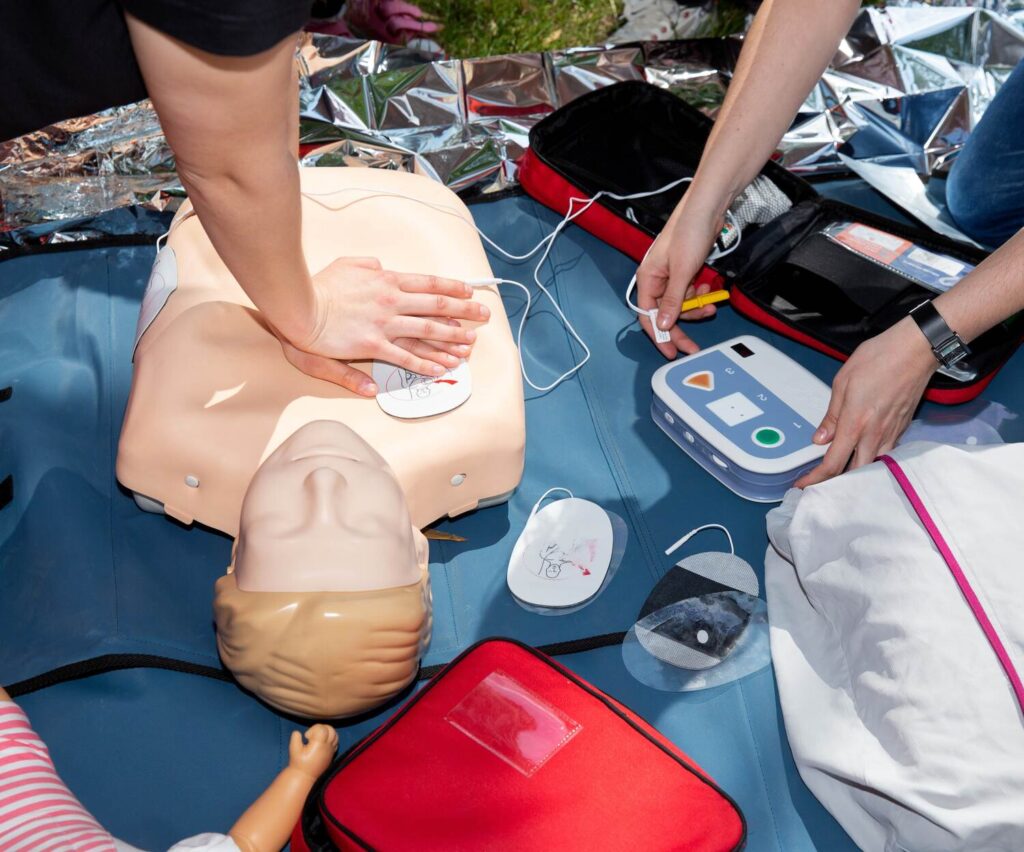
CPR forms part of the skills assessed in HLTAID010 – Provide Basic Emergency Life Support.
There is also a separate nationally recognised CPR unit, HLTAID009 – Provide Cardiopulmonary Resuscitation, for people who specifically need CPR training or a refresher.
At National First Aid Courses, our HLTAID011 Provide First Aid course includes HLTAID010 and HLTAID009, so you receive training in CPR, basic emergency life support and broader first aid skills in the same course.
Does a Level 1 First Aid Certificate Expire?
A nationally recognised Statement of Attainment doesn’t simply become invalid on a particular expiry date. However, first aid skills need to remain current, and employers, industries and regulatory bodies may have requirements around refresher training.
Australian workplace guidance generally recommends refreshing CPR training annually and first aid qualifications every three years. Always check the requirements that apply to your workplace or industry.
Is Level 1 First Aid Still Recognised?
You may still hear the term ‘Level 1 First Aid’, and some organisations continue to use it when describing their first aid requirements.
However, when you’re booking nationally recognised training, the unit code is much more useful than the level number.
If you’re asked for Level 1 First Aid, check whether the person or organisation actually means HLTAID010 – Provide Basic Emergency Life Support.
If you’re asked for Level 2, Senior First Aid or simply a current First Aid Certificate, they may instead mean HLTAID011 – Provide First Aid.
Get Certified With National First Aid Courses
Need to complete or refresh your first aid training? National First Aid Courses offers a range of nationally recognised first aid and CPR courses, with practical, face-to-face training and assessment.
Course options, duration and pricing vary depending on the training you need and your location. After successful completion and the required enrolment checks, you’ll receive the relevant nationally recognised Statement of Attainment.