
First Aid Course for Sports Coaches, Instructors, and Officials
First aid for coaches keeps athletes safe during training, competition and events. A coach’s role goes beyond teaching skills, they’re often the closest person when something goes wrong.
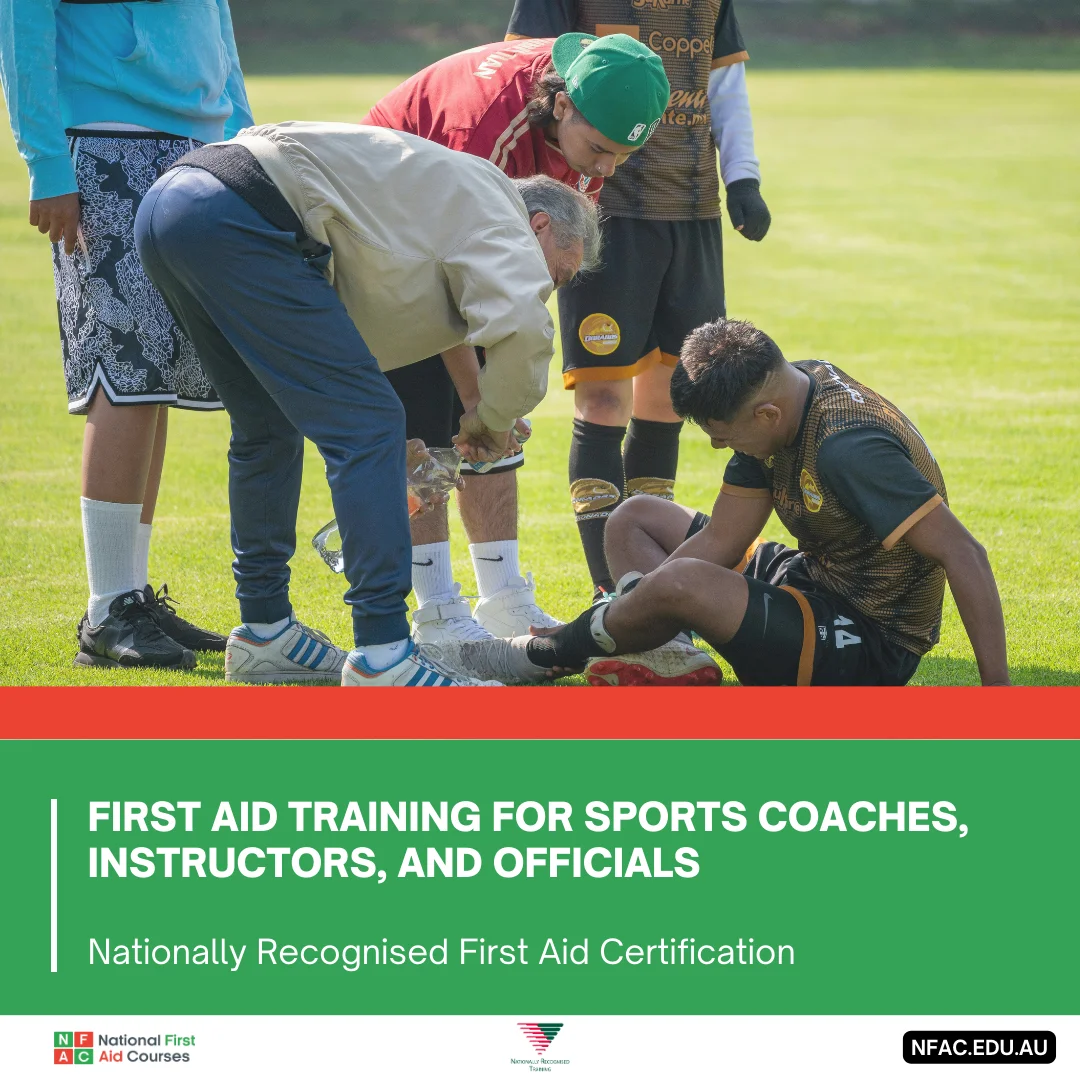


In Short
- First aid is an important skill for sports coaches. Coaches, instructors and officials may be among the first people available when an athlete becomes injured or unwell.
- HLTAID011 Provide First Aid is the current nationally recognised first aid unit used across Australian workplaces and community settings. It includes CPR training.
- CPR should be refreshed every 12 months. Regular refresher training helps keep CPR skills current, while first aid training should be renewed in line with your workplace, sporting organisation or regulatory requirements.
- Some sporting organisations have their own first aid requirements. These can vary between sports, clubs, competitions and roles, so check the requirements of your organisation before enrolling.
- Sports-specific training may be useful for some roles. Coaches and sports trainers may benefit from additional training in sports injury prevention and management alongside general first aid.
An athlete can suffer a sprain, fracture, dislocation, concussion, heat-related illness or serious bleeding with little warning. Less visible emergencies like asthma, anaphylaxis, choking or cardiac arrest can also demand an immediate response.
First aid training gives coaches the practical skills to recognise an emergency, provide appropriate first aid, call for help and monitor the person until it arrives.
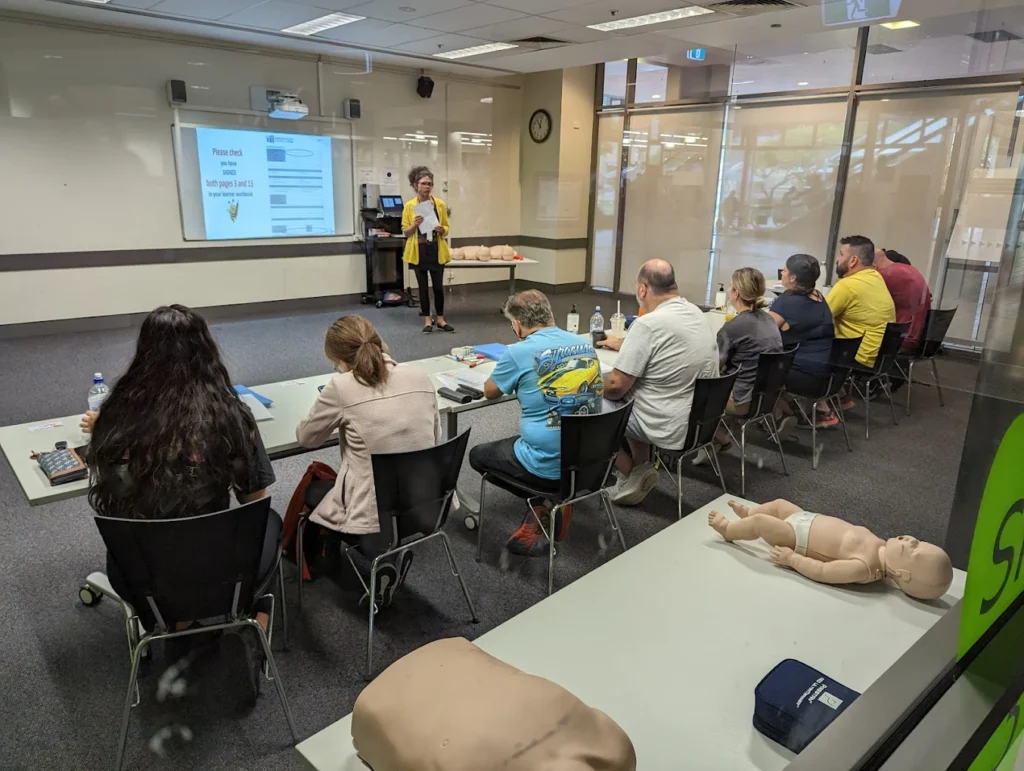
The HLTAID011 Provide First Aid unit covers recognising and assessing emergencies, CPR, using first aid equipment and communicating with emergency services, making it just as relevant to community coaches, school sports coaches, instructors, volunteers and officials as it is to professionals.
Why do sports coaches need first aid training?
Sport involves physical activity, competition and, in many cases, contact between participants. Even with good preparation and injury prevention practices, accidents and medical emergencies can happen.
Having someone with current first aid skills available means an injured athlete can receive appropriate initial care while further medical assistance is organised if required. First aid training can help coaches:
- Recognise when an injury or illness requires immediate attention
- Respond to medical emergencies calmly and appropriately
- Perform CPR and use an automated external defibrillator (AED)
- Manage bleeding and wounds
- Respond to choking
- Recognise and respond to asthma and anaphylaxis
- Provide appropriate initial care for common sporting injuries
- Recognise potential concussion and remove an athlete from play when appropriate
- Respond to heat-related illness and dehydration
- Communicate effectively with emergency services
- Understand when an athlete needs further medical assessment
First aid is not a substitute for medical care or professional sports medicine. Rather, it gives coaches the skills to provide an appropriate initial response and help prevent a situation from becoming worse.
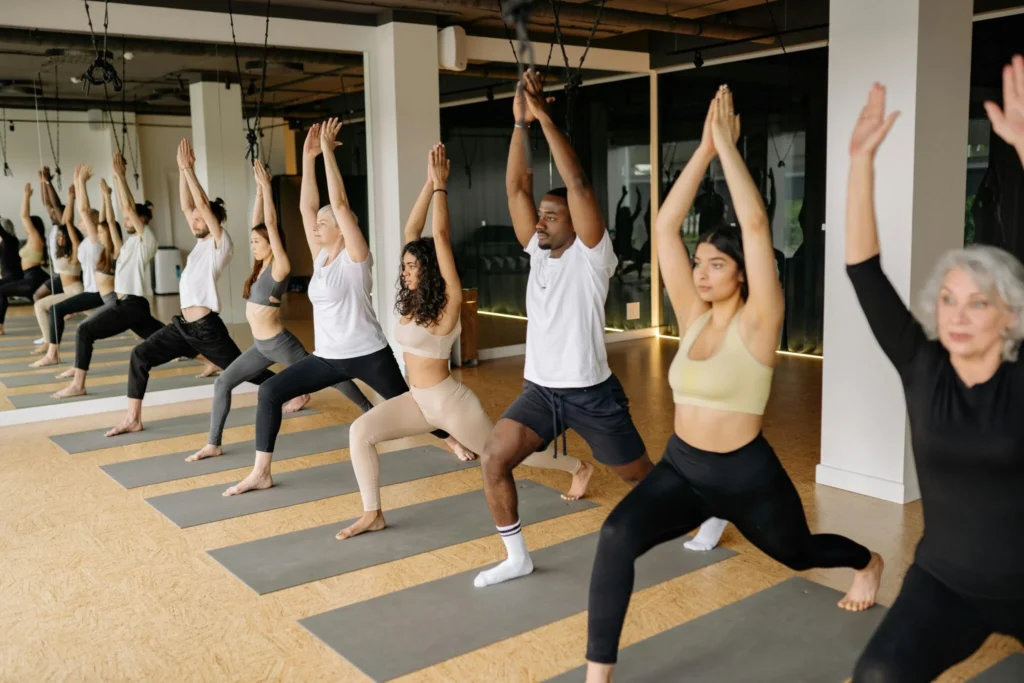
Common injuries and emergencies in sport
The type of first aid a coach may need to provide depends on the sport, participants, environment and level of competition. Some of the more common situations include:
Sprains and strains
Twisted ankles, muscle strains and other soft-tissue injuries are common across many sports. Coaches should understand how to provide appropriate initial care and when an athlete should stop participating and seek further assessment.
Fractures and dislocations
Falls, collisions and high-impact movements can result in fractures or dislocations. First aid focuses on keeping the athlete safe, managing pain and preventing further injury while medical assistance is arranged.
Head injuries and concussion
A head injury should always be taken seriously. Coaches need to recognise possible signs of concussion and follow the relevant sporting organisation’s concussion and return-to-play procedures.
Heat-related illness
Outdoor training and competition can expose athletes to heat exhaustion, dehydration and potentially life-threatening heatstroke. Coaches should know the warning signs and understand the importance of prompt action.
Cuts and bleeding
Cuts, abrasions and more significant bleeding injuries can occur during training and competition. First aid training teaches participants how to control bleeding and manage wounds appropriately.
Asthma and anaphylaxis
Some athletes may have known medical conditions that can become emergencies during exercise. Coaches working with children or community athletes may be particularly likely to encounter asthma or allergic reactions.
Cardiac emergencies
Sudden cardiac arrest is uncommon but potentially fatal. Knowing CPR and how to use an AED can be critical while emergency medical services are on their way.
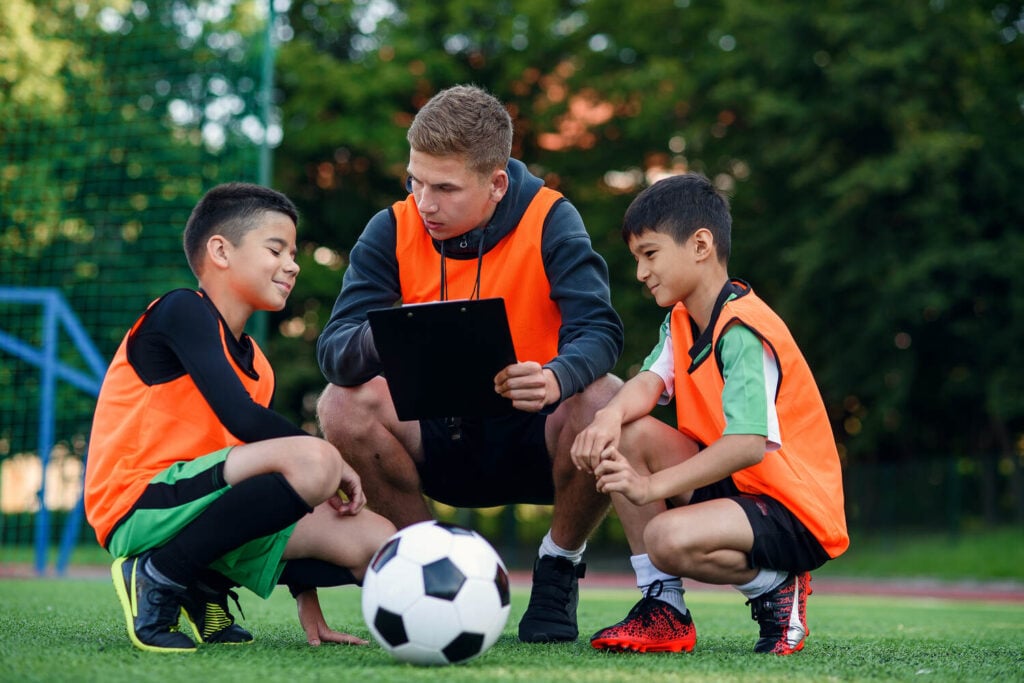
First Aid courses for sports coaches
The right first aid course for a sports coach depends on the role, the sporting organisation and the environment in which you work.
HLTAID011 Provide First Aid
HLTAID011 Provide First Aid is the main nationally recognised first aid course for people who may be required to provide first aid in a workplace or community setting.
It covers a broad range of first aid situations and includes CPR, making it a suitable option for many sports coaches, instructors, officials and volunteers.
Best suited to:
- Sports coaches
- Club volunteers
- Sports instructors
- Officials
- Fitness professionals
- Sports and recreation workers
- People responsible for first aid at sporting activities
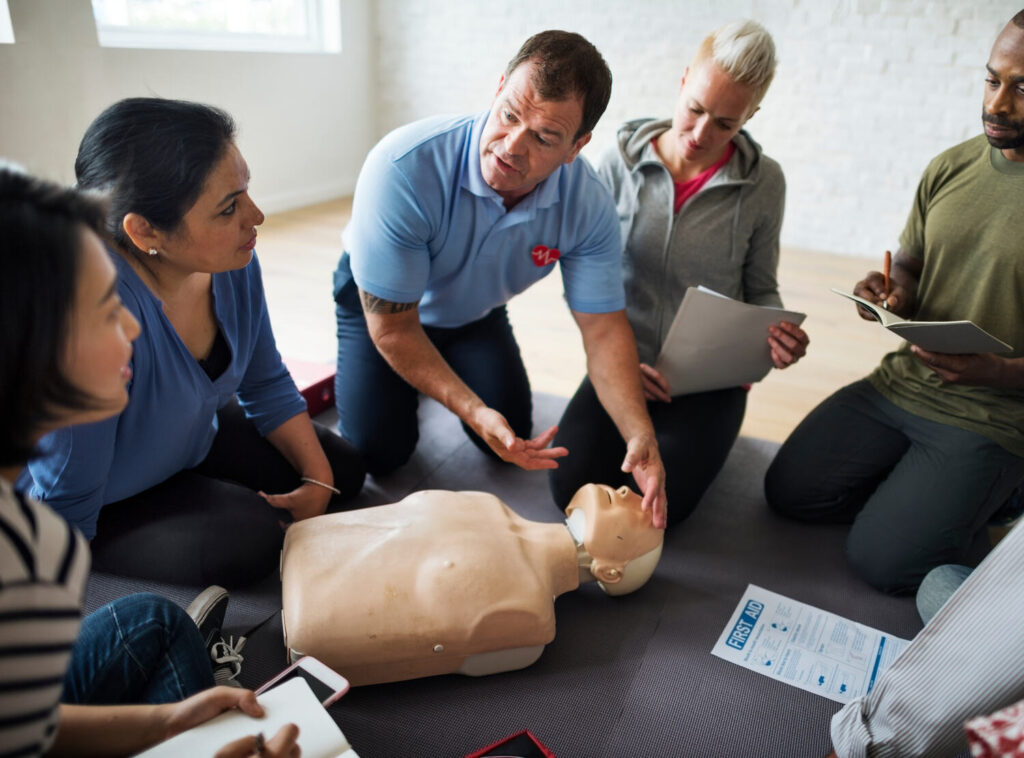
HLTAID009 Provide Cardiopulmonary Resuscitation
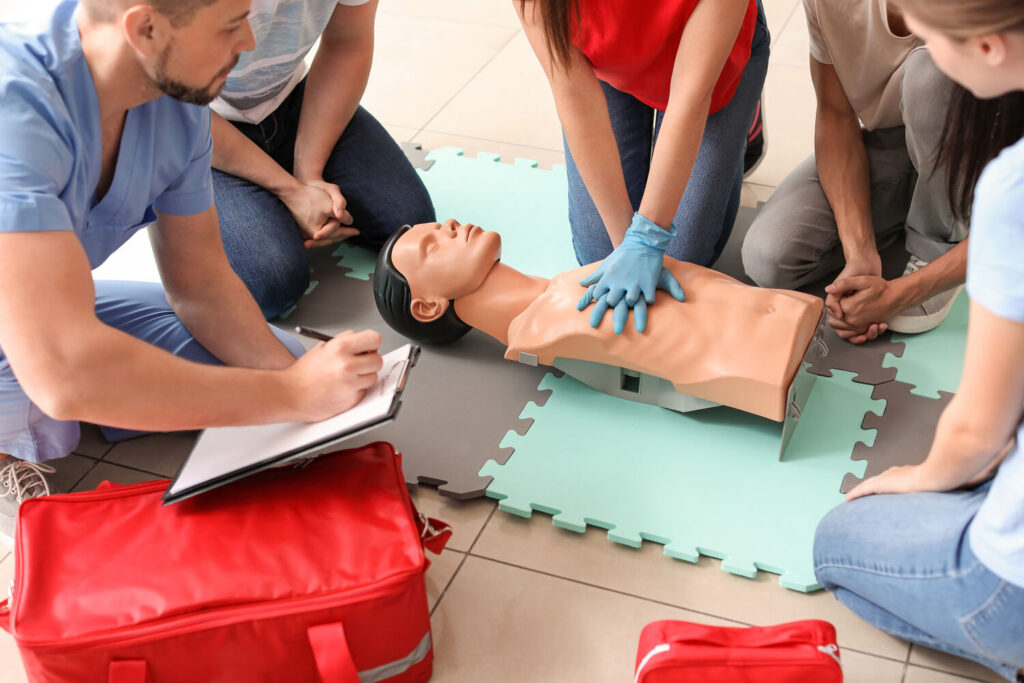
If you only need CPR training, HLTAID009 Provide Cardiopulmonary Resuscitation is the relevant nationally recognised unit. CPR training covers the practical skills needed to respond to cardiac arrest, including CPR and the use of an AED.
CPR is also commonly included as part of broader first aid training. The current national training register lists HLTAID009 as the current CPR unit alongside HLTAID011.
HLTAID012 Provide First Aid in an Education and Care Setting
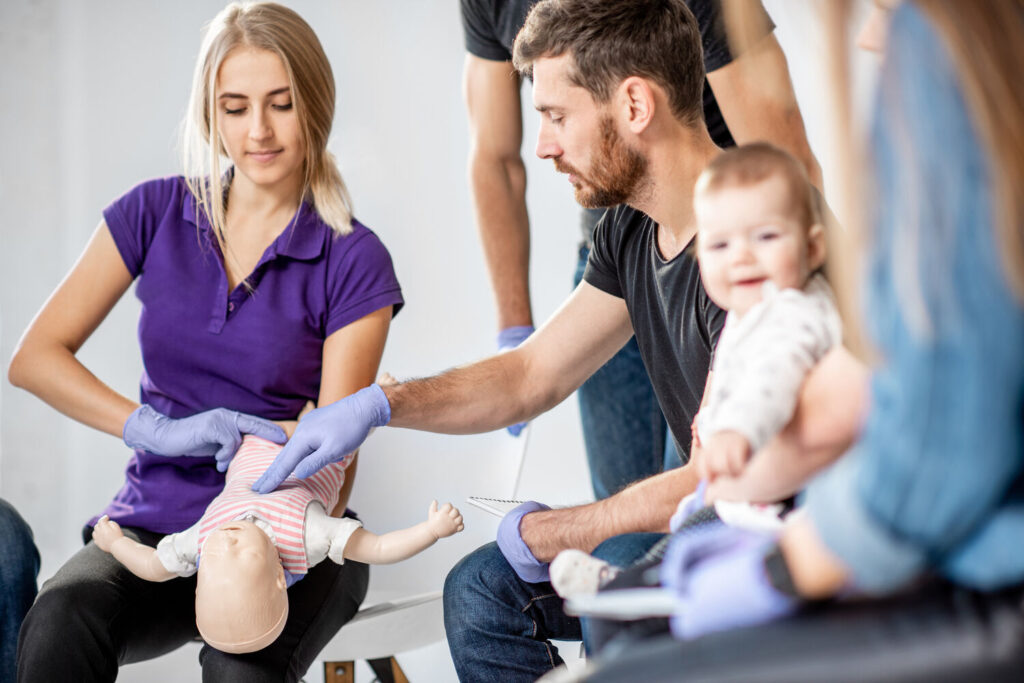
Some coaches work in environments involving children, such as schools, education programs or childcare settings. In these circumstances, a course specifically designed for an education and care setting may be appropriate.
HLTAID012 Provide First Aid in an education and care setting is a separate nationally recognised unit.
However, coaches should check the requirements of their employer, school or sporting organisation rather than assuming that HLTAID012 is required simply because they coach children.
What sports and fitness jobs require first aid?
First aid requirements vary between employers, sporting organisations, states and individual roles. There is no single first aid qualification that every person working in sport or fitness must hold.
However, current first aid certification is commonly required, recommended or expected for a range of sport and fitness roles.
1. Sports coach
Sports coaches work closely with athletes during training and competition and may be responsible for responding to injuries or emergencies.
Requirements vary between sports, while some sporting organisations specify current first aid as part of their coaching requirements.
2. Sports trainer
Sports trainers have a specific focus on athlete safety, injury prevention and injury management, and first aid is an important component of sports trainer training.
3. Personal trainer
Personal trainers work directly with clients during exercise and may work in gyms, outdoor locations, homes and community settings. Personal trainers and other registered exercise professionals are generally expected to hold current nationally recognised first aid and CPR certification.
4. Fitness instructor
Fitness instructors supervise exercise and fitness activities and may need to respond if a participant becomes injured or experiences a medical emergency. First aid and CPR are commonly included among the requirements for fitness professionals.
5. Swimming instructor
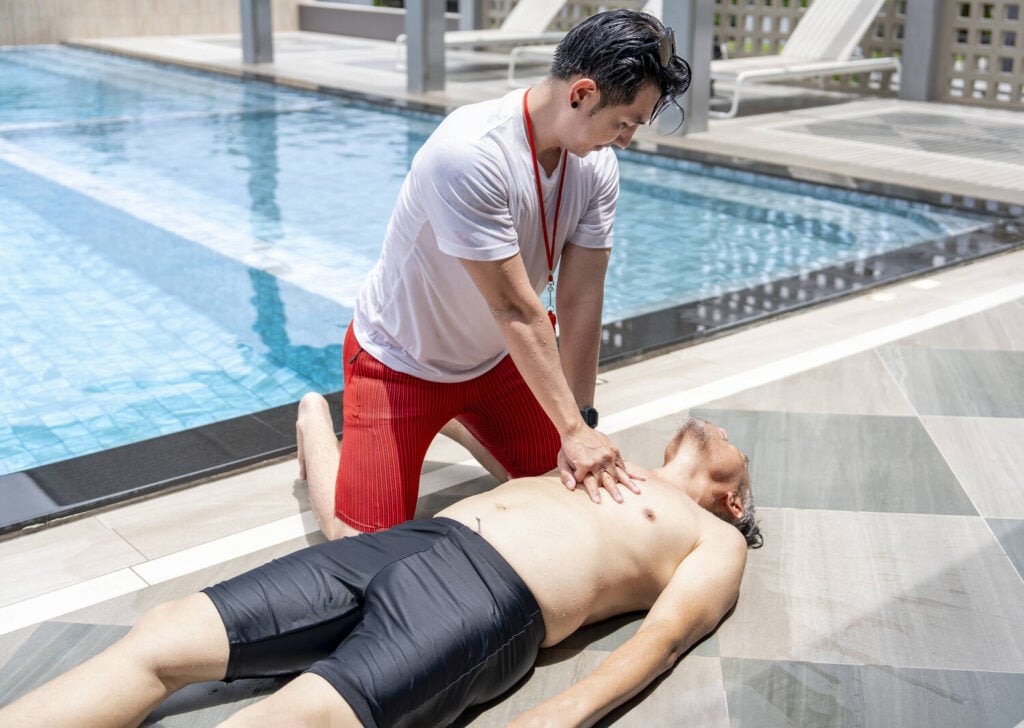
Swimming instructors and aquatic professionals work in environments where rapid emergency response is particularly important. Employers and aquatic organisations may require current first aid and CPR qualifications, alongside other relevant aquatic safety qualifications.
6. Outdoor recreation instructor
Outdoor recreation instructors may work in locations where access to emergency medical assistance can take longer. First aid requirements may be particularly important depending on the activity, environment and level of remoteness.
7. Gym or recreation centre staff
Staff working in gyms, leisure centres and recreation facilities may be responsible for responding to injuries or medical emergencies involving clients and participants.
8. School sports coach or instructor
Teachers, coaches and instructors working with school-aged children may have additional first aid and child-safety requirements determined by their school, employer, education department or sporting organisation.
9. Sports event staff and officials
Officials, event staff and volunteers may work at competitions, carnivals, tournaments and other sporting events where injuries and medical emergencies can occur. The specific first aid requirements will depend on the event and organisation.
Do sports coaches need to have a first aid certificate?
There is no universal Australian rule requiring every sports coach to hold a first aid certificate. Instead, requirements can come from several sources, including:
- Your employer
- Your sporting club or association
- Your national or state sporting organisation
- Competition or league rules
- School or education requirements
- Workplace health and safety arrangements
- Insurance or organisational policies
The Australian Sports Commission, for example, publishes different coaching requirements for different sports through its Sporting Schools program. Tennis Australia’s requirements for coaches delivering its Sporting Schools program include a current first aid certificate as a recommended requirement, while other sports have different requirements.
This is why it is important to check the specific requirements for your sport and role before choosing a course.
If your club or sporting organisation requires coaches to hold a current first aid certificate, HLTAID011 – Provide First Aid is the unit of study commonly used to meet general first aid requirements.
How many first aiders should a sporting organisation have?
If coaching or sporting activities are taking place as part of a workplace, first aider arrangements should be based on the risks involved rather than simply applying a fixed ratio.
Safe Work Australia’s guidance recommends one first aider for every 50 workers in a low-risk workplace, one for every 25 workers in a high-risk workplace and one for every 10 workers in a remote high-risk workplace. It also recommends considering factors such as the nature of the work, the number of workers, remoteness and access to emergency services.
Sporting clubs and community organisations should also consider participants, volunteers, spectators, the location of activities and how quickly emergency assistance can be accessed when developing their first aid arrangements.
What should a sports first aid kit contain?
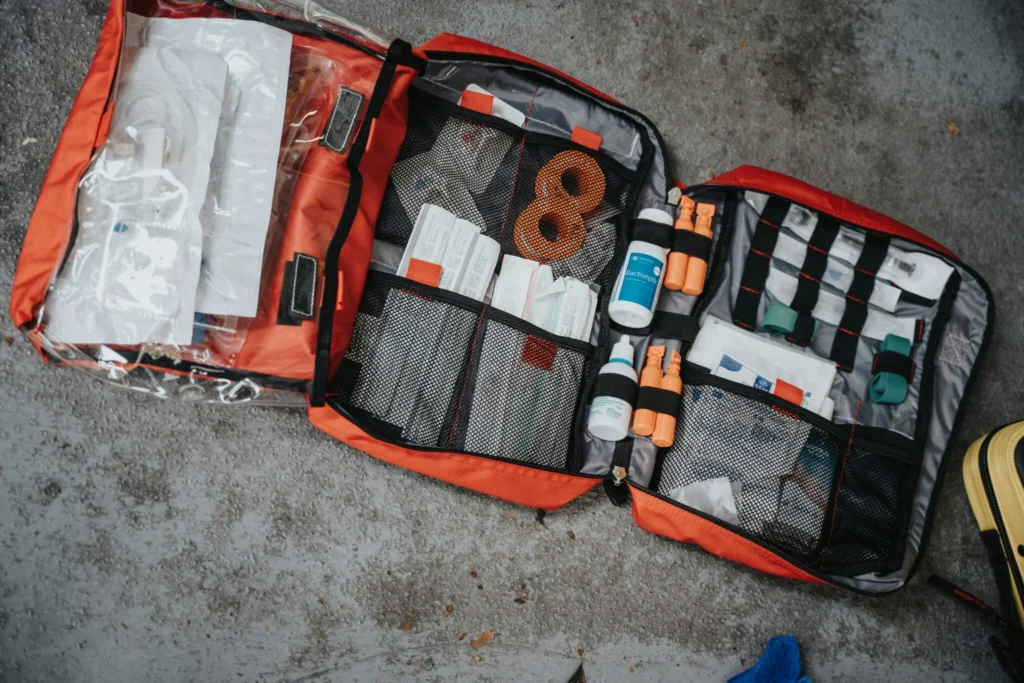
A sporting first aid kit should be appropriate for the activities and environment in which it will be used. Depending on the sport, this may include supplies for:
- Wound and bleeding management
- Cuts and abrasions
- Bandaging and dressings
- Minor burns
- Sprains and soft-tissue injuries
- Personal protective equipment
- CPR response
- Managing other foreseeable risks identified by the organisation
The kit should be accessible, clearly identified and regularly checked to make sure supplies are available and within date. For competitions and activities away from a club or facility, coaches should also know where the first aid kit and AED are located and how emergency services can access the venue.
How to prepare for a sports emergency
First aid training is only one part of being prepared for a sports emergency. Sports clubs and coaching organisations should also have clear procedures for responding to incidents. Before training or competition, coaches should know:
- Where the first aid kit is located
- Where the nearest AED is located
- How to contact emergency services
- The venue’s exact address or emergency access point
- Who is responsible for calling 000
- Who will meet emergency services
- Which participants have relevant medical conditions, where this information is appropriately available
- What the organisation’s concussion and injury-management procedures are
Having these details established before an emergency occurs can make it easier to respond quickly when something goes wrong.
How often should sports coaches renew first aid and CPR?
How often you need to renew your first aid and CPR training can depend on your employer, sporting organisation and applicable regulations.
In general, CPR training is commonly refreshed every 12 months, while first aid training is commonly refreshed every three years. However, you should always follow the specific requirements that apply to your role.
Safe Work Australia recommends that first aiders attend training regularly to keep their knowledge current.
Regular training is particularly valuable for practical skills such as CPR, where confidence and technique can deteriorate without practice.