What Is an AED in First Aid and How Does It Work?
Published: September 30, 2026 | Read time: 8 minutes
Key Takeaways
- AED stands for Automated External Defibrillator, a portable device used to help someone experiencing sudden cardiac arrest.
- An AED analyses the heart’s rhythm and determines whether a shock is required. It will only advise or deliver a shock when an appropriate shockable rhythm is detected.
- AEDs should be used when a person is unresponsive and not breathing normally, alongside CPR and emergency medical assistance.
- You don’t need to be a healthcare professional to use an AED. The device provides voice and/or visual prompts to guide the user through the process.
- Using an AED is taught as part of nationally recognised first aid and CPR training, giving you practical experience using the equipment in a simulated emergency.
If you’ve been learning about CPR or first aid, you’ve probably come across the term AED. But what is an AED in first aid, what does it actually do and when should you use one?
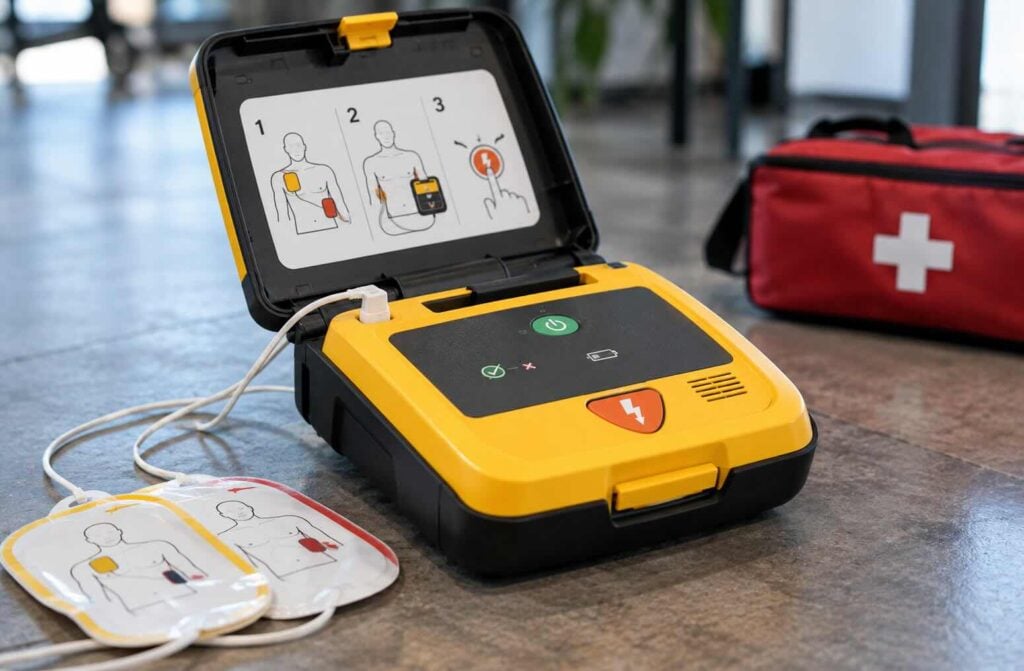
AED stands for Automated External Defibrillator. An AED is a portable device designed to help someone experiencing sudden cardiac arrest. It analyses the electrical activity of the person’s heart and determines whether a shock is required.
If a shock is needed, the AED will tell the rescuer what to do and, depending on the type of device, either prompt them to press a button or automatically deliver the shock.
AEDs are designed so they can be used by members of the public, not just doctors, nurses or paramedics. They provide clear instructions to guide you through the process during an emergency.


What Does an AED Do?
An AED analyses the electrical rhythm of the heart. During some cardiac arrests, the heart’s electrical activity becomes abnormal and the heart is unable to pump blood effectively around the body.
A defibrillator can deliver a controlled electrical shock in an attempt to restore an effective heart rhythm.
Importantly, an AED doesn’t simply shock everyone it is attached to. The device analyses the person’s heart rhythm first and determines whether defibrillation is appropriate.
If a shock isn’t required, the AED won’t advise or deliver one.
When Should You Use an AED?
According to the Australian and New Zealand Committee on Resuscitation (ANZCOR), an AED should be used for a person who is unresponsive and not breathing normally. Chest compressions should begin immediately and the AED should be applied as soon as it becomes available.
Acting quickly matters because the sooner defibrillation can occur when it is needed, the better the person’s chance of surviving cardiac arrest. If you are helping someone who is unresponsive and not breathing normally:
- Call Triple Zero (000) for an ambulance.
- Start CPR.
- Have someone retrieve an AED if one is available.
- Attach the AED as soon as possible.
- Follow its instructions.
- Continue CPR and follow the AED prompts until the person begins breathing normally, emergency services take over or you are unable to continue.
If you’re alone, don’t leave the person to search for an AED. Call Triple Zero (000) and begin CPR. If other people are present, send someone else to find the nearest AED.
What Does AED Mean in DRSABCD?
AED use is also built into the DRSABCD action plan commonly taught in Australian first aid courses:
- D for Danger: Check for danger to yourself, the casualty and others.
- R for Response: Check whether the person responds.
- S for Send for help: Call Triple Zero (000) for an ambulance.
- A for Airway: Check and clear the person’s airway if necessary.
- B for Breathing: Check whether the person is breathing normally.
- C for CPR: If they aren’t breathing normally, begin CPR.
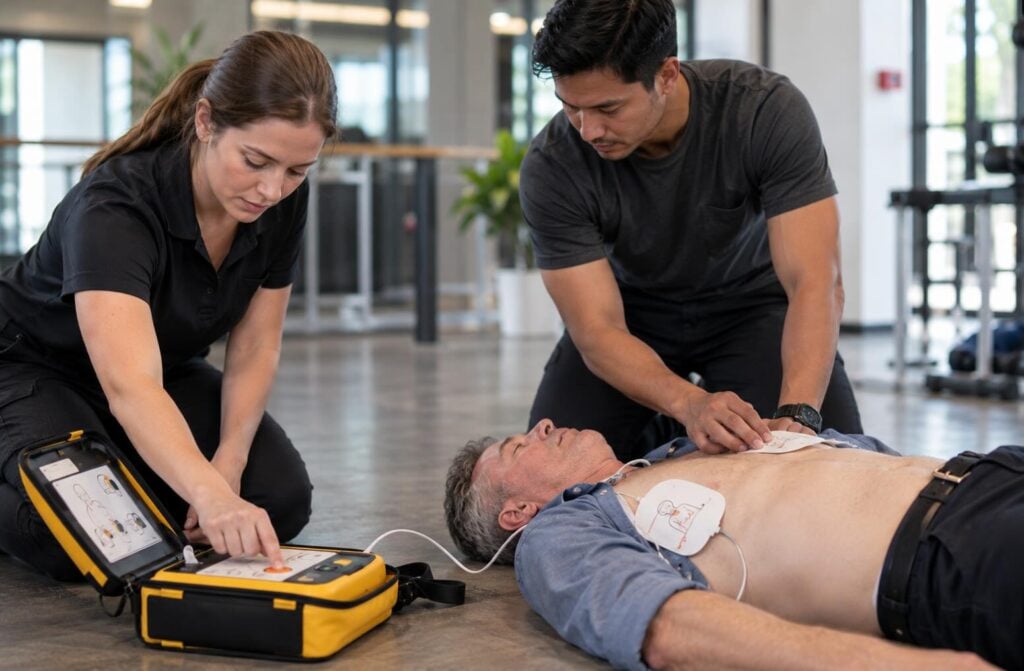
- D for Defibrillation: Attach an AED as soon as one becomes available and follow its instructions.
CPR and defibrillation work together during a cardiac arrest response. CPR helps maintain blood flow, while defibrillation may be able to correct certain abnormal heart rhythms.
How Do You Use an AED?
AED models can vary slightly, so you should always follow the instructions provided by the device. Generally, you will:
- turn on the AED
- expose the person’s chest
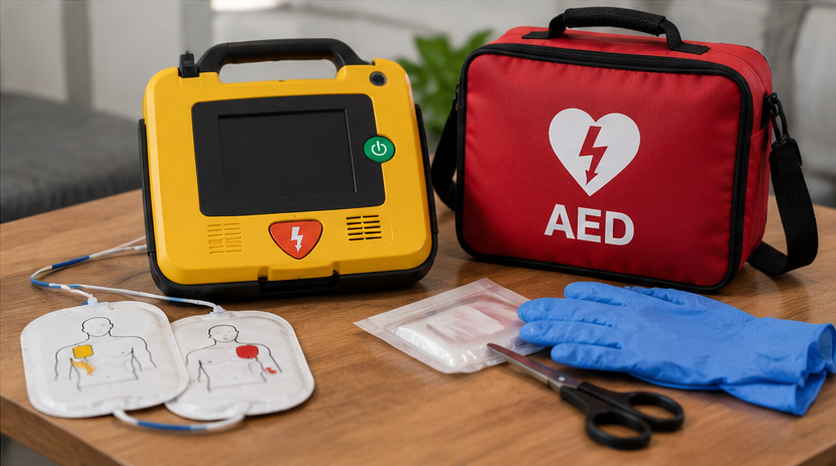
- attach the electrode pads in the positions shown on the pads
- allow the AED to analyse the person’s heart rhythm
- make sure nobody is touching the person while the AED analyses the rhythm or delivers a shock
- deliver the shock if instructed by the device
- immediately resume CPR and continue following the AED’s prompts.
The AED will continue to guide you and may analyse the heart rhythm again during the resuscitation attempt. One of the most important things to remember is to listen to the AED and follow its prompts.
Can Anyone Use an AED?
Yes. AEDs are specifically designed to be used by members of the public as well as trained first aiders and health professionals. You don’t need to diagnose the person’s heart rhythm yourself. The AED does that for you.
You also don’t need to decide whether the person should receive a shock. Once the pads are attached, the AED analyses the rhythm and determines whether a shock is appropriate.
While you don’t need formal training to use an AED in an emergency, completing CPR or first aid training can help you understand where defibrillation fits into the overall emergency response and give you practical experience using an AED.
Can an AED Shock Someone Who Doesn’t Need It?
AEDs are designed to analyse the person’s heart rhythm before a shock is delivered. If the AED detects a rhythm that does not require defibrillation, it will not advise or deliver a shock.
This means you don’t have to make the medical decision yourself. Your job as the first aider is to correctly attach the device, follow its instructions and continue CPR as directed.
Can You Use an AED on a Child?
Yes. For children older than eight years, a standard adult AED and pads can be used. For children aged between one and eight years, paediatric pads and a paediatric AED mode are preferable where available. However, if these aren’t available, ANZCOR guidance allows the use of a standard adult AED.
For infants under one year, a paediatric-capable AED is preferable, but if one isn’t available, a standard AED can be used.
Where Can You Find an AED?
Because an AED can play an important role in responding to cardiac arrest, the devices are increasingly installed in places where large numbers of people live, work, exercise or gather.
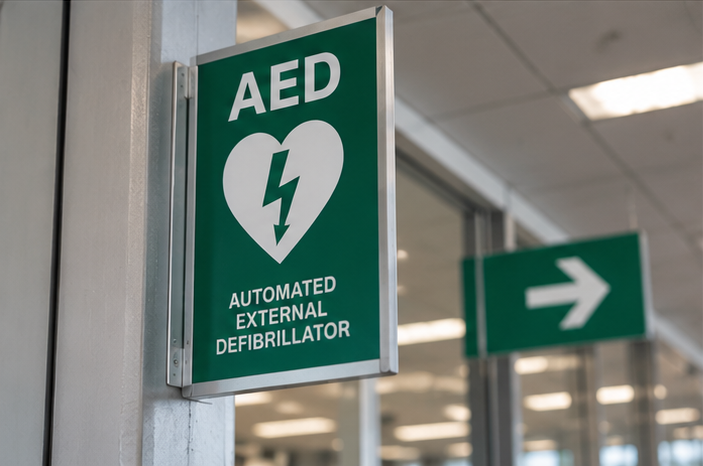
You may have walked past an AED many times without really noticing it. Knowing where AEDs are commonly located (and recognising the signage used to identify them) can save valuable time if you ever need one in an emergency. AEDs are commonly found in places such as:
- shopping centres
- schools
- workplaces
- gyms and sporting clubs
- community centres
- libraries
- airports and transport hubs
- public facilities.
They are generally stored somewhere visible and accessible and marked with defibrillator signage.
If a cardiac arrest occurs, someone should begin CPR immediately while another person locates the nearest AED where possible.
What Do You Learn About AEDs in a First Aid Course?
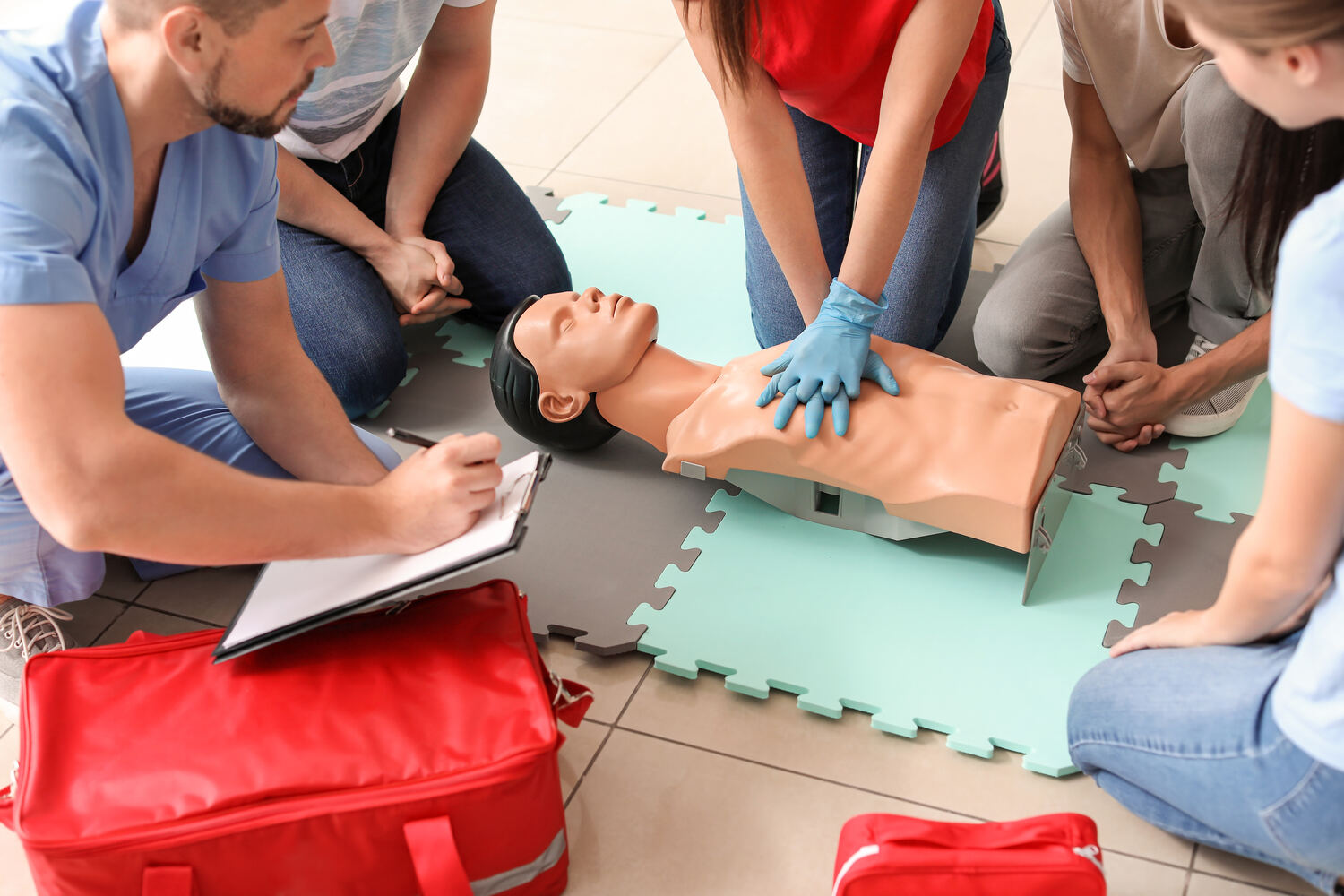
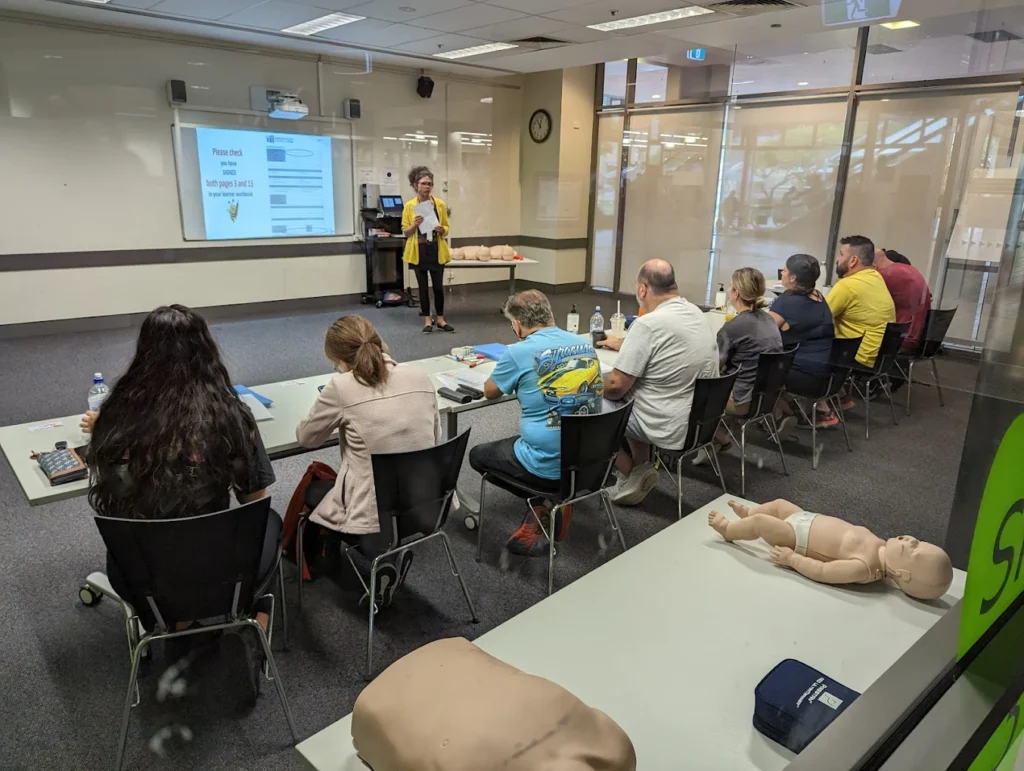
Using an AED isn’t just something discussed in theory during nationally recognised first aid training. You’ll also practise using one. The nationally recognised HLTAID011 – Provide First Aid unit requires students to demonstrate CPR on an adult manikin and follow the prompts of an AED to deliver at least one simulated shock.
The course also covers important considerations surrounding CPR and defibrillation, including:
- recognising when a casualty is unconscious and not breathing normally
- performing CPR
- appropriate use of an AED
- AED safety
- AED maintenance procedures
- the chain of survival
- accessing emergency services
- responding effectively during a simulated first aid emergency.
This practical training can be particularly valuable because a real cardiac arrest is a high-pressure situation. Having already handled an AED and followed its prompts during training can help you understand what to expect if you’re ever faced with an emergency.
AED vs CPR: What’s the Difference?
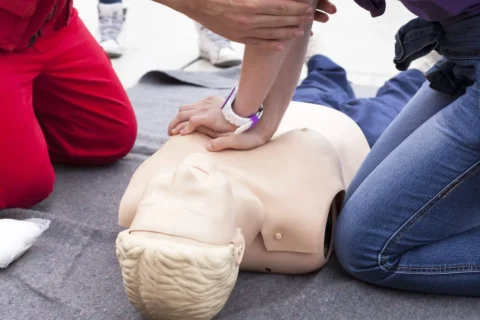
CPR and AED use are different parts of the same cardiac arrest response. CPR uses chest compressions and rescue breaths to help maintain circulation and oxygen supply when someone isn’t breathing normally.
An AED analyses the heart’s electrical rhythm and can deliver a shock when an appropriate shockable rhythm is detected.
It isn’t a matter of choosing between CPR and an AED. If someone is unresponsive and not breathing normally, CPR should begin immediately and an AED should be attached as soon as it becomes available.
Learn How to Use an AED With First Aid Training
AEDs are designed to make defibrillation accessible to everyday people, but knowing what to do before the device arrives, how to perform CPR and how to respond confidently to an emergency are equally important.
At National First Aid Courses, our nationally recognised first aid and CPR courses provide practical training in resuscitation and AED use, helping you develop the skills to respond if someone experiences a cardiac arrest.
Explore our first aid courses and learn the practical skills that could help you respond when every minute matters.
Get Certified With National First Aid Courses
Need to complete or refresh your first aid training? National First Aid Courses offers a range of nationally recognised first aid and CPR courses, with practical, face-to-face training and assessment.
Course options, duration and pricing vary depending on the training you need and your location. After successful completion and the required enrolment checks, you’ll receive the relevant nationally recognised Statement of Attainment.