Key Takeaways
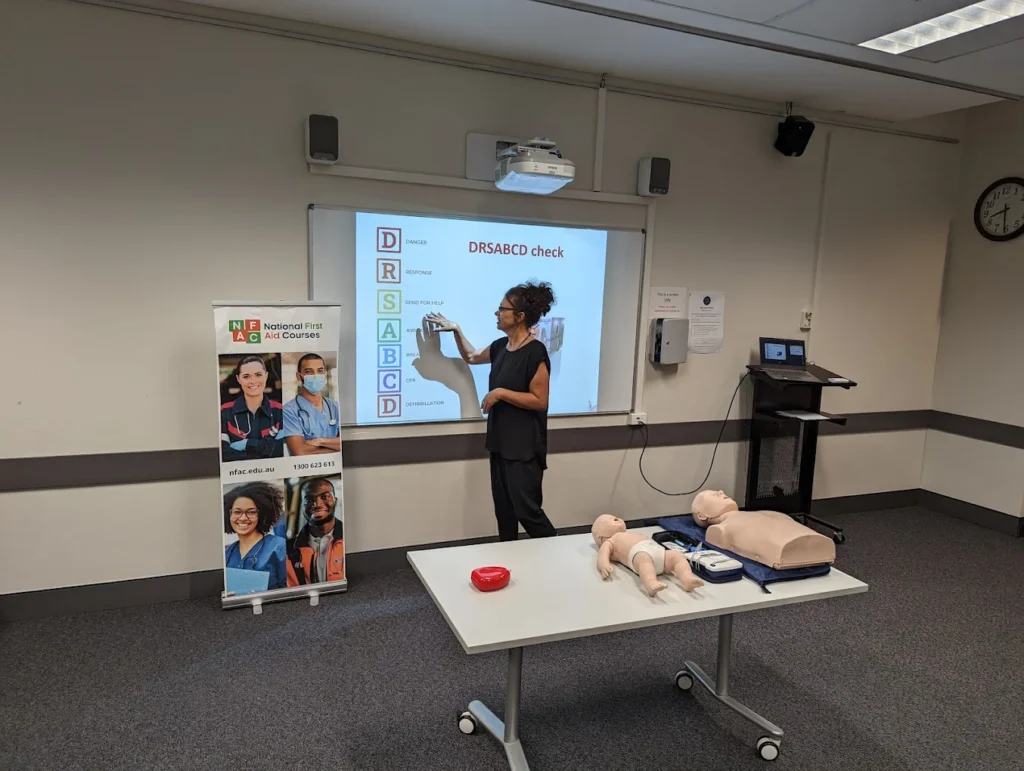
- DRSABCD stands for Danger, Response, Send for help, Airway, Breathing, CPR and Defibrillation.
- DRSABCD is a simple first aid action plan used in Australia to help assess and respond to emergencies.
- Each step helps first aiders identify immediate risks, assess the person’s condition and take appropriate action.
- CPR and defibrillation are important parts of the DRSABCD process when a person is unresponsive and not breathing normally.
- DRSABCD is taught as part of first aid training in Australia, including practical training in CPR and using an AED.
If you’ve ever completed or looked into doing a first aid course, you may have heard the acronym DRSABCD. DRSABCD is a simple action plan used to help first aiders respond to an emergency in a safe and structured way. It provides a sequence of steps to follow when someone is seriously injured, suddenly unwell or unresponsive.
The reason it’s considered so effective? Well, in an emergency, it can be difficult to think clearly. Having a simple process to follow can help you stay focused, identify life-threatening problems and take appropriate action while waiting for emergency medical assistance.




What Does DRSABCD Stand For?
DRSABCD is an action plan used in Australian first aid to help first aiders assess a situation and respond to someone who is seriously ill or injured.
It provides a logical sequence to follow in an emergency, helping you identify immediate dangers, check the person’s condition and take appropriate action. DRSABCD stands for:
- D for Danger
- R for Response
- S for Send for help
- A for Airway
- B for Breathing
- C for CPR
- D for Defibrillation
Each step has an important purpose and should be followed in order. Let’s take a closer look at what each letter means.
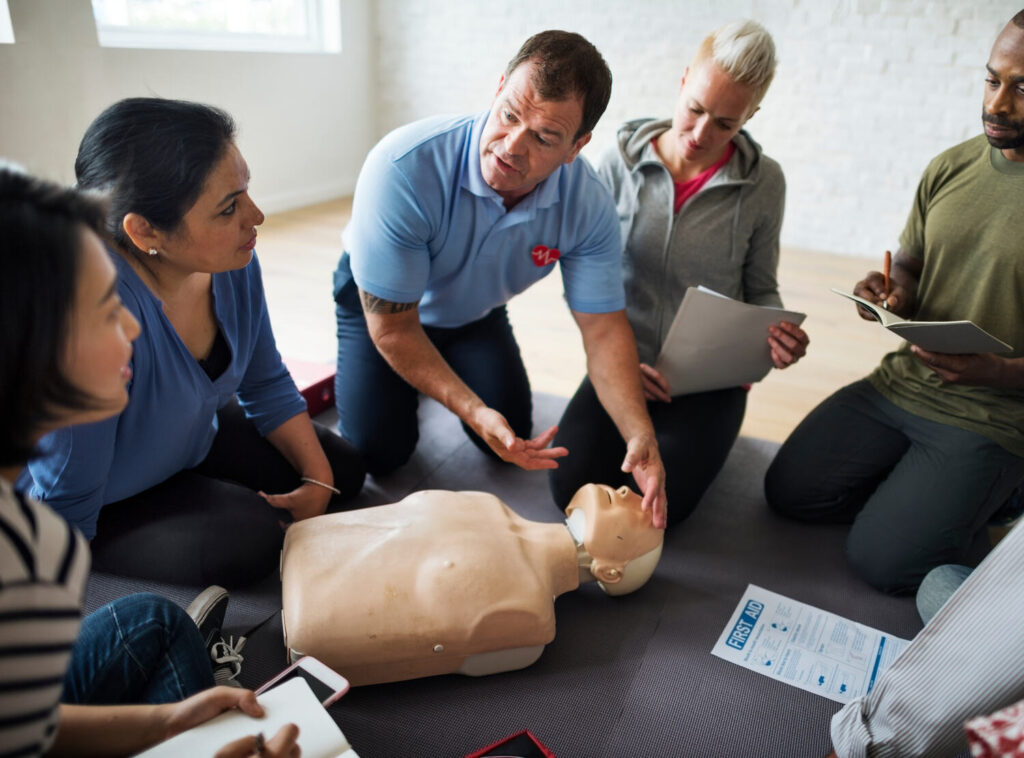
D: Danger
The first step is Danger. Before approaching someone who needs help, you need to make sure the situation is safe. Look around the area and identify anything that could put you, the casualty or other people at risk.
Potential hazards could include traffic, electricity, fire, water, sharp objects, chemicals or bodily fluids.
There’s no point becoming another casualty. If the scene isn’t safe, you need to consider what can be done safely before approaching the person. Checking for danger is therefore an important first step in any emergency response.
R: Response
Once you’ve established that it is safe to approach, the next step is Response. You need to determine whether the person is responsive.
You can try speaking to them and asking questions such as, “Can you hear me?” You can also use gentle touch to see whether they respond.
If the person responds, you can assess their condition further and provide appropriate first aid. If they don’t respond, you need to move to the next step and get help.
S: Send for help
The S stands for Send for help. If the person is unresponsive, call for emergency assistance or ask someone else to make the call.
In Australia, this means contacting 000 for emergency medical assistance.
If other people are nearby, you can ask a specific person to call 000 rather than simply shouting for someone to get help. This makes it more likely that the call will actually be made while you continue assessing and assisting the casualty.
Getting professional help as quickly as possible is an important part of responding to a serious emergency.
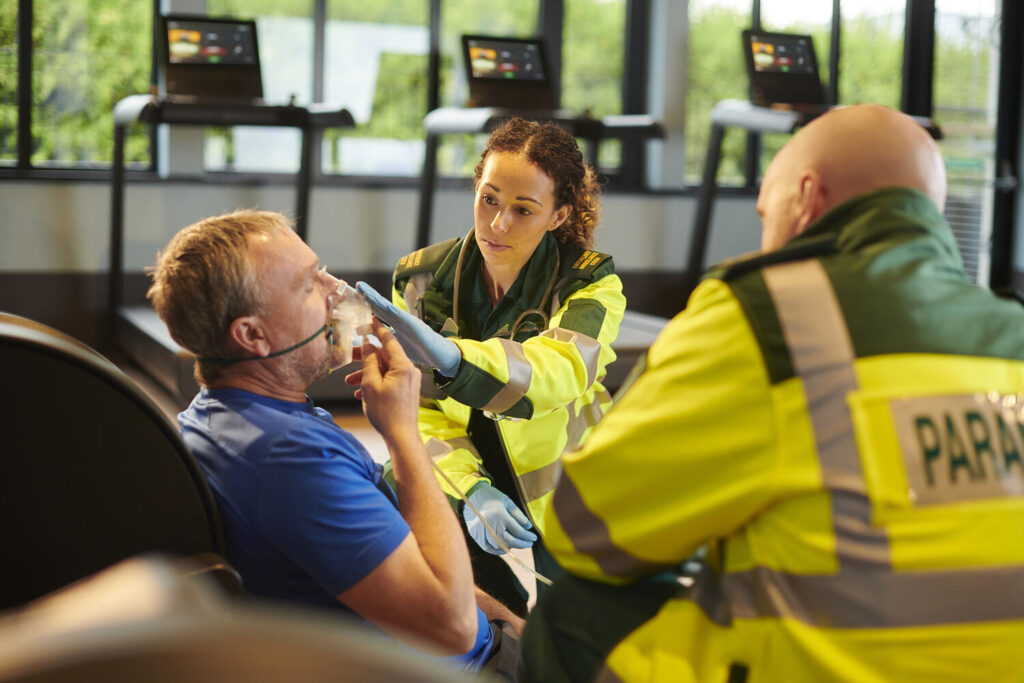
A: Airway
The A stands for Airway. Once you’ve sent for help, you need to check the person’s airway. An airway that is blocked or obstructed can prevent oxygen from reaching the lungs. If the person is unresponsive, positioning the head appropriately can help open the airway.
During first aid training, you’ll learn how to assess and manage the airway as part of the DRSABCD process.
B: Breathing
The B stands for Breathing. After checking the airway, you need to determine whether the person is breathing normally. This is a critical part of the assessment because a person who isn’t breathing normally may require CPR. First aid training teaches you how to assess breathing and recognise when a person needs immediate resuscitation.
If the person is unconscious but breathing normally, the appropriate response may be different from someone who is not breathing normally. This is why learning the complete DRSABCD process is so important rather than simply memorising the acronym.
C: CPR
The C stands for CPR, or cardiopulmonary resuscitation. If a person is unresponsive and not breathing normally, CPR may be required.
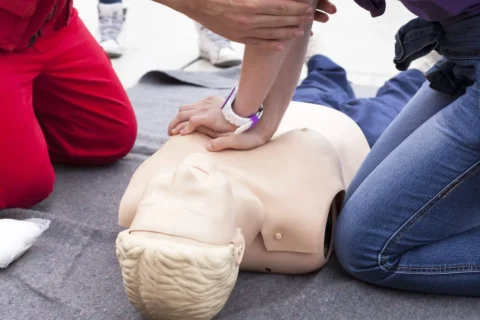
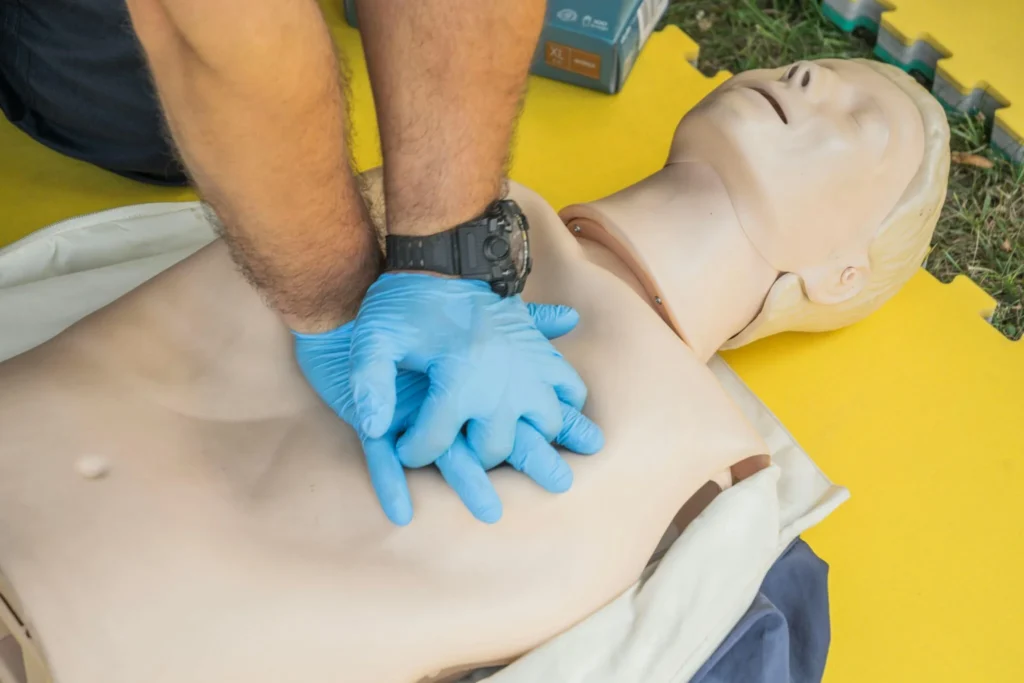
CPR involves chest compressions and rescue breaths and is used to help maintain blood flow and oxygen delivery to vital organs while waiting for emergency medical assistance. Knowing when and how to perform CPR is one of the most important skills taught in first aid training.
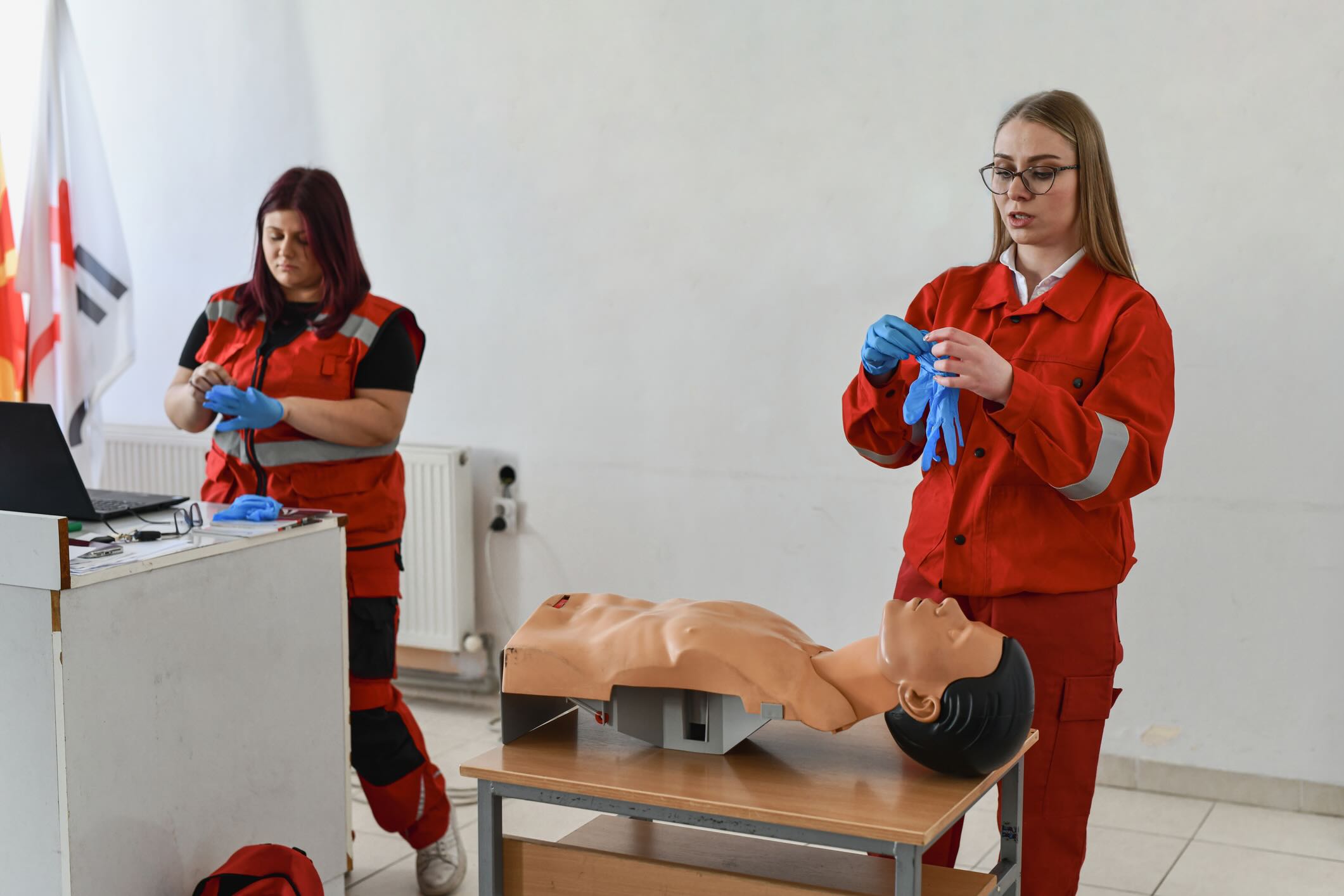
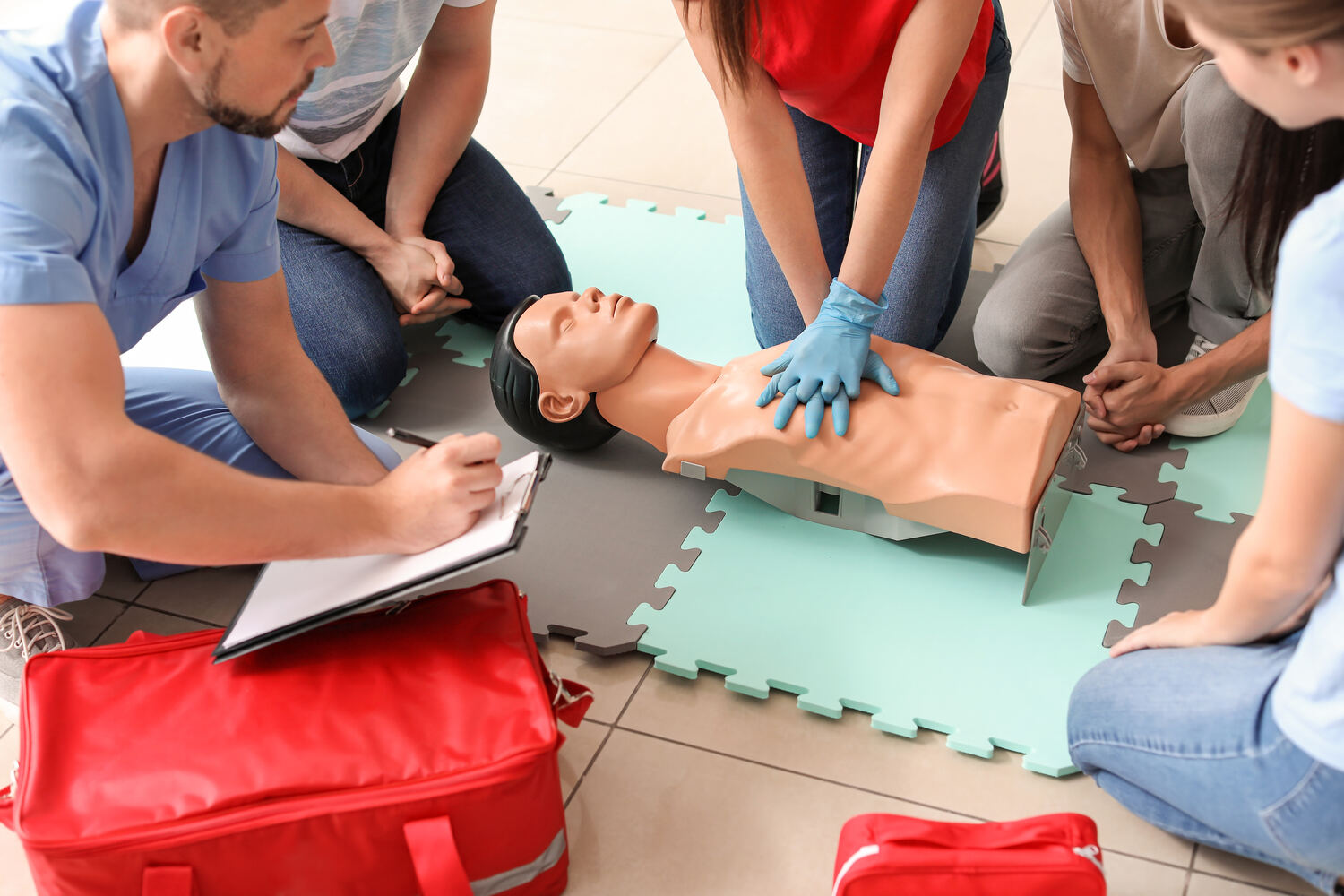
It’s also a skill that needs to be practised. First aid courses don’t simply explain CPR theoretically. Participants practise CPR on manikins so they can develop the practical skills and confidence needed to respond in an emergency.
D: Defibrillation
The final D stands for Defibrillation. This refers to the use of an automated external defibrillator (AED) when one is available and appropriate.
An AED is a device that analyses the heart’s rhythm and, when appropriate, delivers an electrical shock to help treat certain types of cardiac arrest. AEDs are designed to provide clear instructions to the person using them, so you don’t need to be a medical professional to use one.
In a cardiac arrest, early CPR and defibrillation can be critical while waiting for emergency services to arrive. As part of first aid training, you’ll learn how an AED works and have the opportunity to practise using one.
Why is DRSABCD Important in First Aid?
One of the biggest benefits of DRSABCD is that it provides a simple structure to follow during a stressful situation. An emergency isn’t the time to try to remember everything you’ve ever learned about first aid. A structured approach helps you work through the most important checks and actions in the correct order. DRSABCD can help first aiders:
- Assess an emergency systematically.
- Identify immediate dangers before approaching a casualty.
- Recognise whether someone is responsive.
- Get emergency assistance quickly.
- Check the airway and breathing.
- Recognise when CPR may be required.
- Understand when and how defibrillation may be used.
- Remain more calm and focused during an emergency.
It is important to remember, however, that DRSABCD is more than just an acronym to memorise. Effective first aid involves knowing what each step means and how to apply it in a real situation.
Is DRSABCD Taught in First Aid Courses?
DRSABCD is an important part of first aid training in Australia.
During a first aid course, you’ll learn how to assess an emergency, follow the DRSABCD action plan and apply practical first aid skills. This includes hands-on practice with CPR and defibrillation, as well as other first aid techniques.
National First Aid Courses delivers face-to-face first aid training designed to give participants practical skills and confidence when responding to emergencies. Participants practise essential skills such as DRSABCD, CPR and using a defibrillator during their training.
The DRSABCD process is also included in NFAC’s first aid learning materials and is described as an action plan to guide first aiders through an emergency in the correct order.
Frequently Asked Questions
Is DRSABCD the same as DRABC?
DRABC is an older version of the same action plan. The main difference is the addition of the second D for Defibrillation, which reflects how widely available AEDs have become in public spaces like shopping centres, airports and gyms.
If you’ve done first aid training before and learned DRABC, the steps are largely the same, but updating to DRSABCD means you’re also learning when and how to use a defibrillator, which is now a standard part of Australian first aid training.
Does DRSABCD work the same way for children and infants?
The same sequence applies for children and infants, but some of the practical steps are adjusted for younger casualties. CPR technique for children and infants differs from adult CPR in terms of compression depth, hand placement and rescue breath volume. If you’re working in childcare, education or any role involving children, it’s worth making sure your first aid training specifically covers paediatric first aid alongside the standard DRSABCD process.
Is DRSABCD used outside Australia?
The specific acronym is primarily used in Australia, but the underlying logic is consistent with emergency response frameworks used in other countries. The UK uses DR ABC, and other countries have their own versions.
The core priorities, checking for danger, assessing responsiveness, getting help, managing the airway and breathing, and starting CPR, are consistent across most international first aid guidelines, so the skills transfer even if the acronym changes.
What if you freeze in a real emergency and can't remember the steps?
It happens to freeze or forget what to do, and it’s one of the main reasons hands-on first aid training matters more than just reading about DRSABCD. Physically practising the steps in a course setting builds a kind of muscle memory that’s much easier to access under pressure than something you’ve only read once. Starting with D for Danger is a natural anchor point since it’s the first thing you instinctively do when you walk into any unexpected situation, and the rest tends to follow from there.
Can you perform DRSABCD without any training?