
Key Takeaways
- ABC stands for Airway, Breathing and Circulation in the traditional first aid assessment approach.
- In Australia’s DRSABCD action plan, the C refers to CPR, rather than circulation.
- Checking the airway and breathing is an important part of assessing someone who is seriously ill or injured.
- First aid courses teach you how to apply these principles in real-life emergencies, including when CPR and an AED may be required.
- Learning first aid can help you respond more confidently when someone needs immediate assistance.
ABC doesn’t just refer to the first three letters of the alphabet. In first aid, ABC stands for Airway, Breathing and Circulation. It’s a traditional way of remembering some of the most important things to check when assessing someone who is sick or injured.
Although ABC is less commonly taught as a standalone approach today, its principles are an important part of first aid training. In Australia, they are incorporated into the DRSABCD action plan, which provides a structured approach to responding to emergencies.
So, what does ABC mean in Australian first aid? The traditional ABC approach uses A for Airway, B for Breathing and C for Circulation. In DRSABCD, however, C stands for CPR.




What Does ABC Stand for in First Aid?
The traditional ABC approach focuses on three immediate priorities when assessing a person during an emergency:
- A – Airway: Is the airway clear and open?
- B – Breathing: Is the person breathing normally?
- C – Circulation: Is blood circulating effectively around the body?
These priorities are closely connected. A blocked airway can prevent breathing, while problems with breathing or circulation can deprive vital organs of oxygen.
In Australian first aid training, these principles are generally incorporated into the broader DRSABCD action plan rather than taught as a standalone process.
A: Airway
The first step is to check whether the person’s airway is open and clear.
The airway is the passage that allows air to travel into the lungs. If it becomes blocked by food, vomit, blood, swelling or another object, the person may be unable to breathe.
A person who is unconscious may also have an airway that is partially blocked because their tongue can fall backwards.
As part of the DRSABCD approach, a first aider checks and manages the airway using appropriate first aid procedures.
B: Breathing
Once the airway has been checked, the next step is to determine whether the person is breathing normally.
A first aider looks for normal chest movement and other signs of normal breathing. If the person is not breathing normally, CPR may be required.
Abnormal gasping is not considered normal breathing and can occur during cardiac arrest.
If a person is unconscious but breathing normally, their breathing should continue to be monitored and appropriate first aid procedures followed.
C: Circulation
In the traditional ABC approach, C refers to circulation, which is the movement of blood around the body. Effective circulation allows oxygen to reach the body’s tissues and organs.
Modern first aid focuses on recognising when a person is unresponsive and not breathing normally rather than spending valuable time trying to diagnose circulation problems by checking a pulse.
This is one reason the traditional ABC terminology differs from the C for CPR used in Australia’s DRSABCD action plan.
Why is the ABC Approach Important?
The ABC approach gives first aiders a simple way to prioritise the most urgent problems. When an emergency happens, a person may have multiple injuries or symptoms, but problems affecting their airway and breathing can become critical very quickly.
Following a structured approach helps a first aider focus on immediate life-threatening problems before moving on to less urgent injuries. It can also reduce hesitation by providing a clear sequence to follow.
This is particularly important when dealing with situations such as:
- Cardiac arrest
- Choking
- Unconsciousness
- Serious allergic reactions
- Severe injuries
- Breathing difficulties
- Other medical emergencies
First aid isn’t about diagnosing a person’s medical condition. It is about providing appropriate immediate assistance while waiting for professional medical help.
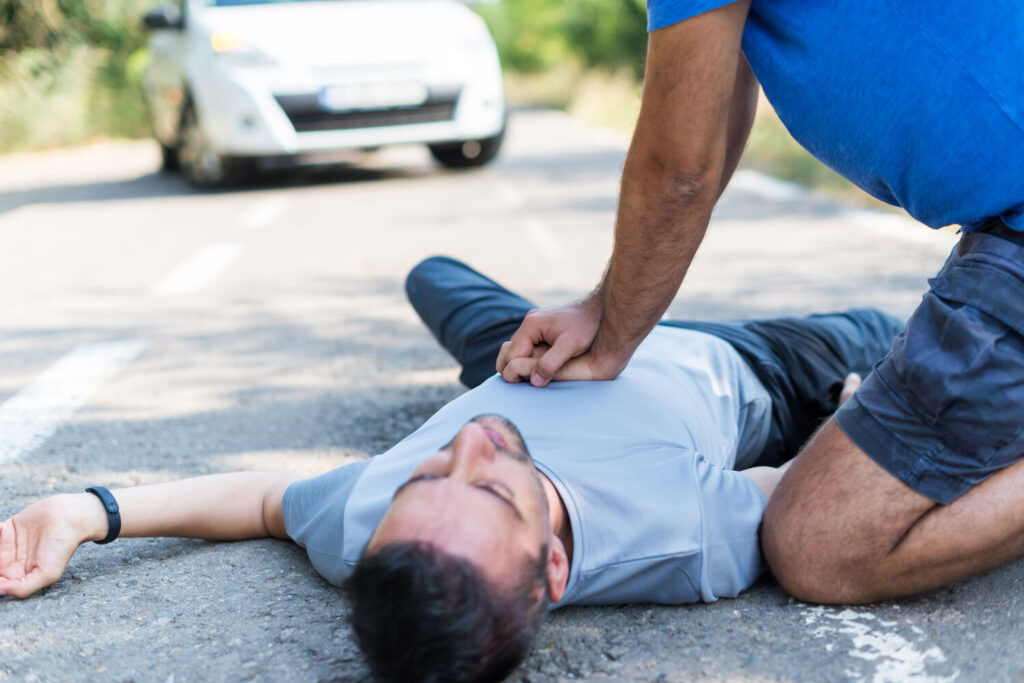
Is ABC Included in a First Aid Course?
Understanding the principles behind Airway, Breathing and Circulation is an important part of first aid and CPR training.
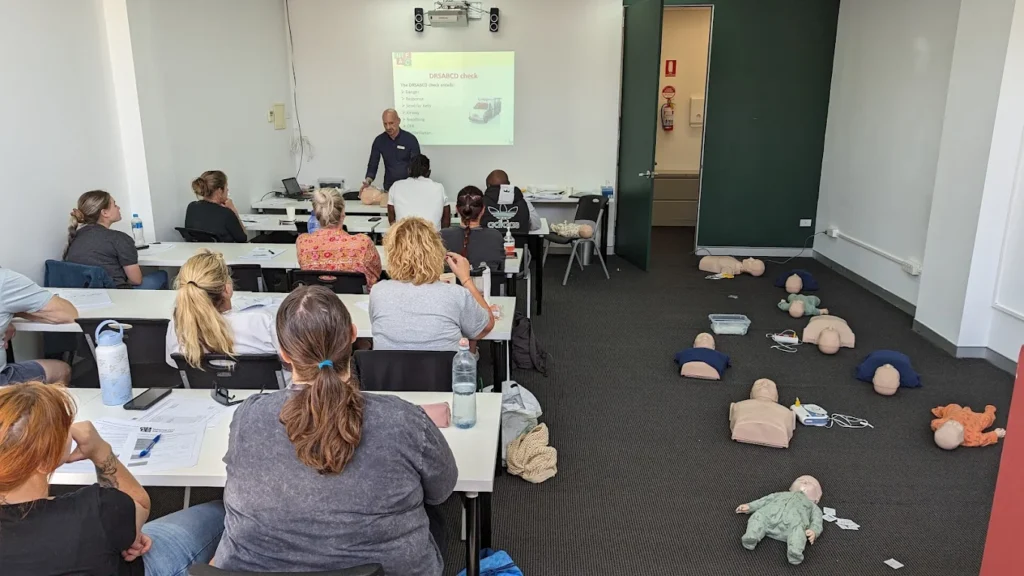
In Australia, first aid training generally teaches the DRSABCD action plan, including how to assess a person’s airway and breathing and when CPR and defibrillation may be required.
A recognised first aid course goes well beyond simply memorising the letters. You learn how to apply the steps in a practical emergency, including how to assess a casualty, respond to unconsciousness, perform CPR and use an AED.
This practical training matters because knowing what ABC stands for is very different from being confident enough to use those skills in an emergency.
Learn the ABCs of First Aid
Knowing what ABC stands for is a useful starting point, but first aid training is about much more than remembering a few letters.
In Australia, first aid courses teach you how to apply the DRSABCD action plan in practical situations, including assessing an emergency, performing CPR and using an AED when required.
Whether you’re completing first aid training for work, family, sport or simply to be better prepared, learning these skills can help you respond more confidently when someone needs help.
Frequently Asked Questions
How long does a first aid certificate last, and do you need to renew it?
In Australia, a standard first aid certificate is valid for three years. However, CPR is recommended to be renewed annually, since the guidelines can be updated and the skill itself benefits from regular practice. Most people do a combined First Aid and CPR renewal to knock both out at once.
If your certificate has lapsed, the good news is that renewal courses are typically shorter than the original training since you’re refreshing existing knowledge rather than starting from scratch.
Can you do more harm than good by performing CPR on someone?
What do you do if you're the only person there when someone collapses?
The priority is to call Triple Zero (000) immediately, even before starting CPR. Put the phone on speaker so the operator can guide you through the process while you work.
If there are other people nearby, shout specific instructions at a specific person (“You in the red shirt, call 000 now”) rather than a general call for help, since bystanders often freeze when no one is directly addressed. If you spot an AED nearby, grab it before starting compressions, since every second counts once you begin.
What's the difference between a basic first aid course and a more advanced one?
What should you do if someone starts breathing again while you're doing CPR?