Key Takeaways
-
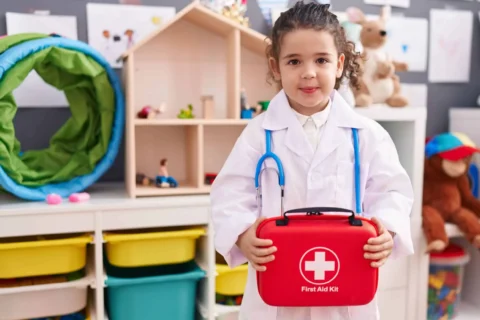
First aid training helps parents respond confidently in emergencies. A first aid course for parents teaches skills that can be used in real-life situations, helping parents if a child has an injury or medical emergency.
-
Courses cover life-saving skills such as CPR and choking response. First aid training for parents includes CPR for infants, children, and adults, along with techniques for managing choking and other common emergencies.
-
First aid courses can usually be completed in a day. Many nationally recognised courses take around 6–7 hours, while CPR-only training can often be completed in 1–2 hours, making them accessible for busy parents.
-
First aid training is valuable for anyone responsible for children. While designed for parents, these courses are also beneficial for grandparents, babysitters, and caregivers.
Becoming a parent changes the way you think about safety. Everyday situations suddenly carry new responsibility – from preparing meals and supervising bath time to managing bumps, falls, and unexpected illnesses.
While most childhood injuries are minor, emergencies can happen quickly and without warning.
Knowing what to do in those first critical moments can make a significant difference before professional help arrives. This is why many families choose to complete a first aid course for parents.
Modern first aid training for parents equips mothers, fathers, and caregivers with practical skills to recognise emergencies, provide immediate care, and respond calmly under pressure. In just a few hours of training, parents can learn life-saving techniques such as CPR, choking response, and how to manage common injuries and medical emergencies involving children.
This guide explains what parents can expect from first aid training, what skills are covered, how long courses typically take, and who can benefit most from learning these essential safety skills.


What is a First Aid Course for Parents?
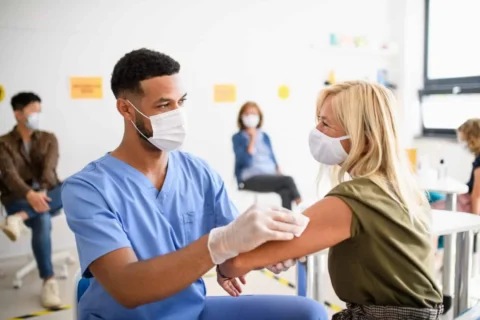
A first aid course for parents typically follows the same nationally recognised training standards used in Australian workplaces and childcare settings. These courses are designed to teach participants how to respond to a wide range of medical emergencies affecting adults, children, and infants.
In Australia, the most common training units include:
-
- HLTAID011 – Provide First Aid
- HLTAID009 – Provide Cardiopulmonary Resuscitation (CPR)
- HLTAID012 – Provide First Aid in an Education and Care Setting
While these courses are often required for workplace compliance, they are equally valuable for parents who want to be prepared for emergencies at home.
The childcare-focused unit (HLTAID012) is particularly relevant for families with young children because it includes additional emphasis on infant and child emergencies.
Regardless of the specific course selected, the training is designed to be practical, engaging, and accessible for people with no medical background.
Why First Aid Training is Important for Parents
Children are naturally curious. As they grow and explore the world around them, they inevitably encounter risks. Falls, cuts, burns, allergic reactions, and choking incidents are all relatively common during childhood.
In many situations, the first person available to respond is a parent or caregiver. Emergency services may take time to arrive, and the actions taken during those first few minutes can play an important role in stabilising a child and preventing complications.
Completing a first aid course for parents provides the knowledge and confidence to manage these situations effectively. Rather than feeling uncertain or panicked, trained parents know how to assess the situation, follow a structured response plan, and provide care until medical professionals arrive.
Parents who undertake first aid training often describe the experience as empowering. It removes much of the fear associated with emergency situations and replaces it with practical knowledge and preparedness.
Who Should Take a First Aid Course for Parents?
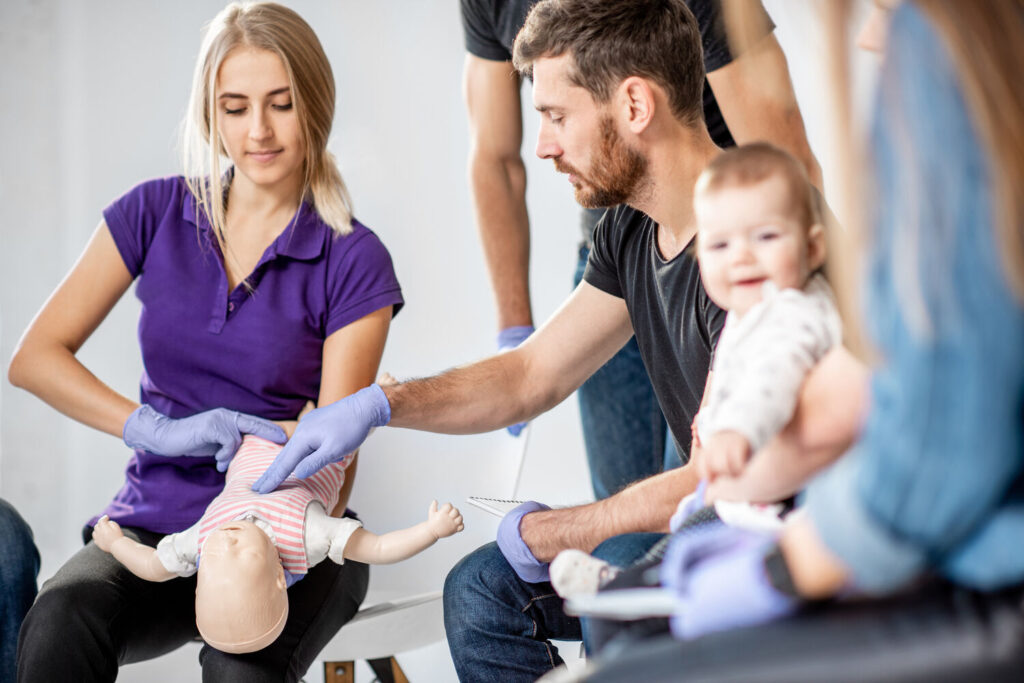
Certain groups may find it particularly valuable. New parents often choose to complete training before or shortly after the birth of their child. Learning infant CPR, choking response techniques, and how to manage common baby emergencies can provide significant peace of mind during the early stages of parenting.
Parents of toddlers and young children also benefit greatly from first aid training. As children begin crawling, walking, and climbing, their risk of minor injuries increases. Knowing how to respond to falls, burns, or choking incidents can make everyday parenting feel safer and more manageable.
Families with children who have asthma, allergies, or other medical conditions may find first aid training especially important. Understanding how to recognise symptoms and respond quickly can help prevent complications during an emergency.
First aid training is not limited to parents alone. Grandparents, babysitters, and other caregivers can also benefit from learning these skills. In many families, multiple people share responsibility for childcare, and ensuring that everyone knows how to respond in an emergency creates a safer environment for children.
What You’ll Learn in a First Aid Course for Parents
A quality first aid training program for parents focuses on practical skills that can be applied in real-world situations. Participants learn how to recognise emergencies, provide immediate care, and seek professional help when needed.
The training includes:
CPR and DRSABCD
One of the central components of most courses is cardiopulmonary resuscitation (CPR).
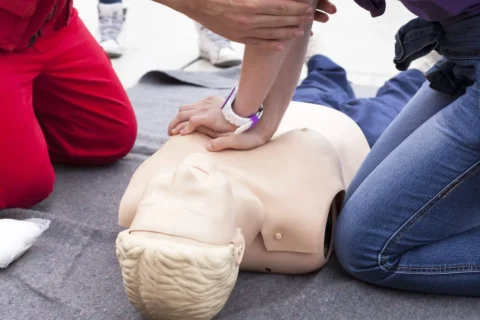
Parents practise performing CPR on adult, child, and infant training manikins while learning the internationally recognised DRSABCD action plan used by emergency responders. This framework guides participants through assessing danger, checking responsiveness, calling for help, and beginning life-saving interventions.
Choking
Choking response is another critical skill taught in first aid training. Because infants and young children frequently explore objects with their mouths, choking incidents can occur suddenly.
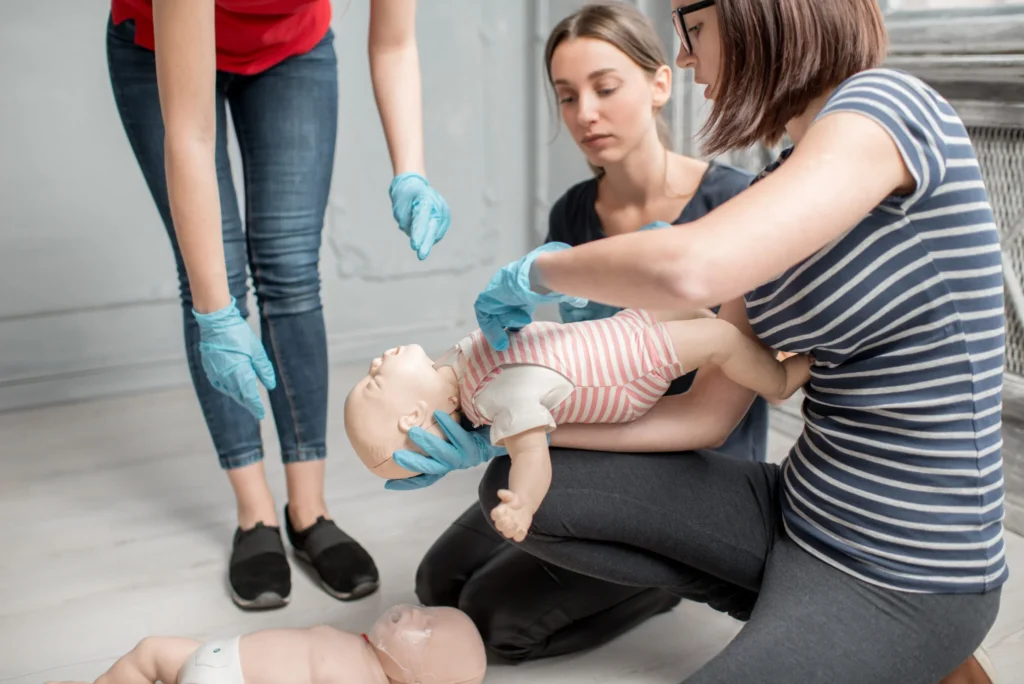
Parents learn how to identify the signs of airway obstruction and how to perform the appropriate response techniques for babies and young children.
Allergic Reactions
Courses also cover how to respond to severe allergic reactions. Food allergies are increasingly common, and some reactions can escalate rapidly into anaphylaxis.
Parents are trained to recognise symptoms such as swelling, difficulty breathing, or widespread hives, and they practise using adrenaline auto-injectors so they can respond quickly if necessary.
Burns and scalds
Burns and scalds are another common household injury, particularly in kitchens and bathrooms. Training teaches parents how to cool burns immediately, protect the affected area, and determine when medical attention is required.
Everyday Injuries
Beyond these high-risk scenarios, first aid courses also teach how to manage everyday injuries such as cuts, bleeding wounds, sprains, and nosebleeds. Parents learn safe bandaging techniques and how to reduce infection risk while providing basic care.
Serious Medical Conditions
Importantly, first aid training also helps parents recognise the signs of serious medical conditions such as asthma attacks, seizures, stroke, or poisoning. Early recognition can lead to faster treatment and improved outcomes.
How Long Does First Aid Training for Parents Take?
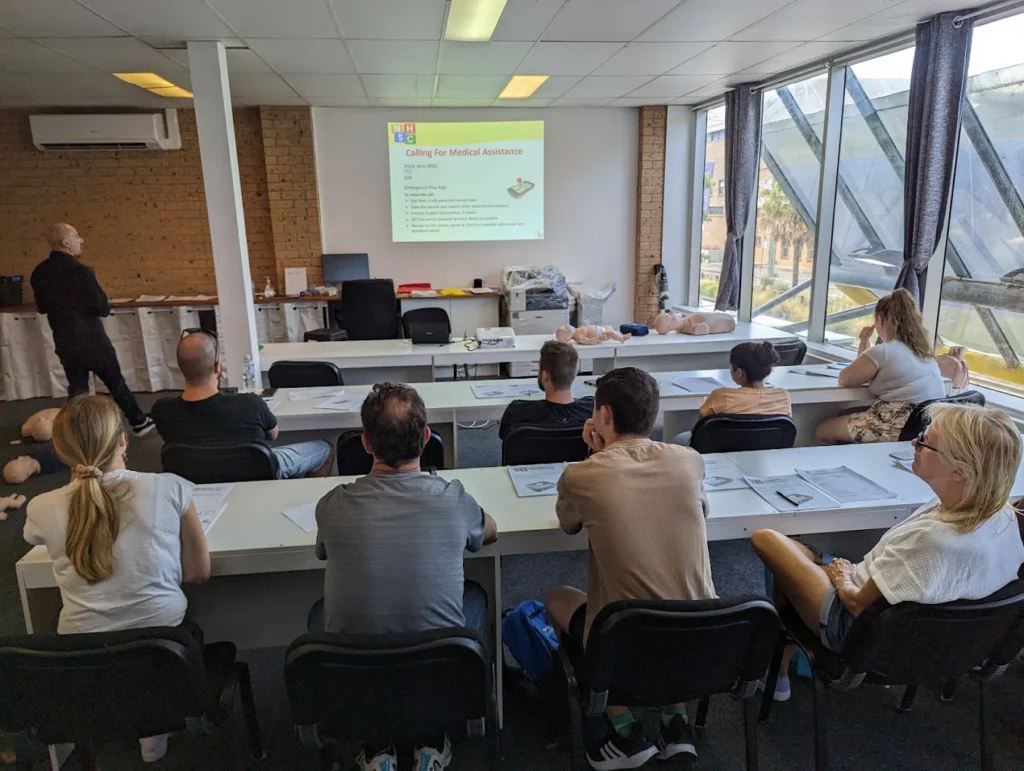
Many parents are surprised to learn how quickly first aid training can be completed. Most nationally recognised courses are designed to fit into a single day, making them accessible even for busy families.
A standard Provide First Aid (HLTAID011) course usually involves around one day of training. Some providers offer blended learning options, where participants complete theory components online before attending a shorter in-person practical session.
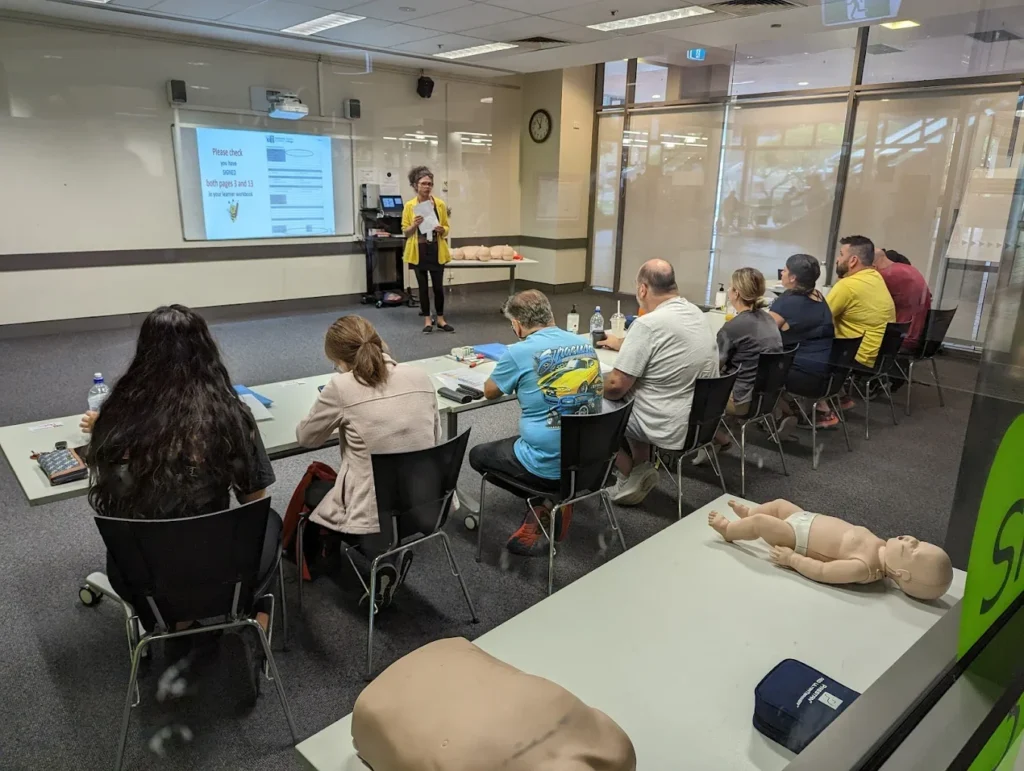
Courses that focus specifically on childcare first aid typically take around six to seven hours of face-to-face training. These sessions include demonstrations, practical exercises, and simulated emergency scenarios that help participants practise the techniques they have learned.
For parents who want a shorter introduction, CPR-only courses are also available and can often be completed in one to two hours.
Although the training time is relatively short, the knowledge gained can be incredibly valuable. Participants leave with practical experience and a recognised certificate demonstrating their ability to respond to common emergencies.
How Long First Aid Certification Lasts
First aid certificates in Australia remain valid for three years. However, it is recommended that CPR skills should be refreshed more frequently.
The Australian Resuscitation Council advises renewing CPR training every 12 months. This ensures participants remain confident in performing the technique and stay up to date with current guidelines.
For parents, periodic refresher training is beneficial because it reinforces important skills and keeps emergency response procedures fresh in memory. Many parents choose to repeat training every few years, particularly as their children grow and encounter new activities and environments.
Frequently Asked Questions
Do parents need first aid training?
While it is not legally required, first aid training for parents is strongly recommended because it teaches essential skills like CPR, choking response, and how to manage common childhood injuries.
How long does a first aid course for parents take?
Most first aid courses take between 6 and 7 hours and can usually be completed in a single day. CPR-only courses may take 1–2 hours.
What first aid course is best for parents in Australia?
Many parents complete HLTAID011 Provide First Aid or HLTAID012 Provide First Aid in an Education and Care Setting, which includes infant and child first aid training.
Do first aid courses for parents include infant CPR?
Yes. Most first aid courses for parents include CPR training for infants, children, and adults. Participants learn how to recognise cardiac arrest, perform chest compressions and rescue breaths, and follow the DRSABCD emergency response plan.
Can parents take a first aid course without a medical background?
Absolutely. First aid training for parents is designed for people with no medical experience. Courses are practical, easy to follow, and guided by experienced trainers who demonstrate each skill step-by-step.
Ready to Complete your First Aid Training For Parents?
If your training is approaching the recommended renewal timeframe, completing a refresher course is the best way to ensure your skills remain current and workplace compliant.
National First Aid Courses provides nationally recognised training in:
- HLTAID009 – Provide Cardiopulmonary Resuscitation (CPR)
- HLTAID010 – Provide Basic Emergency Life Support
- HLTAID011 – Provide First Aid
Our courses are designed to be practical, accessible, and aligned with the latest Australian safety guidelines, helping individuals and workplaces stay prepared for emergencies.
Whether you need certification for work or simply want to learn life-saving skills, completing a first aid course ensures you are ready to respond when it matters most.