Key Takeaways for Face-to-Face First Aid Training
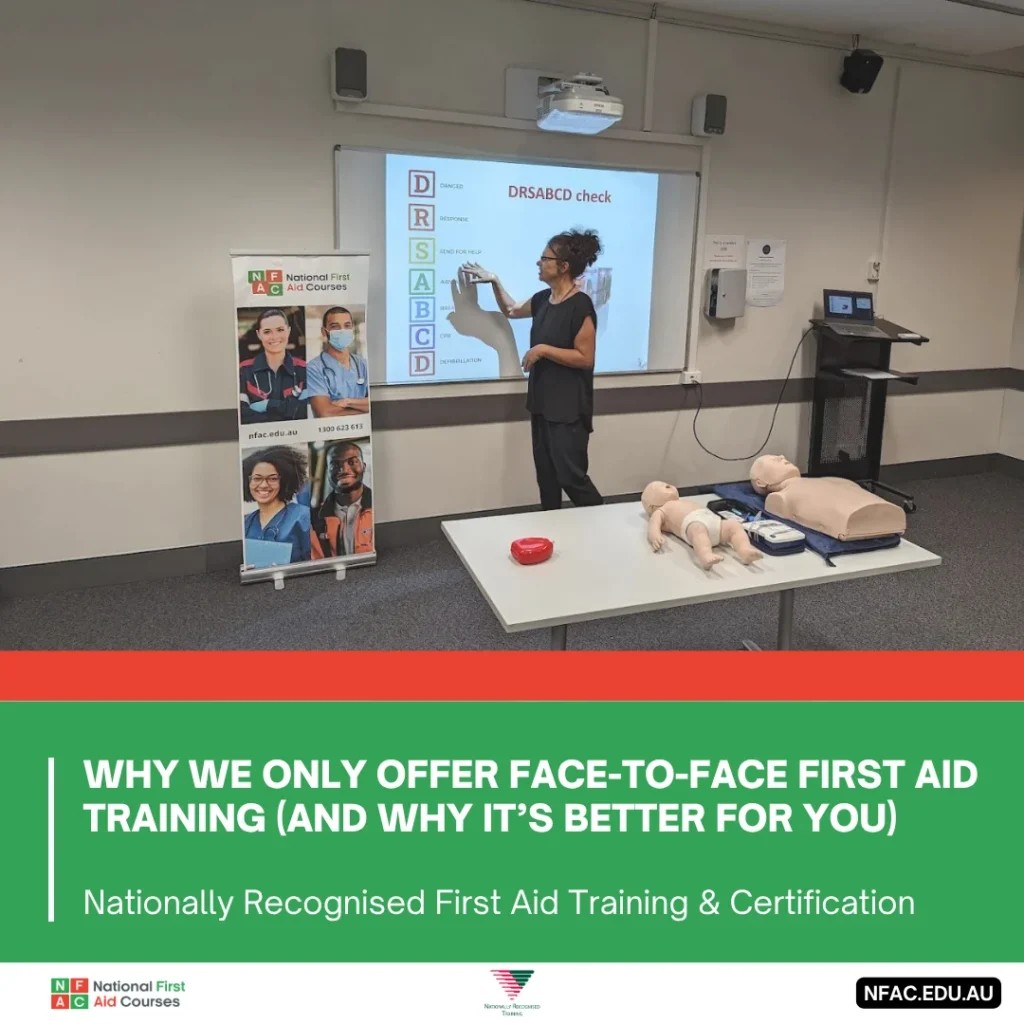
- No Hidden Online Modules: Complete all theory and practical skills in one streamlined in-person session—no 5–8 hour online pre-study required.
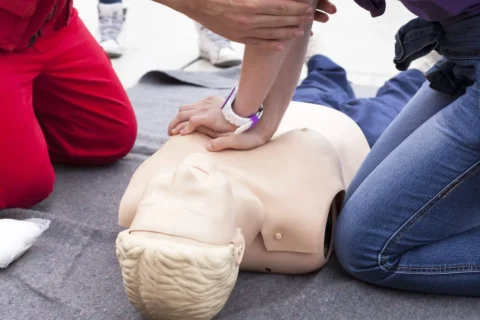
- Hands-On Practice: Learn CPR, AED use, bleeding and burn management, asthma and anaphylaxis response through live demonstrations and real-life scenarios.
- Real-Time Trainer Support: Ask questions, get instant feedback, and clear up confusion on the spot—no guessing based on multiple-choice quizzes.
- Higher Retention & Confidence: Active, in-person learning builds muscle memory and ensures you know exactly what to do under pressure.
- Same-Day Certification: Leave with your nationally recognised certificate on the day—ready to prove your skills.
- Convenient Locations & Times: Available at multiple venues across Australia with flexible scheduling, including weekends and short-notice sessions.
Cutting Through the Confusion of First Aid Training in Australia

Let’s be clear about what a blended course actually involves.
A “blended” first aid course means you complete all the theory online at home — and then show up in person to do the practical component.
However, what many providers don’t tell you is that the online component often takes four to eight hours to complete.
And that’s not easy time either — it’s usually multiple modules, quizzes, and videos that drag on.
The time needed to complete the online modules for a blended first aid course is usually buried in the fine print, but it’s there.
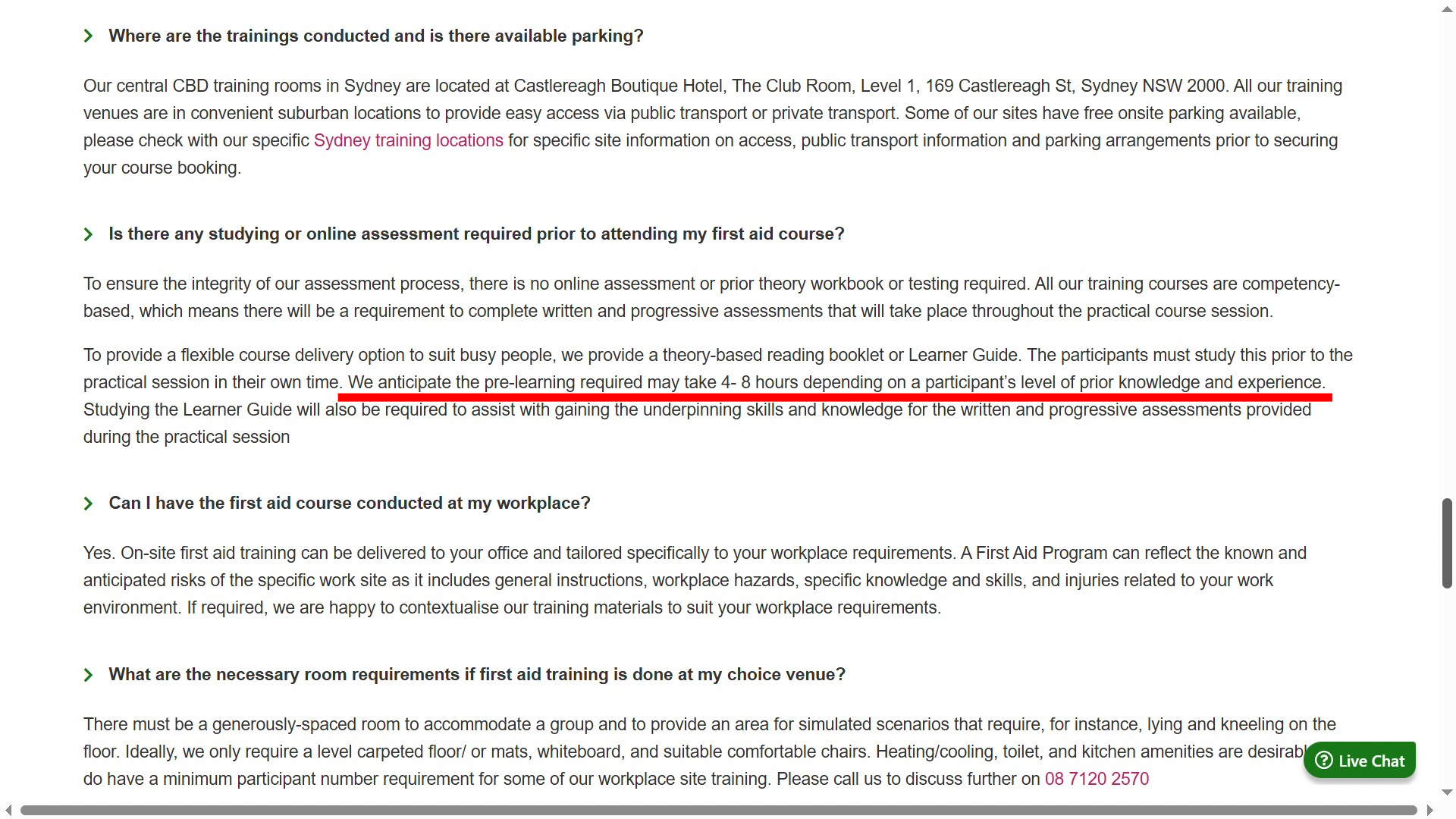
And here’s the kicker: you still have to go to a training site to finish the course anyway.
So after all that time sitting at your computer, you still need to book in, travel, and attend the in-person session.
From a trainer’s perspective, it just doesn’t make sense.
You’re already giving up part of your day — why not do it properly and get the whole thing done in one go?
That’s what we offer.
One face-to-face session, start to finish, where everything is explained clearly and you leave confident, not confused.
Trainer insight:
“Blended courses just shift the workload onto you — without giving you the trainer support that you need.”
The Problem With Online Modules in First Aid Training
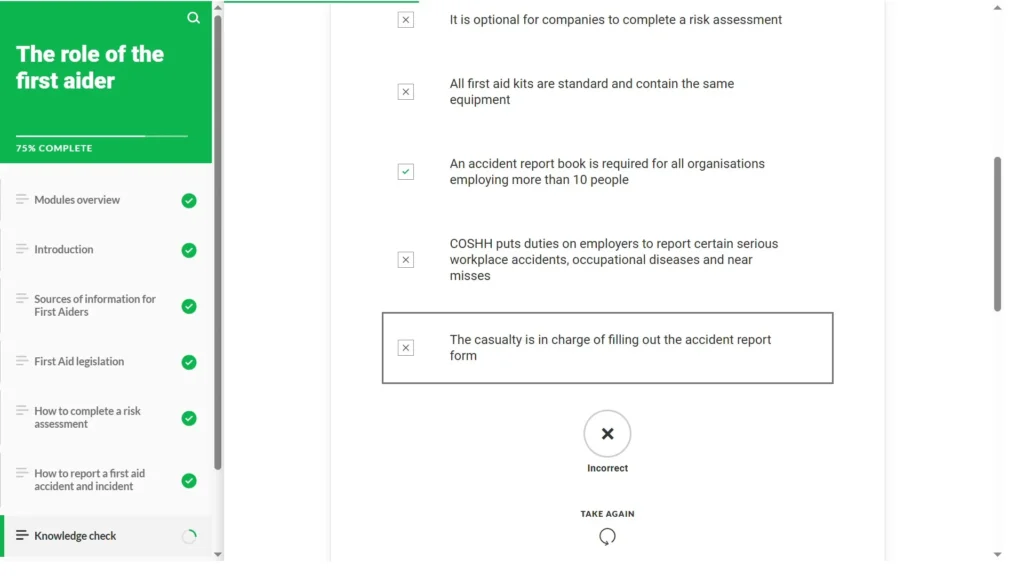
Trying to learn first aid by clicking through slides on a computer screen at home doesn’t work for most people.
We’ve heard it all from students who’ve done online or blended courses elsewhere:
-
“The questions didn’t make sense.”
-
“I didn’t know what the right answer was supposed to be.”
-
“I finished it, but I still wasn’t confident.”
And we get it — because most online modules aren’t built to actually teach you effective first aid techniques.
Here’s what usually happens if you take a blended or online first aid course:
1. Multiple Choice Confusion
The quizzes often give you several answer options — with a few that are obviously wrong, and a couple that seem right.
That kind of guessing game doesn’t build knowledge.
It just puts the wrong answers in your head.
Trainer insight:
“We’ve had students quote incorrect first aid steps to us — because they remembered them from a dodgy online quiz.”
2. No Room to Ask Questions
If something doesn’t make sense online, who do you ask?
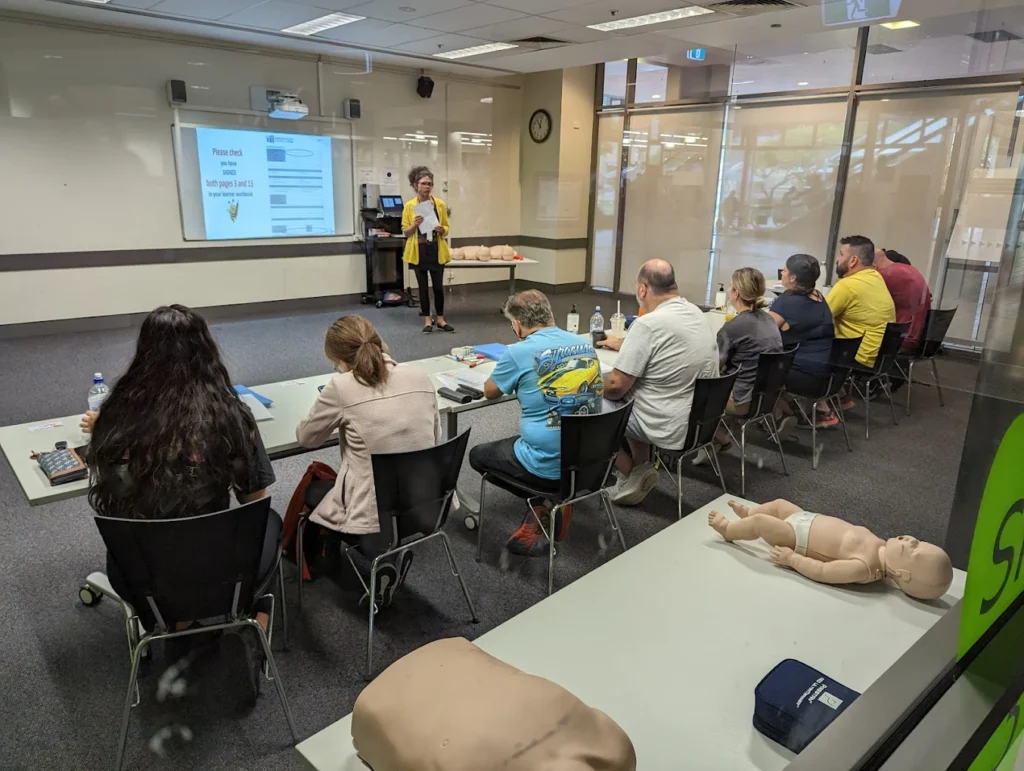
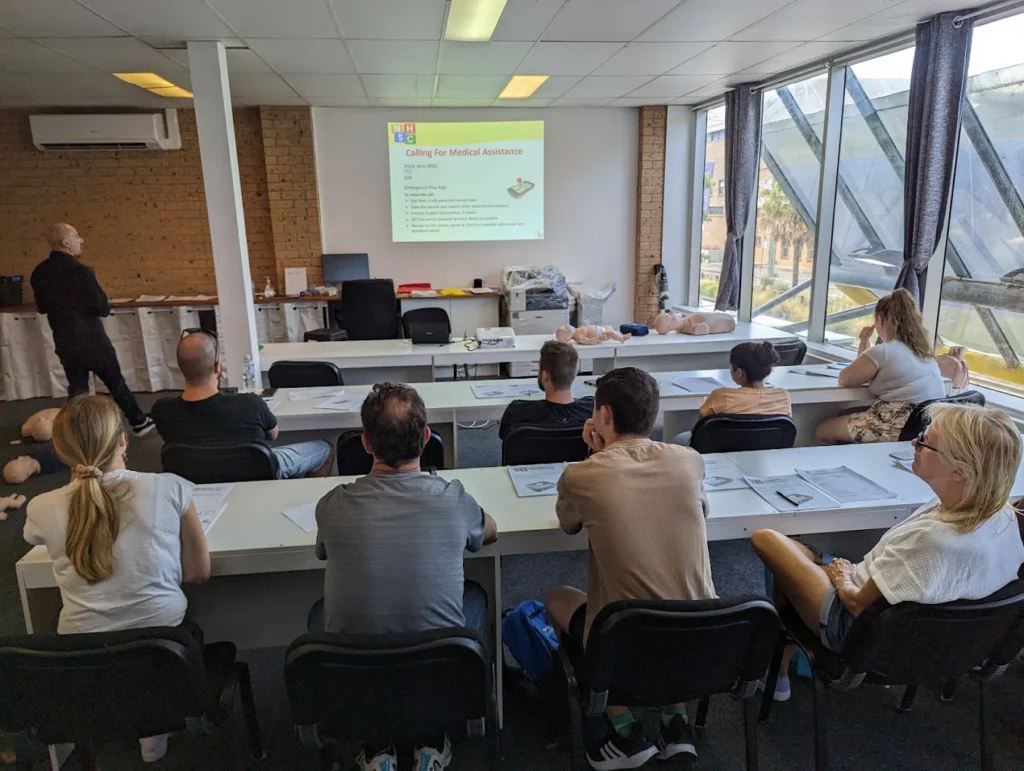
In a face-to-face session, you can raise your hand, have a proper discussion, and learn from the trainer (and your classmates).
That back-and-forth is where real learning happens.
3. It’s Passive, Not Practical
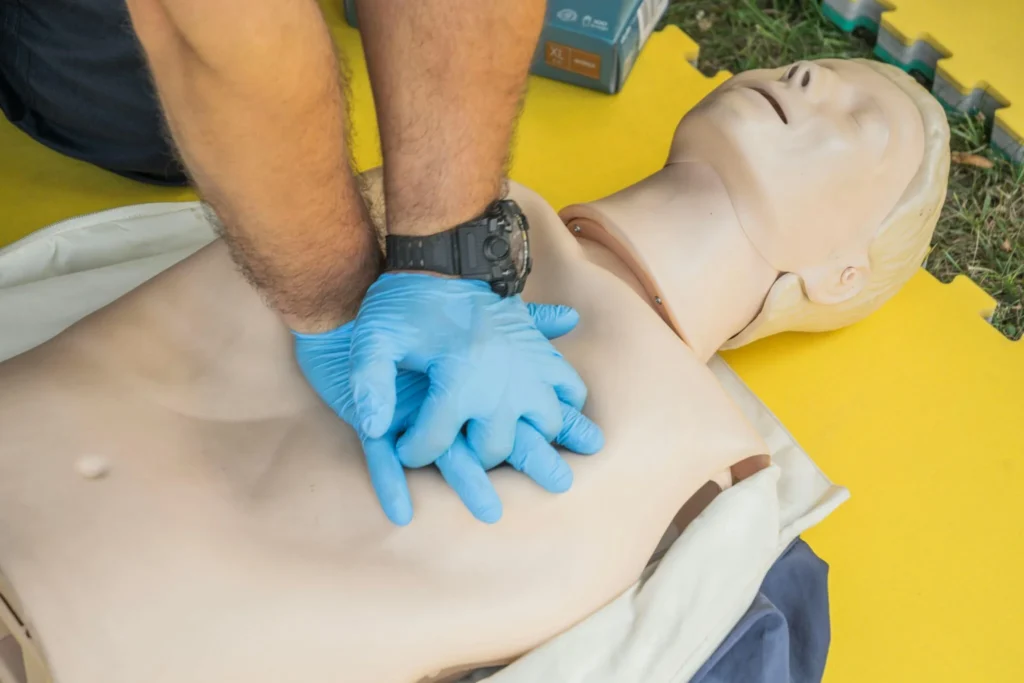
You can’t learn CPR by watching a video.
You need to do it.
You need to feel how hard to push, how to check for breathing, and what real-time feedback looks like.
Online modules just don’t offer that level of experience.
4. It’s Mentally Draining
Sitting alone, staring at screens for 5–8 hours?
That’s exhausting — and retention suffers.
In fact, research shows that people retain far less information from passive, screen-based learning compared to active, hands-on training.
Bottom line?
You might finish the online part… but that doesn’t mean you’ve actually learned it — or that you’ll remember it when it counts.
Trainer insight:
“When someone’s unconscious and not breathing, you need to act. You don’t want to be second-guessing yourself because a quiz from two weeks ago said something different.”
You Still Have to Show Up to a First Aid Training Venue Anyway — Why Waste Hours Online Too?
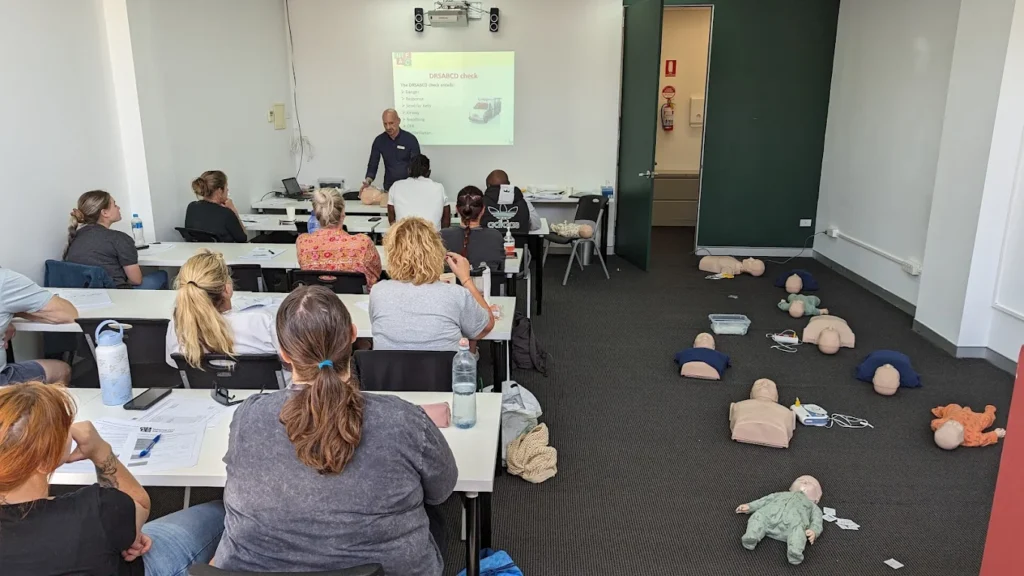
Here’s the part most people miss when they choose a blended course:
You still have to go to a first aid training site anyway.
Even if you’ve spent hours doing online theory, you’ll still need to attend a face-to-face practical session to demonstrate your skills and get certified.
That’s the national standard for first aid training in Australia — no way around it.
So let’s ask the obvious question:
If you’re already turning up in person… why not just do the whole course properly from the start?
The Face-to-Face Component in Blended Courses Is Often Rushed
In most blended courses, the practical session is cut down to the bare minimum.
Why?
Because they assume you already “know the theory” from the online part.
But most people don’t.
Not well enough at least.
That puts pressure on both the trainer and the student to squeeze everything into a shorter timeframe.
You’re often just doing a quick skills demonstration — not actually learning or building confidence.
Trainer insight:
“People show up for the practical but haven’t really understood the online content. Then we’re trying to catch them up during the session. It’s not fair on them — and it’s not safe.”
You’re Not Saving Time — You’re Spreading It Out
When you do a blended course, you’re not saving time — you’re just splitting your time in two.
First, several hours on your own at home.
Then travel, parking, and another few hours on site.
It all adds up fast.
In comparison, our face-to-face courses are efficient, streamlined, and done in a single session — usually in 3.5 to 6 hours total, depending on the course type.
You’re giving up your time either way.
With us, you make it count — and you walk away actually knowing what to do in an emergency.
Trainer insight:
“You wouldn’t want someone doing CPR on your loved one just because they passed a quiz online. We train people to really know what they’re doing.”
Face-to-Face First Aid Training = Faster, Easier, and More Practical
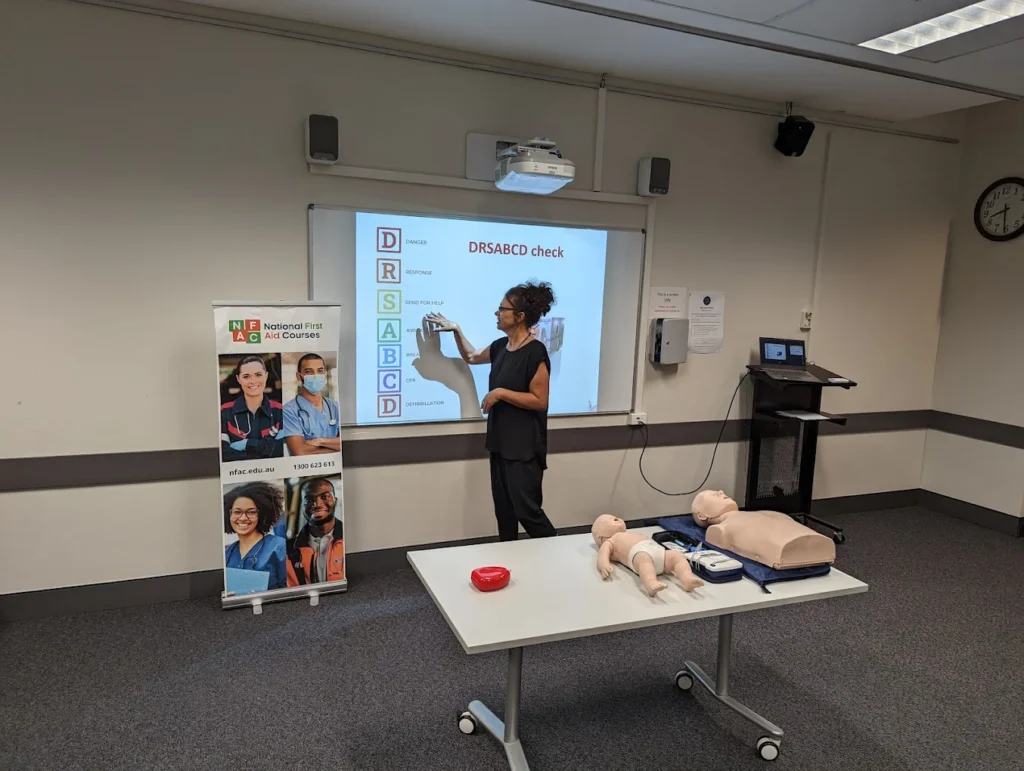
Here’s the truth most providers won’t tell you:
Face-to-face training is actually more convenient.
No login dramas.
No video modules.
No confusing multiple-choice questions.
You show up, get hands-on training with an experienced instructor, ask questions as they come up, and walk away fully certified — immediately after you complete the course.
Learn by Doing, Not Guessing
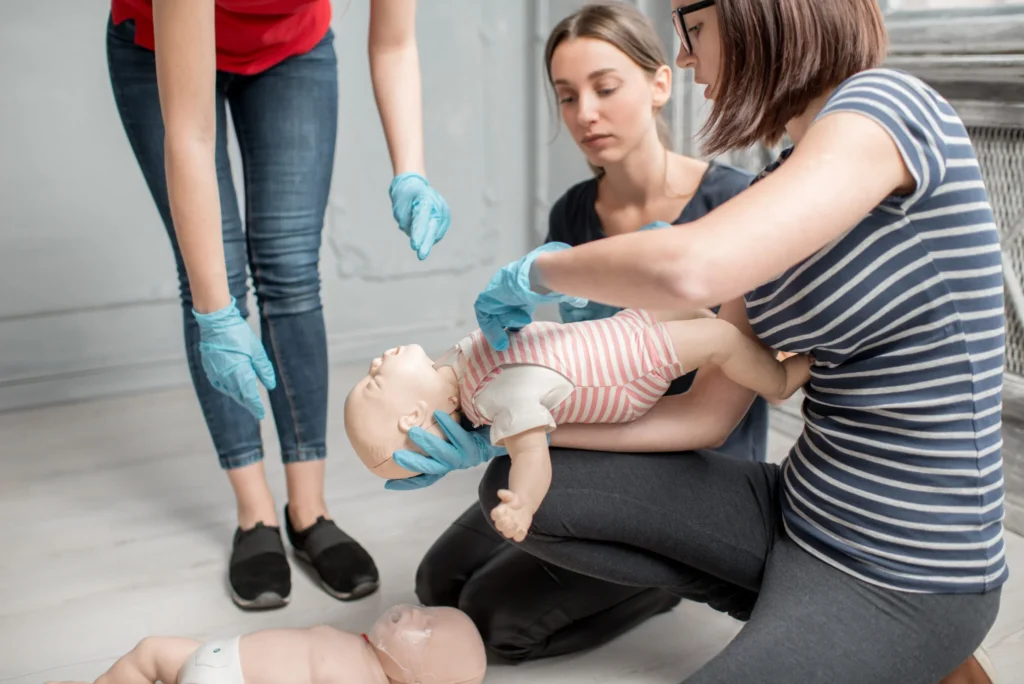
In a real training room, you’re learning by doing the things you’ll need in an emergency:
-
Checking for response and breathing
-
Performing CPR on a manikin
-
Using an AED
-
Managing bleeding, burns, asthma, anaphylaxis and more
You don’t just tick a box — you practice it until it makes sense.
Ask Questions, Get Real Answers
You’re not left wondering what a term means or whether you’ve interpreted a video correctly.
You’ve got an experienced trainer there, ready to explain it in plain English, using real-life examples and scenarios.
Trainer insight:
“Sometimes people feel silly asking a question online — or they just skip it. In person, we encourage questions because that’s how people really learn.”
Here’s How Face-to-Face Training Stacks Up:
| Feature | Blended Training | Face-to-Face (NFAC) |
|---|---|---|
| Total Time Commitment | Often 6–9 hours (online + travel + practical) | 3.5–6 hours (one session) |
| Learning Style | Passive online + rushed practical | Fully interactive, hands-on |
| Trainer Support | Limited or delayed | Real-time support, in person |
| Confidence Level | Often low – “Did I get it right?” | High – “I know exactly what to do” |
| Tech Hassles | Common – logins, timeouts, modules that don’t save | None – just show up |
| Certification Timeframe | Sometimes delayed after practical | Often same-day certification |
Blended courses might look convenient on paper — but in practice, they demand more of your time and give you less in return.
With National First Aid Courses, you show up once, learn it properly, and leave feeling ready.
Don’t Risk Getting It Wrong in an Emergency
Face-to-Face Training Is More Convenient Than You Think
When It Comes to First Aid, Real Learning Matters
Frequently Asked Questions
Can I still get a nationally recognised certificate if I do face-to-face only?
Yes — and in fact, face-to-face is the original and most widely recognised method of training. All our first aid courses are nationally recognised and comply with the latest Australian Resuscitation Council (ARC) guidelines. There’s no requirement to do any part online to be “valid.”
Isn’t online training more up-to-date with new information?
Not necessarily. Our trainers are qualified professionals who stay current with all regulation updates, changes to guidelines, and best practices. In fact, face-to-face training gives you a chance to ask about real-world updates that often get missed in outdated online modules.
What if I haven’t studied in years or get nervous in group settings?
Totally normal — and we cater to that. Our trainers are patient, down-to-earth, and experienced in working with people from all walks of life. You won’t be put on the spot or asked to perform in front of others. You’ll get support every step of the way, and we make sure everyone feels comfortable before assessment.
How do employers view face-to-face vs blended training?
Many employers actually prefer candidates who’ve done face-to-face training, especially in high-risk industries like construction, childcare, and healthcare. It gives them confidence that you’ve had hands-on practice and know what to do in a real situation.
Is face-to-face training more expensive?
Not with us. Our courses are priced competitively — and when you factor in the extra time, tech hassles, and delayed certification with blended options, face-to-face is often the better value overall. We also offer a Best Price Guarantee to make sure you’re not paying more than you should.
Do I need to bring anything on the day?
Just a valid photo ID, your USI (Unique Student Identifier), and a willingness to learn. We provide everything else — including experienced trainers, all equipment, and a straightforward process from start to finish.
Get Government-Approved First Aid Training at a Location Near You!
Ready to gain essential first aid skills to improve your confidence, enhance your resume, and advance your career?
Look no further than National First Aid Courses — Australia’s leading First Aid Course provider.
As a Registered Training Organisation (RTO 41072), we guarantee you will receive the highest standard of training.
We offer official, accredited, nationally recognised First Aid training at affordable prices.
Our comprehensive First Aid Courses are designed to equip you with the knowledge and certifications needed to provide life-saving assistance in emergency situations.
With face-to-face instruction, same-day certificates, and convenient locations across New South Wales and Queensland (including Sydney, Brisbane and the Gold Coast) we make it easy for you to become a certified First Aider.
Enrol in one of our upcoming First Aid courses and secure your spot today!