Key Takeaways
- Seconds Matter: Brain damage can start within 4–6 minutes of cardiac arrest. Without immediate CPR, survival odds drop fast — especially in the first critical moments.
- First Aid Saves Lives When You Know What to Do: CPR can double or triple survival chances, but only if someone nearby is trained and confident enough to act.
- AEDs Are Designed for the Public — But You Still Need Confidence to Use One: Basic training gives you the knowledge to recognise a defibrillator, turn it on, and follow the prompts without hesitation.
- Emergencies Hit Close to Home: Most cardiac arrests happen in everyday places like homes, parks, or workplaces. You’re more likely to help a loved one than a stranger.
- Training Turns Fear Into Action: Bystanders knew what to do — and it made all the difference. First aid training gives you the confidence to step up, not stand back.
You Never Think It’ll Happen To You... Until It Does

How Immediate Response Changed Everything
As first aid professionals, we see a lot of what should happen during these types of emergencies.
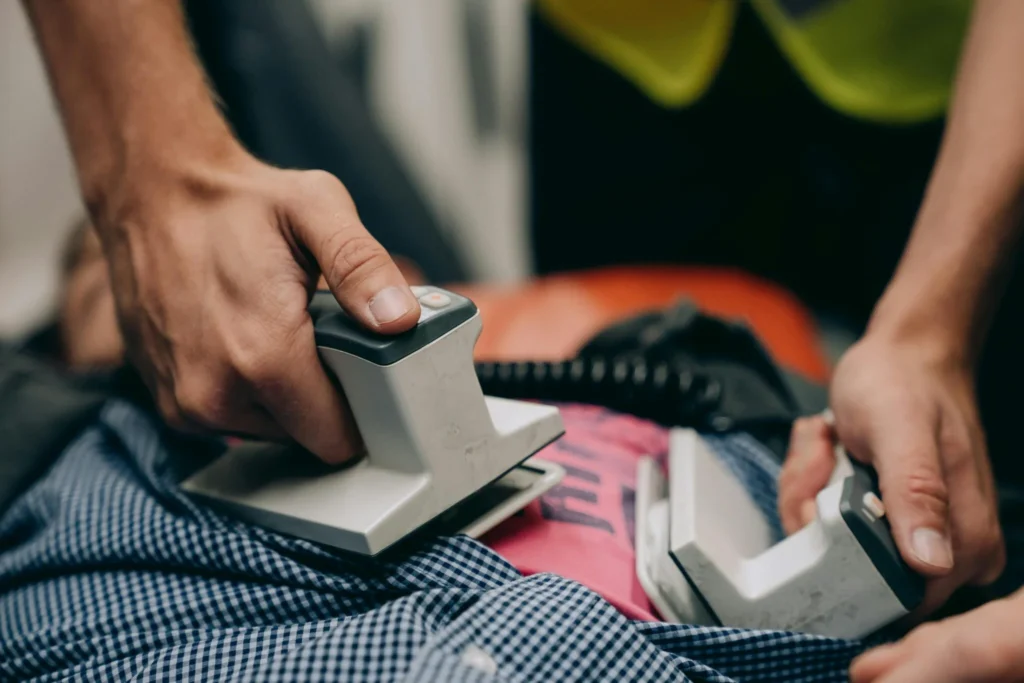
And while this family didn’t have professional training and first aid certificates, they ticked several life-saving boxes:
-
Immediate CPR: They didn’t wait. Chest compressions started right after the collapse.
-
Team effort: They rotated between compressions and breaths as they got tired — crucial for maintaining effective CPR.
-
Used an AED: Despite challenges retrieving it (wrong codes, asthma attack), they got the defib on scene and used it twice.
-
Called 000 early: Every second counts, and emergency services were already en route.
-
Help from strangers: A reminder that community response matters.
The Result?
Not only did he survive — he regained consciousness with no brain damage, an outcome that’s extremely uncommon after a cardiac arrest.
Brain cells begin dying within minutes without oxygen, so this kind of recovery only happens when CPR and defibrillation are started immediately.
Thanks to the quick responses from all involved, the patient was able to have successful bypass surgery and will be able to continue living a full life.
What Every Aussie Needs to Know

You don’t need to be a healthcare professional to save a life — but you do need to know what to do when it counts.
- CPR is critical. Studies show that starting CPR immediately can double or even triple the chances of survival after a cardiac arrest. Yet, according to the Heart Foundation, only about one in three Australians feel confident performing CPR when it really matters.
- AEDs (automated external defibrillators) are designed for everyone to use. They give clear, step-by-step voice instructions, making them accessible even to those without medical training. However, in a high-pressure moment, panic can easily take over. This is why practical training is so important — it helps build the confidence to act quickly and calmly.
- First aid is often performed on someone you know — not a stranger. Research shows people are much more likely to intervene for family members, friends, or colleagues. This means the person you help could be your parent, your best mate, or a coworker — someone close to you.
Knowing basic first aid isn’t just a nice skill to have — it’s a vital part of community safety that can directly affect the lives of people you care about.
Being prepared means you’re ready to step up when every second counts.
Doing Something Is Better Than Doing Nothing
One of the biggest reasons people don’t act in an emergency?
Fear.
Fear of making it worse.
Fear of “getting it wrong.”
Fear of being sued.
But here’s what every Australian should know:
You Are Legally Protected
In every state and territory in Australia, Good Samaritan laws protect people who help in good faith during an emergency.
That means if you try to assist — whether it’s CPR, calling 000, or grabbing a defib — you are not liable if things don’t go perfectly.
You won’t get sued for trying to save someone’s life.
Doing Nothing Is the Real Risk
Remember, when someone is in cardiac arrest, every minute that passes without CPR reduces their chance of survival by about 10%.
Waiting for an ambulance without starting CPR can be the difference between life and death — or permanent brain damage.
What To Do If Someone Collapses – A Simple Action Plan to Follow
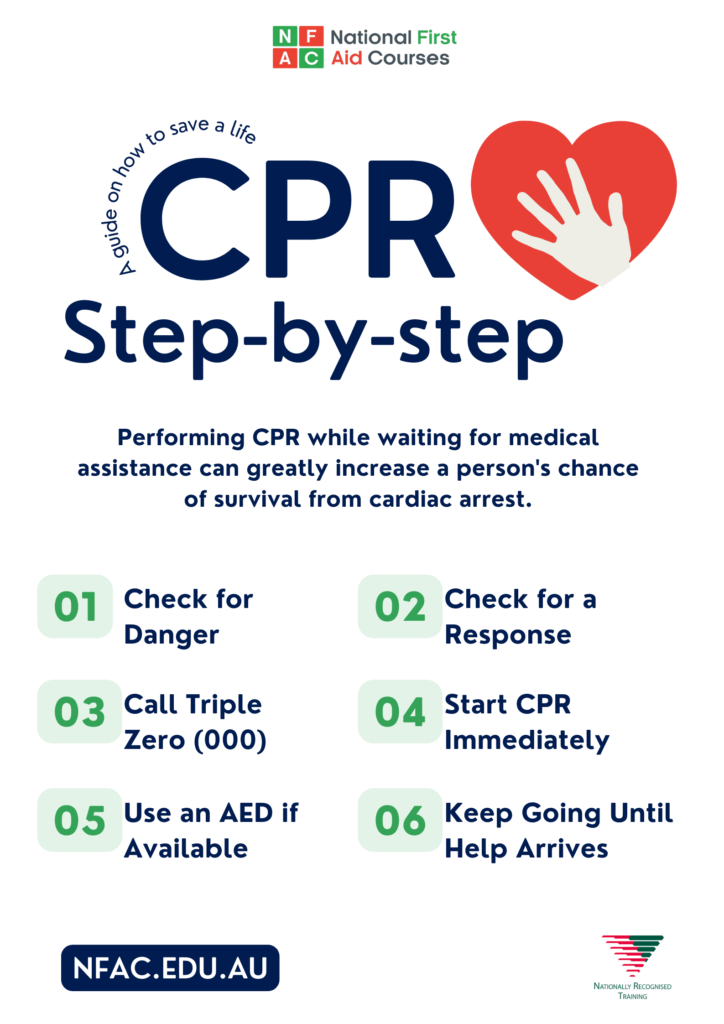
If you ever witness someone suddenly collapse and become unresponsive, your actions in the first few minutes are absolutely crucial.
Here’s what to do — even if you’ve never done first aid training:
1. Check for Danger
Make sure the scene is safe for you and others.
2. Check for a Response
Tap their shoulders. Shout their name. If they don’t respond and aren’t breathing normally — assume it’s cardiac arrest.
3. Call Triple Zero (000)
Put your phone on speaker. Stay calm. The operator will guide you.
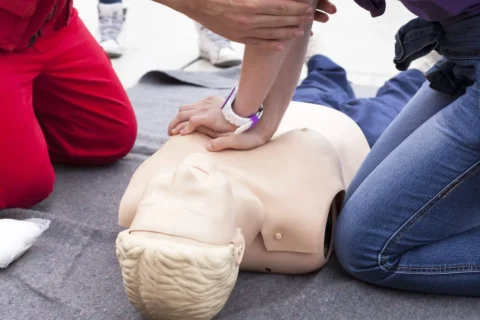
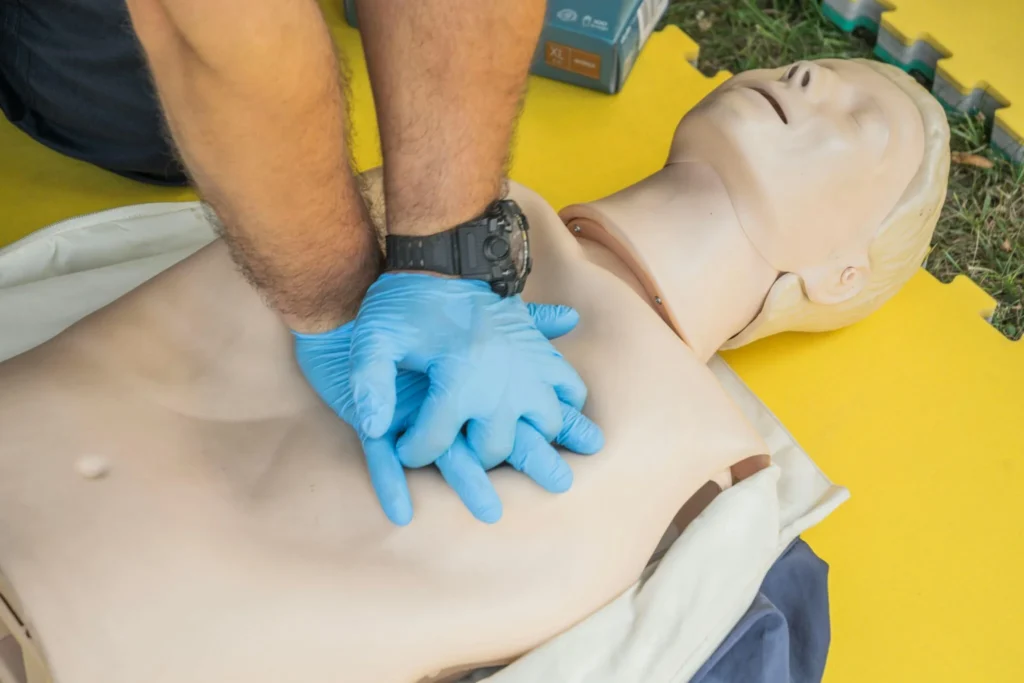
4. Start CPR Immediately
-
Push hard and fast in the centre of the chest.
-
Aim for 100–120 compressions per minute — that’s roughly the beat of Stayin’ Alive by the Bee Gees.
-
Keep going. Don’t stop.
5. Use an AED if Available
-
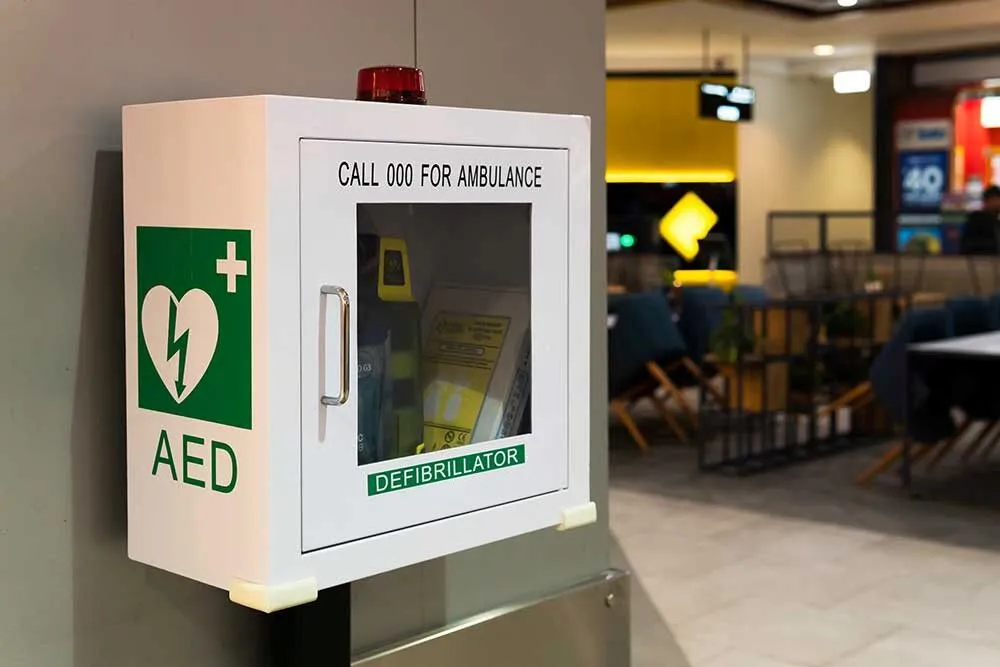
AED = Automated External Defibrillator.
-
Most shopping centres, schools, sporting clubs and public buildings have one.
-
Follow the voice prompts — they’re designed for untrained people.
-
Don’t be afraid: you can’t hurt someone by using it — but you could save their life.
6. Keep Going Until Help Arrives
-
Swap with someone else if you get tired.
-
Paramedics will take over as soon as they arrive.
A Note on Defibrillators (AEDs)
This incident is a clear example of why early intervention matters — and why we need more people across Australia equipped with the knowledge and confidence to act.
The people involved weren’t health professionals.
They were family members and bystanders — under pressure and operating on instinct.
But they did exactly what we hope anyone would do in that situation: they acted.
They performed CPR.
They persisted in finding a defibrillator.
And because of that, a man survived — with his brain intact and his life ahead of him.
As a professional first aid trainer, I see how often people underestimate their ability to help in an emergency.
But this case proves that you don’t need to be a health professional to save a life — you just need to be prepared and willing to act
Get Government-Approved First Aid Training at a Location Near You!
In a cardiac emergency, every second matters — and it won’t be a paramedic who gets there first.
It could be you.
National First Aid Courses delivers accredited, hands-on training that prepares everyday Australians to step up when it counts most.
As a Registered Training Organisation (RTO 41072), we guarantee you will receive the highest standard of training.
With face-to-face instruction, same-day certificates, and convenient locations across New South Wales and Queensland (including Sydney, Brisbane and the Gold Coast) we make it easy for you to become a certified First Aider.
Choose from our three most popular courses:
-
CPR (HLTAID009): Learn how to perform high-quality CPR and use a defibrillator.
-
First Aid (HLTAID011): Covers everything from the CPR course, plus how to treat bleeding, burns, choking, fractures and more.
-
Childcare First Aid (HLTAID012): Tailored for parents, educators, and carers.
Don’t wait for an emergency to realise you weren’t ready.
Enrol in one of our upcoming First Aid courses and secure your spot today!