First Aid Vocabulary: A Complete First Aid Glossary of Key Terms
If you’re completing a course with National First Aid Courses (NFAC), you’ll quickly notice something interesting: first aid has its own language.


In Short for First Aid Training by NFAC
-
First aid vocabulary is the language of emergency care and helps you understand instructions, procedures, and training content quickly and accurately.
-
Key terms like DRSABCD, CPR, AED, and recovery position are used across all accredited first aid courses in Australia and form the foundation of emergency response.
-
Understanding first aid terminology improves communication with emergency services, helping you relay information clearly and respond more effectively in critical situations.
-
First aid is both a practical and communication-based skill, and knowing the correct terms helps you follow structured steps during high-pressure emergencies.
-
Learning and recognising common first aid vocabulary builds confidence, reduces hesitation, and supports faster decision-making when every second counts.
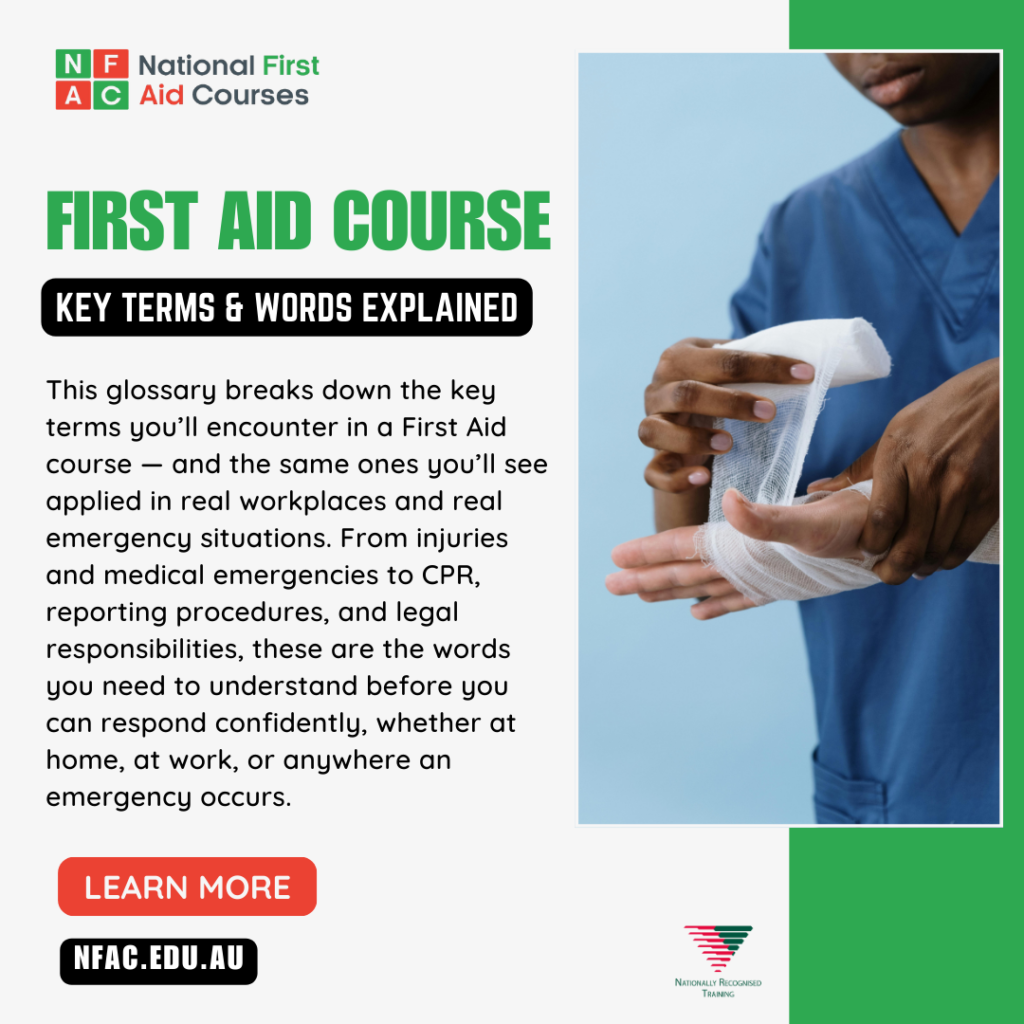
From terms like ‘primary survey’ to ‘AED’ and ‘recovery position’, the world of emergency care includes a range of words that may feel unfamiliar at first.
Understanding first aid vocabulary and common first aid terminology is just as important as learning the practical skills. These terms help you follow instructions clearly, communicate with emergency services, and respond confidently when every second counts.
This first aid glossary explains the most common first aid terms in plain English. Instead of confusing medical jargon, you’ll find simple explanations for the words used in nationally recognised training courses.
Whether you’re learning first aid for the first time or refreshing your certification, this guide will help you feel more comfortable with the language used in real emergencies at work, home, school, or in the community.
Core First Aid Vocabulary and Concepts
Before learning specific treatments or techniques, it helps to understand the core first aid vocabulary that underpins emergency response. During a first aid course, you’ll hear certain terms used repeatedly because they describe the key concepts that guide safe and effective care.
These words form the foundation of how first aiders assess situations, prioritise actions, and communicate with others during an emergency. By becoming familiar with these common terms, you can better understand instructions during training and respond more confidently in real-life situations.
First Aid
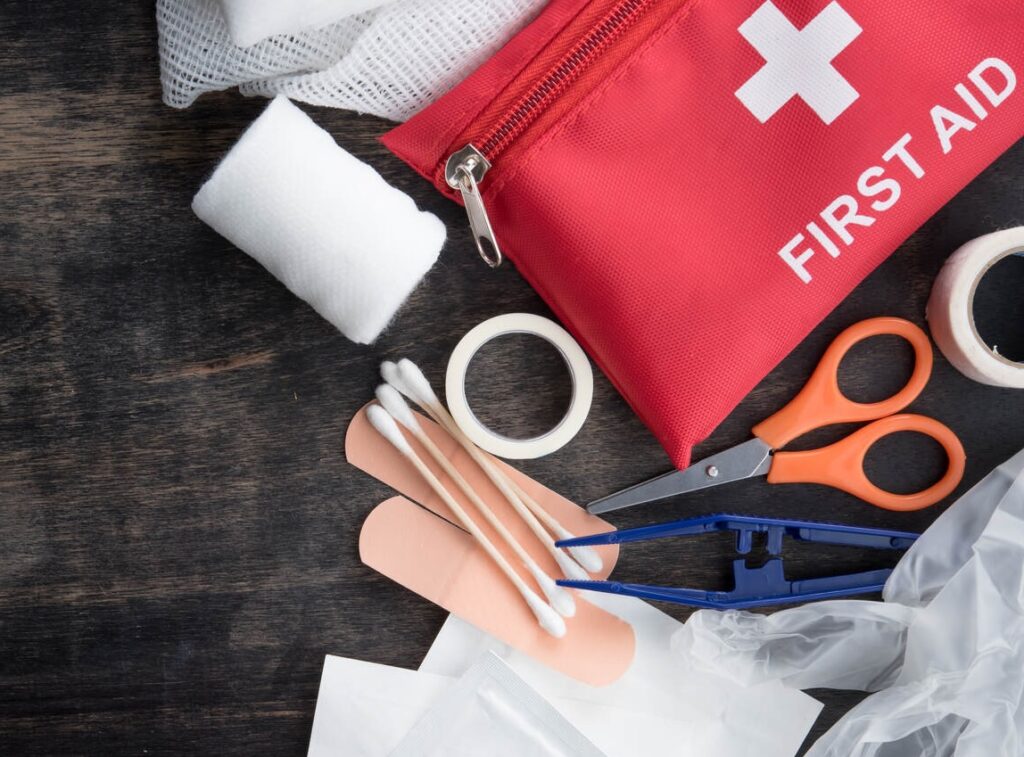
First aid is the immediate care given to someone who is injured or suddenly becomes ill before professional medical help arrives. The goal of first aid is to preserve life, prevent the condition from worsening, and promote recovery.
Emergency Procedures
Emergency procedures are the step-by-step actions used to respond to medical emergencies such as cardiac arrest, choking, severe bleeding, or unconsciousness. These procedures help ensure a calm and structured response in stressful situations.
Scene Safety
Before helping someone, the first step always involves checking for danger. Scene safety means assessing the area to ensure it’s safe to approach the casualty. Hazards might include:
- traffic
- fire
- electricity
- chemicals
- aggressive behaviour
A safe scene protects the casualty, the first aider, and emergency responders.
Duty of Care
Duty of care refers to the legal and ethical responsibility to take reasonable steps to avoid causing harm to others. In first aid, this means acting within your level of training, providing assistance when it is safe to do so, behaving as a reasonable person would in the same situation
Consent
Before providing treatment, you must obtain consent from a conscious adult. If a person is unconscious or unable to respond, consent is automatically assumed. This is known as implied consent.
Primary Survey
The primary survey is the first and most important assessment of a casualty. It focuses on identifying life-threatening problems and follows the well-known DRSABCD action plan:
- Danger
- Response
- Send for help
- Airway
- Breathing
- CPR
- Defibrillation
Secondary Survey
Once life-threatening issues have been addressed, a secondary survey involves a more detailed examination of the casualty. This head-to-toe assessment helps identify additional injuries, illnesses, or symptoms that require attention.
Vital Signs
Vital signs are key indicators of a person’s health and condition. Common vital signs include breathing rate, pulse, skin colour and temperature, level of consciousness. Changes in these signs can indicate that a person’s condition is improving or deteriorating.
Roles and Responsibilities in First Aid
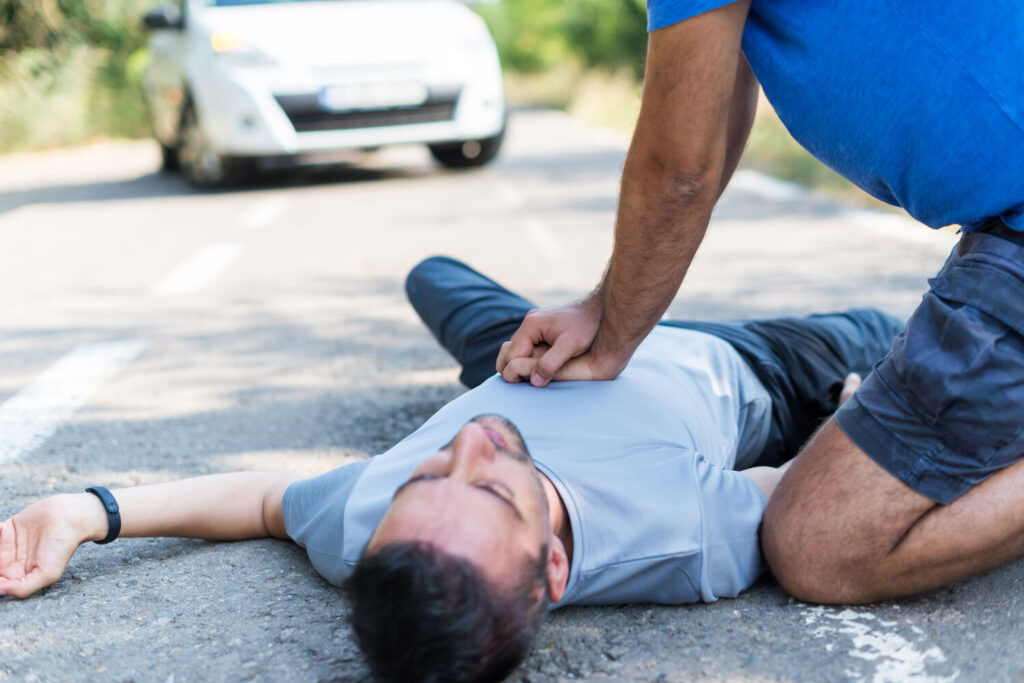
First aid responses often involve several different roles. While a trained first aider is usually the person providing immediate care, they are often supported by others who help manage the situation, contact emergency services, or ensure the area is safe.
Understanding these roles is an important part of learning first aid vocabulary, because each role has specific responsibilities during an emergency.
For example, in a workplace, a ‘responsible person’ may ensure first aid equipment and procedures are in place, while a ‘supervisor’ may co-ordinate the response and document the incident.
Emergency responders such as paramedics may also become involved once professional help arrives. Knowing who does what during a first aid situation helps create a co-ordinated response, ensuring casualties receive care quickly and safely.
First Aider
A first aider is someone trained to provide immediate care during a medical emergency.
Their responsibilities include assessing the situation, delivering appropriate treatment, and supporting the casualty until professional help arrives.
Responsible Person
In workplaces, a responsible person ensures proper first aid arrangements are in place. This may include maintaining first aid kits, organising staff training, and ensuring compliance with safety regulations.
Supervisor
A supervisor may coordinate emergency responses in a workplace and ensure procedures are followed correctly. They may also be responsible for incident reporting and workplace safety management.
Emergency Services
Emergency services include paramedics, firefighters, and police. These professionals provide advanced medical care, rescue operations, and scene management during serious incidents.
Emergency Equipment and First Aid Vocabulary
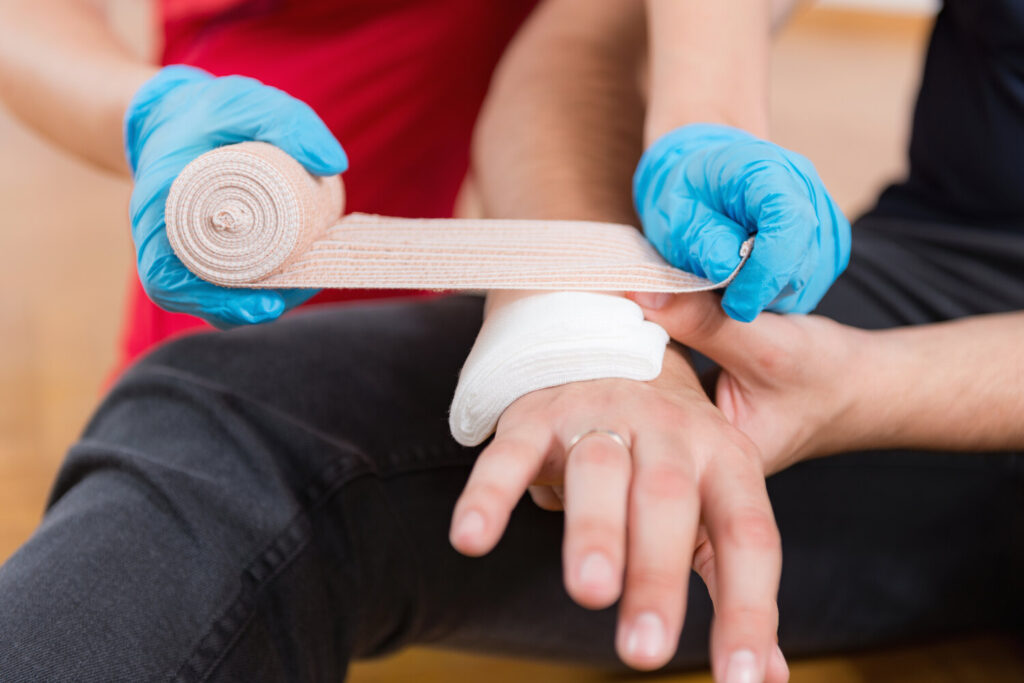
Alongside learning treatment techniques, first aid training also introduces a range of emergency equipment that may be used to help care for an injured or unwell person.
Understanding the names and purposes of this equipment is an important part of learning first aid vocabulary, because it allows first aiders to respond quickly and confidently when equipment is needed.
During a course, you’ll learn how different tools are used to manage emergencies, from basic items found in a first aid kit to life-saving devices like an automated external defibrillator (AED).
Personal Protective Equipment (PPE)
PPE stands for personal protective equipment and includes protective items such as gloves, masks, and eye protection.
These help reduce the risk of infection or contamination when treating a casualty.
First Aid Kit
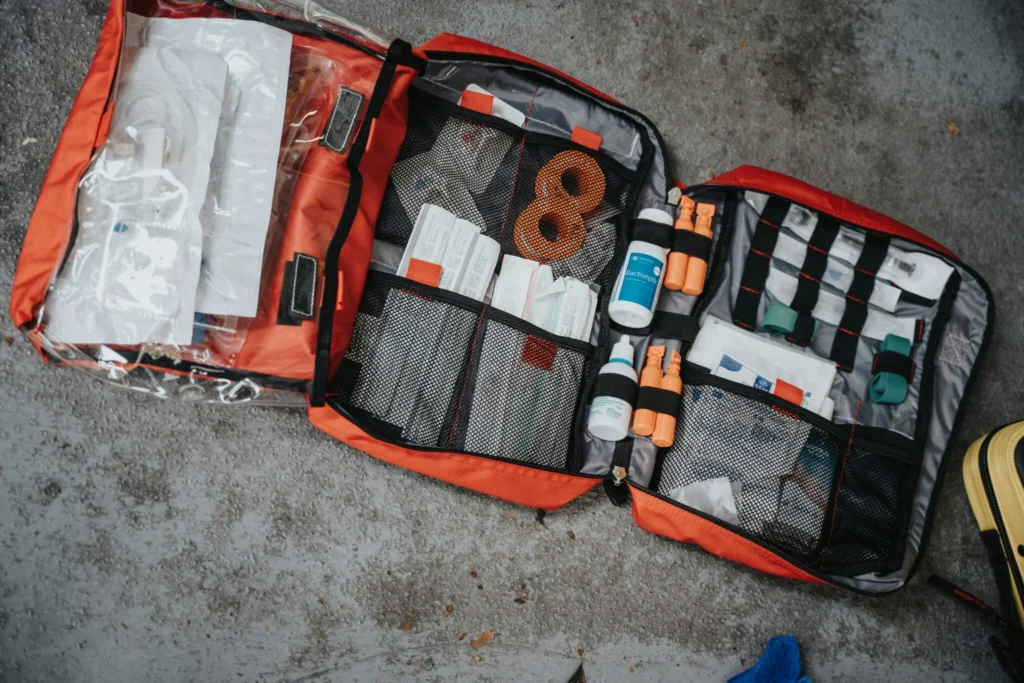
A first aid kit contains medical supplies used to treat injuries. Common items include:
- bandages
- sterile dressings
- antiseptic wipes
- gloves
- scissors
Automated External Defibrillator (AED)
An Automated External Defibrillator (AED) is a portable device used during cardiac arrest.
It analyses the heart’s rhythm and can deliver an electric shock to help restore a normal heartbeat.
AEDs are designed to be used by trained first aiders and members of the public.
CPR (Cardiopulmonary Resuscitation)
CPR is a life-saving technique used when a person has stopped breathing. It involves chest compressions combined with rescue breaths.
These actions help maintain circulation and oxygen flow to the brain until emergency services arrive.
Airway, Breathing, Circulation (ABC)
The ABC assessment checks three critical life functions:
- Airway – Is the airway clear?
- Breathing – Is the person breathing normally?
- Circulation – Is blood circulating through the body?
This simple check forms the basis of many emergency assessments.
Airway, Breathing, Circulation, Defibrillation (ABCD)
ABCD takes the basic ABC check one step further by adding defibrillation. It’s used when cardiac arrest is suspected and an AED might be needed.
-
Airway – Clear the airway
-
Breathing – Check for normal breathing
-
Circulation – Check for signs of circulation
-
Defibrillation – Is a shock needed to restore a normal heart rhythm?
Danger, Response, Send, Airway, Breathing, CPR, Defibrillation (DRSABCD)
This is the full emergency response action plan used across Australia. You’ll hear this one a lot during first aid training because it covers every step from the moment you arrive at an emergency scene to delivering advanced care.
-
Danger – Is the scene safe?
-
Response – Is the person conscious?
-
Send for help – Call 000
-
Airway – Clear the airway
-
Breathing – Check for normal breathing
-
CPR – Start chest compressions if needed
-
Defibrillation – Use an AED if available
Alert, Voice, Pain, Unresponsive (AVPU)
AVPU is a quick and simple scale used to assess how conscious a person is. It helps first aiders figure out how serious the situation is and what kind of response is needed.
-
Alert – Is the person fully awake?
-
Voice – Do they respond to your voice?
-
Pain – Do they respond to pain?
-
Unresponsive – No response at all
Face, Arms, Speech, Time (FAST)
FAST is the go-to test for spotting a stroke. Time is critical with strokes, so this quick check helps first aiders act fast and get emergency services on the way as soon as possible.
-
Face – Is one side drooping?
-
Arms – Can they raise both arms?
-
Speech – Is their speech slurred or unclear?
-
Time – Call 000 immediately
Signs, Allergies, Medications, Past History, Last Meal, Events (SAMPLE)
SAMPLE is used to gather key information about a casualty quickly. It’s especially useful when passing information on to paramedics so they arrive with a clear picture of what’s going on.
-
Signs and symptoms
-
Allergies
-
Medications
-
Past medical history
-
Last meal or drink
-
Events leading up to the incident
Deformity, Open Wounds, Tenderness, Swelling (DOTS)
DOTS is used during a physical check to find injuries that might not be obvious at first glance. First aiders work through this during a secondary survey to make sure nothing gets missed.
-
Deformity
-
Open wounds
-
Tenderness
-
Swelling
Rest, Ice, Compression, Elevation (RICE)
RICE is the standard approach for treating soft tissue injuries like sprains, strains, and minor swelling. It’s one of the first things you learn and one of the most commonly used in everyday situations.
- Rest
- Ice
- Compression
- Elevation
Infection Control
Infection control refers to procedures that reduce the spread of illness or contamination.
Examples include:
- hand hygiene
- wearing gloves
- safe disposal of contaminated materials
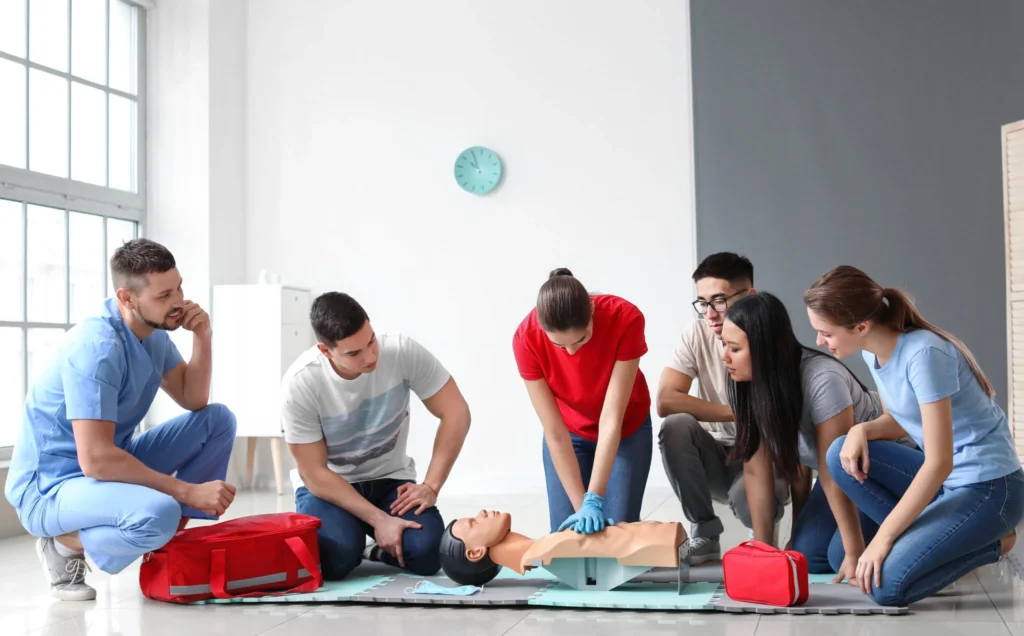
Common Medical Conditions in First Aid Vocabulary
Another important part of learning first aid vocabulary is understanding the names and basic characteristics of common injuries and medical emergencies.
During first aid training, you will be introduced to a range of conditions that can occur in everyday life, from minor injuries to serious medical events that require urgent care.
Knowing the correct terms helps first aiders recognise what may be happening, communicate clearly with others, and follow the appropriate treatment steps.
Bleeding
Bleeding occurs when blood escapes from damaged blood vessels. Severe bleeding can become life-threatening and requires direct pressure and immediate treatment.
Shock
Shock occurs when the body is not receiving enough blood flow. It may result from trauma, severe bleeding, burns, or serious illness.
Burns
Burns are injuries caused by heat, chemicals, electricity, and friction. First aid typically involves cooling the burn and protecting the area from infection.
Fractures
A fracture is a broken or cracked bone. First aid focuses on immobilising the injured area and preventing further movement.
Heart Attack
A heart attack occurs when blood flow to the heart is blocked. Common symptoms include chest pressure or pain, shortness of breath, sweating, and nausea. Immediate emergency care is critical.
Stroke
A stroke occurs when blood flow to the brain is interrupted. Key warning signs include facial drooping, arm weakness, and difficulty speaking.
Choking
Choking happens when an object blocks the airway. Treatment may involve back blows, abdominal thrusts, or CPR if the person becomes unresponsive.
Asthma
Asthma is a condition that causes difficulty breathing due to narrowed airways. First aid often involves assisting with a reliever inhaler and monitoring the person’s breathing.
Allergic Reaction / Anaphylaxis
An allergic reaction occurs when the immune system reacts strongly to a substance. Severe reactions, called anaphylaxis, can be life-threatening and require adrenaline (epinephrine) treatment.
Seizure
A seizure is caused by abnormal electrical activity in the brain. First aid focuses on protecting the person from injury, keeping the airway clear, and timing the seizure.
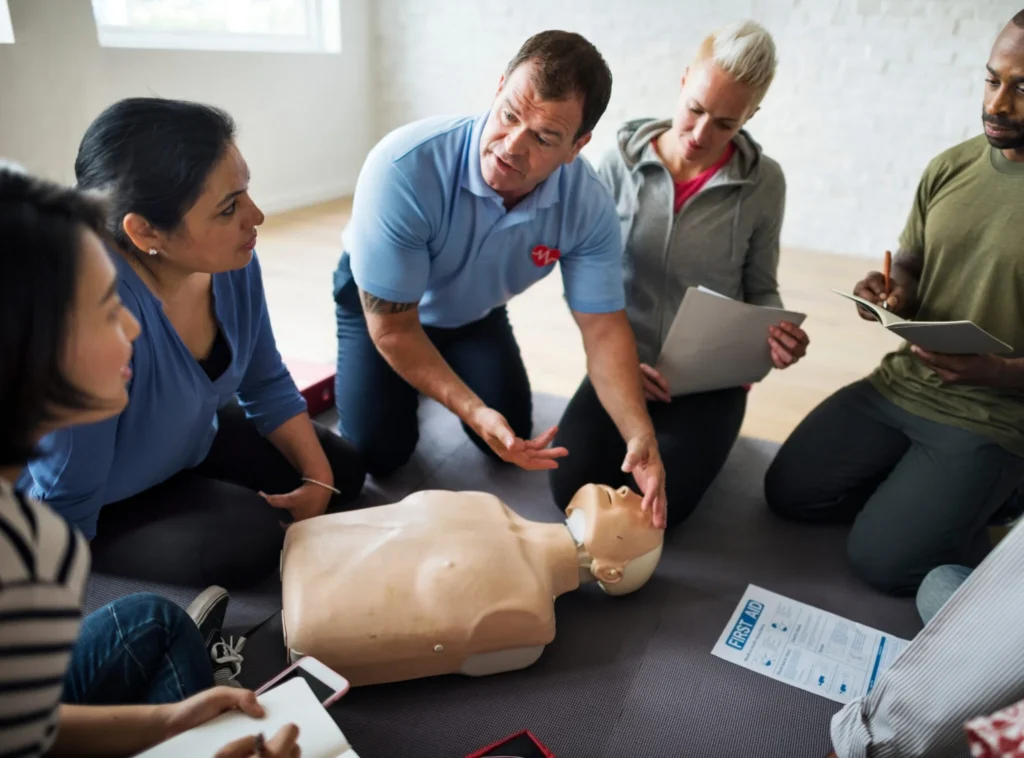
Additional Important First Aid Vocabulary
In addition to the core concepts covered in first aid training, there are several other important first aid vocabulary terms that describe key life-saving techniques and emergency response principles.
Recovery Position
The recovery position is used when someone is unconscious but breathing. It places the person on their side to help keep the airway clear and prevent choking.
Chain of Survival
The chain of survival describes the key steps that improve survival in cardiac arrest:
- Early recognition
- Early CPR
- Early defibrillation
- Advanced medical care
Defibrillation
Defibrillation is the delivery of an electric shock using an AED to restore a normal heart rhythm.
Triage
Triage is the process of prioritising patients based on the severity of their injuries, particularly in large emergencies involving multiple casualties.
Notifiable Incident
A notifiable incident is a serious workplace event that must be reported to authorities, such as a fatality, serious injury, or dangerous occurrence.
Near Miss
A near miss is an incident that could have caused harm but did not. Reporting near misses helps improve workplace safety systems.

Putting First Aid Vocabulary into Practice
Learning first aid vocabulary isn’t just about remembering definitions. It’s about understanding how those words translate into real-world action.
During training with National First Aid Courses, these terms are reinforced through hands-on scenarios and practical demonstrations so you can:
- recognise emergencies quickly
- follow correct treatment procedures
- communicate clearly with others
- make confident decisions under pressure
For example, understanding the primary survey ensures you check life-threatening problems first, while recognising the term AED helps you respond immediately during cardiac arrest.
Learn First Aid Vocabulary Through Practical Training
Reading about first aid is a great start, but real confidence comes from hands-on training. Courses delivered by National First Aid Courses combine practical instruction, real equipment, and realistic emergency scenarios to help you build both skills and understanding. You’ll learn how to:
- recognise medical emergencies quickly
- apply first aid techniques correctly
- use emergency equipment safely
- stay calm and confident in high-pressure situations
Our nationally recognised courses are designed to ensure you’re workplace-ready and prepared for real life emergencies.

Frequently Asked Questions
Why is learning first aid vocabulary important?
Learning first aid vocabulary is important because it helps people understand instructions during emergencies and apply first aid procedures correctly. When you recognise key terms such as CPR, AED, recovery position, or primary survey, you can act faster and communicate more effectively with others during a critical situation.
Do you learn first aid vocabulary in first aid training courses?
Yes. Accredited training courses delivered by National First Aid Courses teach both practical skills and the terminology used during emergencies. Learning this vocabulary ensures participants understand instructions, emergency procedures, and the correct steps to follow when responding to an injured or unwell person.
What are the most common first aid terms?
Some of the most common first aid terms include CPR (cardiopulmonary resuscitation), AED (automated external defibrillator), DRSABCD, recovery position, primary survey, airway, bleeding control, and shock. These terms describe essential steps and techniques used when providing first aid.
What does DRSABCD stand for in first aid?
DRSABCD is a step-by-step emergency action plan used during first aid situations. It stands for Danger, Response, Send for help, Airway, Breathing, CPR, and Defibrillation. This process helps first aiders quickly identify life-threatening problems and prioritise the correct treatment steps.
How can I learn first aid vocabulary quickly?
The best way to learn first aid vocabulary is through hands-on training combined with practical scenarios. Courses delivered by National First Aid Courses introduce key terms while demonstrating how they apply in real emergencies, helping students understand both the language and the actions required to respond confidently.
Get Government-Approved First Aid Training at a Location Near You!
Ready to Complete your First Aid Training?
Whether you need to tick a box for work or just want to know what to do in an emergency, NFAC has you covered. We offer nationally recognised first aid training that’s practical, straight to the point, and built around real situations.
Our courses are designed to be practical, accessible, and aligned with the latest Australian safety guidelines, helping individuals and workplaces stay prepared for emergencies.
Find a course near you at nfac.edu.au and get certified with confidence.
Our courses are designed to be practical, accessible, and aligned with the latest Australian safety guidelines, helping individuals and workplaces stay prepared for emergencies.