
Key Takeaways
- RICER stands for Rest, Ice, Compression, Elevation, and Referral, and is a widely used first aid method for treating soft tissue injuries.
- The RICER approach helps reduce pain, swelling, and further tissue damage in the early stages after an injury occurs.
- RICER is commonly used for sprains, strains, bruising, and minor sports or workplace injuries involving muscles and ligaments.
- While RICER is still widely taught in Australian first aid training, newer recovery approaches such as PEACE & LOVE are also becoming more common in sports medicine.
If you’ve ever attended a first aid course or looked up treatment for sprains and strains, you’ve likely come across the term RICER. But what does it actually mean, and why is it still widely taught in Australia?
Understanding the RICER meaning in first aid is essential for anyone who wants to confidently respond to soft tissue injuries such as sprains, strains, and bruises. It’s a simple, structured approach that helps reduce pain, swelling, and further damage in the critical early stages of an injury.
In this article, we’ll break down exactly what RICER stands for, how to apply it correctly, and when it should be used.




What Does RICER Stand For in First Aid?
RICER is an acronym used in first aid to guide the immediate treatment of soft tissue injuries. It stands for:
- R – Rest
- I – Ice
- C – Compression
- E – Elevation
- R – Referral
Each step plays an important role in reducing injury severity and supporting recovery.
At organisations like National First Aid Courses, RICER is commonly taught as part of foundational first aid training because it provides a clear, easy-to-remember structure for responding to common sports and workplace injuries.

R – Rest: Stop Further Damage
The first step in RICER is rest. As soon as an injury occurs, the affected area should be rested immediately. Continuing to move or use the injured body part can worsen tissue damage and increase swelling.
Rest doesn’t just mean sitting down. It means avoiding any activity that places stress on the injured area. For example, if someone sprains their ankle, they should stop walking on it as soon as possible.
The goal is simple: prevent the injury from getting worse.
I – Ice: Reduce Pain and Swelling
The next step is applying ice to the injured area. Ice helps reduce pain, swelling, and internal bleeding by constricting blood vessels.
Cold therapy should be applied as soon as possible after the injury occurs, ideally within the first 48 hours. A common method is wrapping ice in a cloth or using a cold pack and applying it for 15–20 minutes at a time, with breaks in between.
It’s important not to place ice directly on the skin, as this can cause ice burns or skin damage.
C – Compression: Limit Swelling
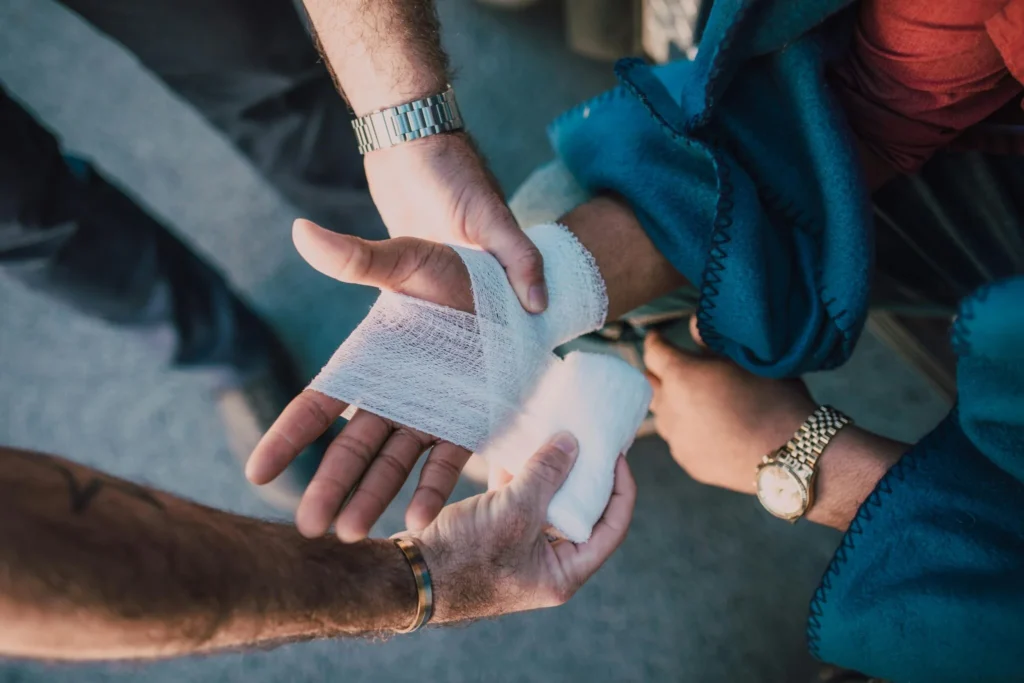
Compression involves applying a bandage or wrap to the injured area to help control swelling and provide support.
A firm but comfortable elastic bandage is usually used. It should be snug enough to provide pressure but not so tight that it restricts blood flow. Signs that a bandage is too tight include numbness, tingling, or increased pain.
Compression is especially useful for sprained ankles, knees, and wrists, where swelling can build quickly.
E – Elevation: Reduce Fluid Build-Up
Elevation means raising the injured area above the level of the heart if possible. This helps reduce blood flow to the area, minimising swelling and discomfort.
For example, if someone has injured their leg, they should lie down and prop the leg up on cushions or a chair.
Elevation works best when combined with rest, ice, and compression, especially in the first 24-48 hours after injury.
R – Referral: Get Professional Assessment
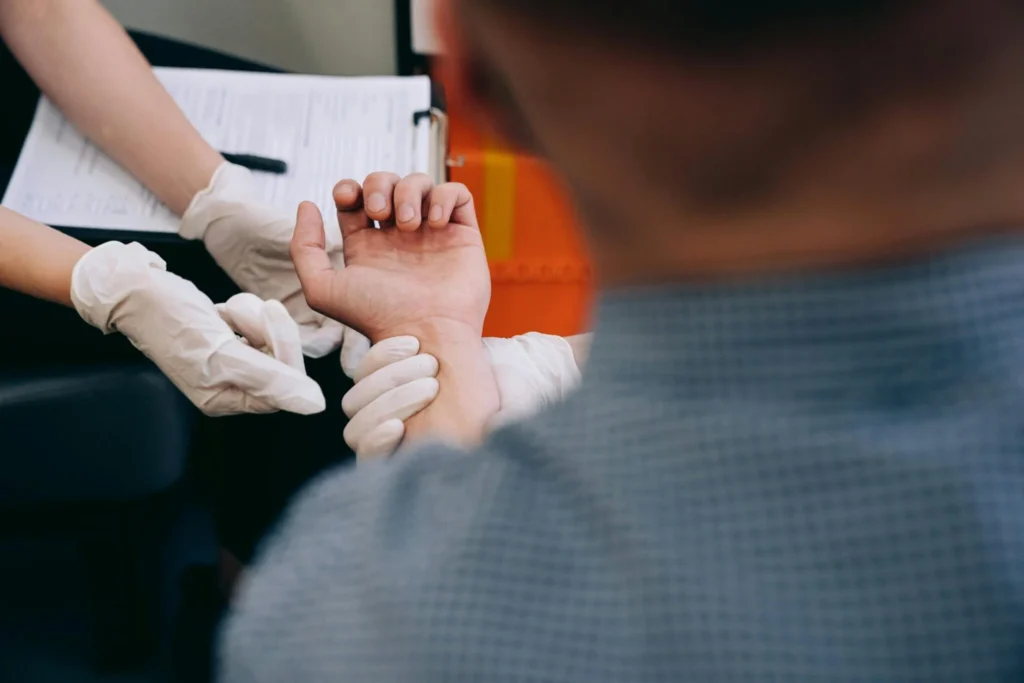
The final step in RICER is referral, which means seeking professional medical advice.
While RICER is effective for managing minor soft tissue injuries, it is not a substitute for medical diagnosis. If the injury is severe, does not improve, or shows signs of complications, the person should be referred to a doctor, physiotherapist, or emergency care provider.
Signs that referral is needed include:
- Severe pain or deformity
- Inability to bear weight
- Suspected fracture
- No improvement after 48–72 hours
- Significant swelling or bruising
This step is often overlooked, but it is crucial for ensuring proper recovery and avoiding long-term damage.
When Should You Use RICER?
RICER is most commonly used for soft tissue injuries such as sprains, strains, bruising, and other minor sports or workplace injuries.
These types of injuries often involve damage to muscles, ligaments, or surrounding tissues, where swelling and inflammation can develop quickly after the incident occurs. Applying RICER early can help reduce pain, limit swelling, and support a smoother recovery process.
However, RICER is not appropriate for every injury. More serious conditions such as fractures, head injuries, dislocations, or severe wounds require different first aid responses and often immediate medical attention.
Knowing when RICER is suitable, and when a situation needs urgent professional care, is just as important as understanding how to apply the technique itself.
Common Mistakes When Using RICER
Even though RICER is simple, there are a few common mistakes people make:
- Applying heat too early: Heat should not be used in the first 48 hours, as it can increase swelling.
- Wrapping compression too tightly: This can restrict circulation and worsen the injury.
- Returning to activity too soon: Pain may reduce quickly, but the tissue is still healing.
- Ignoring referral: Failing to seek professional advice can lead to long-term complications.
Proper training helps avoid these mistakes and ensures RICER is applied effectively.
Is RICER Still the Best Approach?
In modern first aid and sports medicine, RICER is still widely taught, but you may also hear about updated approaches such as PEACE & LOVE. These newer frameworks place more emphasis on long-term recovery, rehabilitation, and avoiding over-treatment in the early stages.
However, RICER remains a valuable foundational tool, especially for beginners and workplace first aid responders. It is simple, memorable, and highly effective for immediate care.
Many accredited providers, including National First Aid Courses, continue to teach RICER as part of core first aid education because it builds essential confidence in responding to injuries quickly and correctly.
Frequently Asked Questions
When should RICER be used?
RICER should be used as soon as possible after a soft tissue injury occurs. It is commonly applied for sprains, strains, bruising, and minor sports injuries to help reduce swelling and support recovery.
Is RICER still recommended in first aid?
Yes, RICER is still widely taught in first aid training across Australia. Although newer approaches such as PEACE & LOVE are also discussed in sports medicine, RICER remains a simple and effective framework for immediate injury management.
Can RICER be used for fractures?
No, RICER is not suitable for suspected fractures, head injuries, or severe wounds. These injuries require urgent medical assessment and different first aid treatment methods.
What is the difference between RICER and PEACE & LOVE?
RICER focuses on immediate care after an injury, while PEACE & LOVE is a newer recovery approach that includes rehabilitation, education, and gradual return to movement over time.
Is online first aid training accepted in Australia?
Online learning is accepted for the theory component of first aid training, but you cannot complete a fully accredited first aid course entirely online. A practical, in-person assessment is always required to meet Australian national training standards.
Get Government-Approved First Aid Training at a Location Near You!
Ready to Complete your First Aid Training?
If you’ve never done a first aid course before, completing your initial training is the best way to build the skills you need to respond confidently in an emergency.
National First Aid Courses provides nationally recognised training in:
- HLTAID009 – Provide Cardiopulmonary Resuscitation (CPR)
- HLTAID010 – Provide Basic Emergency Life Support
- HLTAID011 – Provide First Aid
Our courses are designed to be practical, accessible, and aligned with the latest Australian safety guidelines, helping individuals and workplaces stay prepared for emergencies.
Whether you need certification for work or simply want to learn life-saving skills, completing a first aid course ensures you are ready to respond when it matters most.